Stop Dog Boredom Fast: Simple DIY Enrichment Ideas
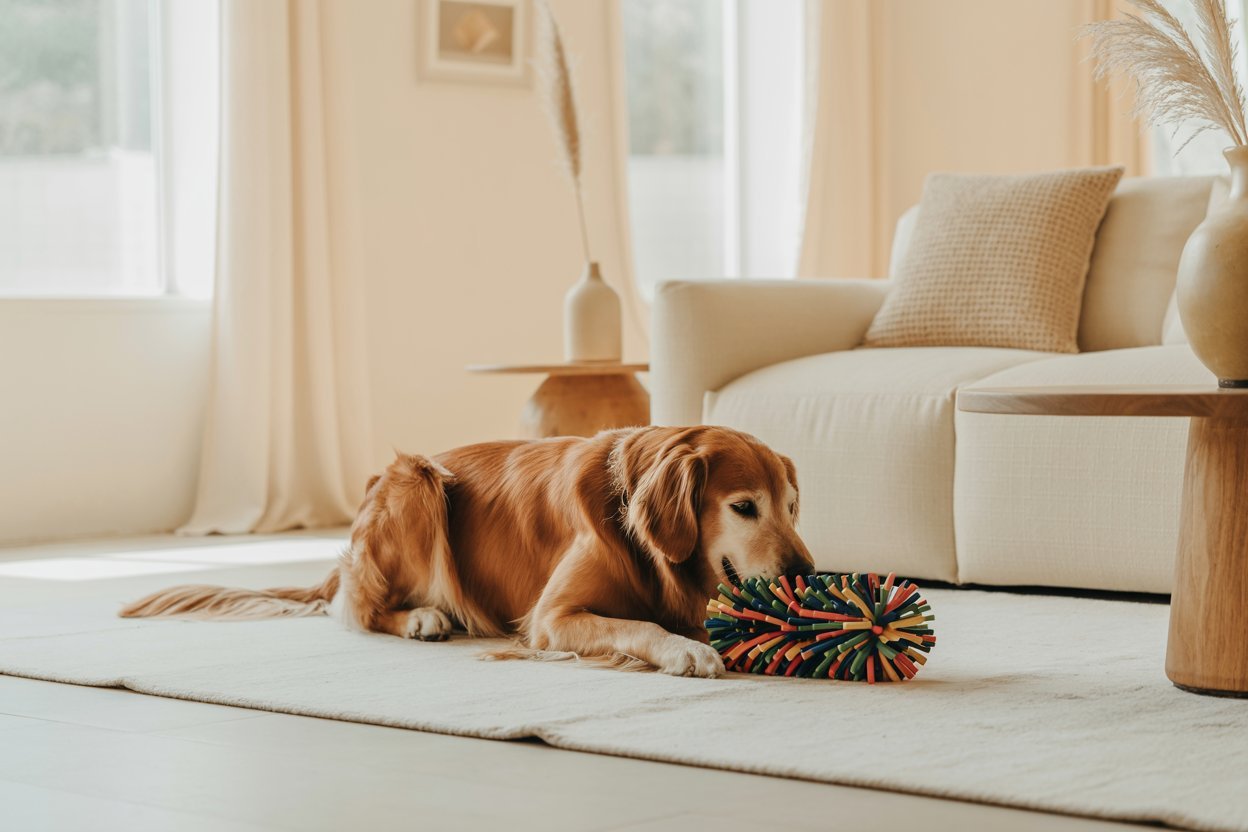
The day I realized my dog was bored wasn’t dramatic. There was no big moment, no sudden chaos. It was quieter than that. He just seemed off. Less excited, more restless.
He started chewing things he had never touched before, following me around endlessly, and flopping down with those long, exaggerated sighs that made me feel like I was somehow failing him.
At first, I thought maybe he needed more exercise. So I added longer walks. But something still felt missing.
That’s when I discovered the magic of enrichment.
Not expensive toys. Not complicated routines. Just simple, thoughtful ways to engage his mind and everything changed.
If you’re here, you’ve probably noticed similar signs in your own dog. And the good news? You can fix dog boredom faster than you think with things you likely already have at home.
This guide is everything I wish I knew earlier. It’s practical, deeply helpful, and designed to fit into real life (because let’s be honest we’re all busy sometimes).
What Dog Boredom Really Means (And Why It Matters)

Dog boredom isn’t just about having “nothing to do.” It’s deeper than that.
Dogs are naturally curious, intelligent, and driven by instincts sniffing, searching, chewing, exploring. When those needs aren’t met, boredom starts to build. And when boredom builds, it often turns into frustration.
That frustration shows up in ways we don’t always love:
- Chewing furniture
- Excessive barking
- Digging
- Hyperactivity
- Attention-seeking behaviors
But here’s the shift that changed everything for me:
Your dog isn’t misbehaving—they’re under-stimulated.
Once I started seeing boredom as a need instead of a problem, I approached things differently. And enrichment became our daily rhythm.
Signs Your Dog Needs Enrichment (Even If They Seem “Fine”)
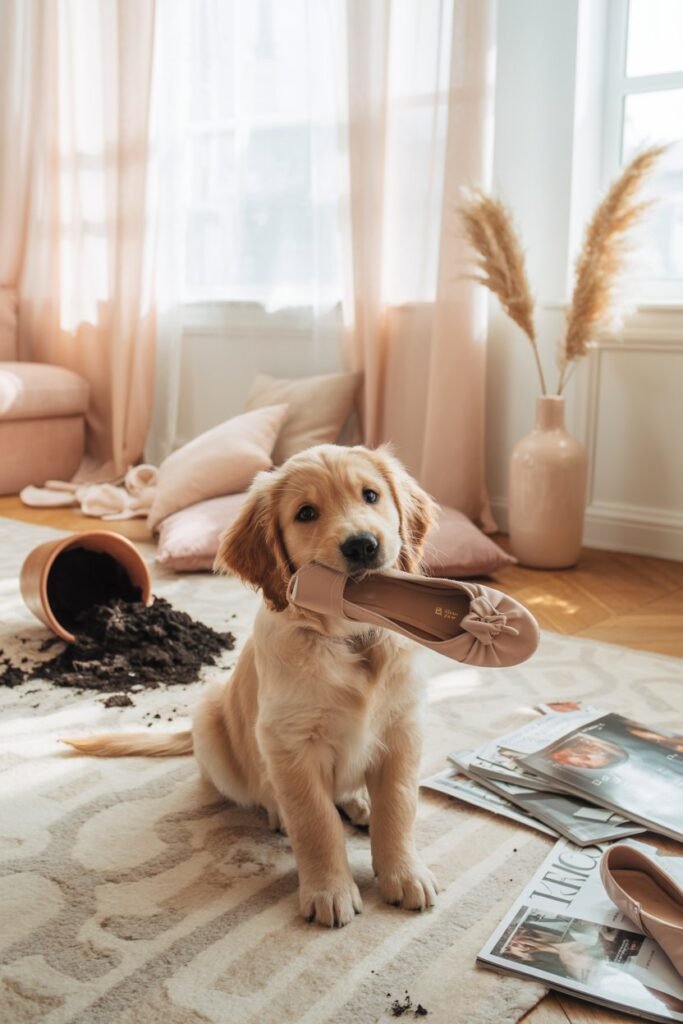
Some dogs don’t act out in obvious ways. Instead, boredom can be subtle.
Look for:
- Restlessness (pacing, inability to settle)
- Over-sleeping but still seeming tired
- Sudden clinginess
- Loss of interest in toys
- Random bursts of energy at odd times
I remember noticing my dog would pick up a toy, drop it, then wander off. That wasn’t laziness—it was boredom with sameness.
Dogs crave novelty. And enrichment gives them exactly that.
The Secret to Stopping Dog Boredom Fast
If you take one thing from this post, let it be this:
Mental stimulation tires your dog out faster than physical exercise alone.
A 15-minute enrichment activity can be more effective than a long walk.
Why? Because thinking, sniffing, and problem-solving use more brain power. And a mentally satisfied dog is a calm, happy dog.
1. The Towel Treat Puzzle (My Everyday Lifesaver)
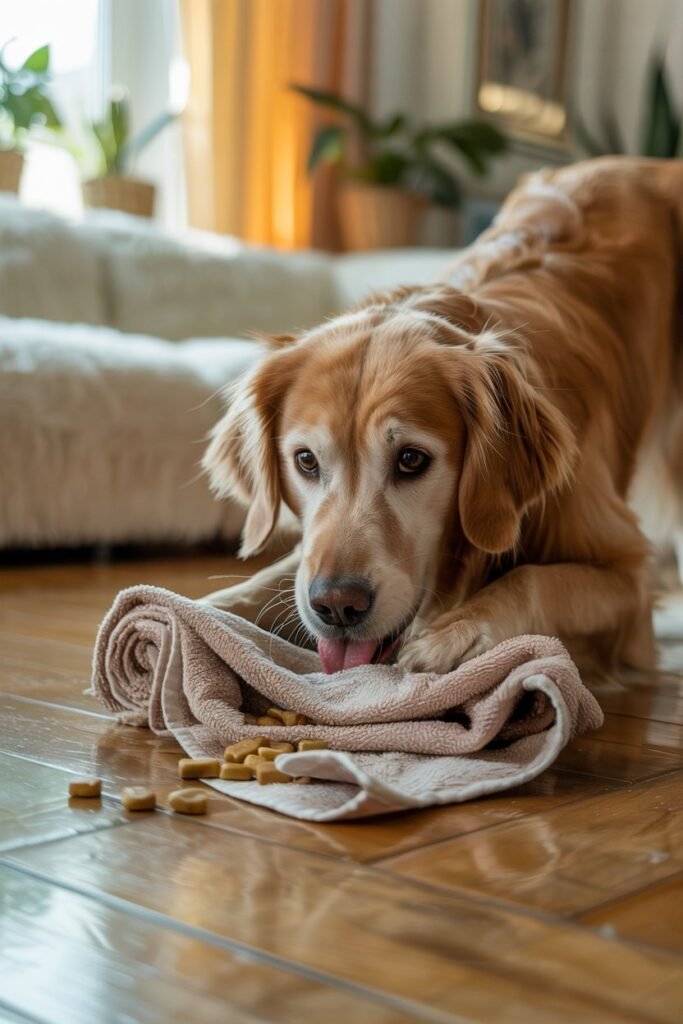
This is the first enrichment activity I ever tried and I still use it constantly because it’s just that effective.
What You’ll Need:
- 1–2 medium or large towels (old ones work perfectly)
- A mix of kibble and high-value treats (like small training treats or tiny bits of cooked chicken)
Step-by-Step Instructions:
- Lay the towel completely flat on the floor.
- Lightly scatter a few treats across the surface (don’t overload it at first).
- Fold the towel in half lengthwise.
- Add another light sprinkle of treats.
- Roll the towel tightly from one end to the other.
- For more challenge, tie the rolled towel into a loose knot.
How to Introduce It:
If your dog is new to puzzles, don’t make it too hard immediately. Start with a simple fold so they understand the “game,” then gradually increase difficulty.
Why This Works So Well:
Dogs rely heavily on their sense of smell. This activity forces them to sniff, paw, nudge, and problem-solve—all in one simple setup.
Make It More Challenging:
- Use multiple towels layered together
- Add different textures (like a small blanket inside)
- Hide higher-value treats deeper inside folds
Common Mistake to Avoid:
Tying the towel too tightly at first can frustrate your dog. Always build up slowly.
2. DIY Snuffle Box (Perfect for Nose-Driven Dogs)
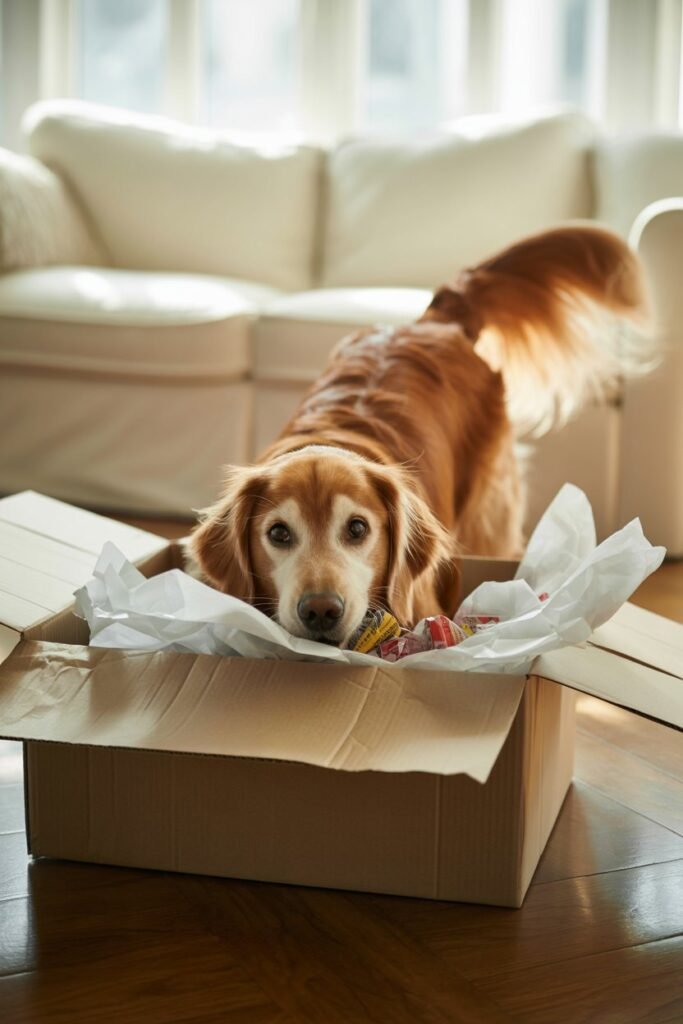
This is one of the easiest ways to recreate a snuffle mat without buying anything—and once you try it, you’ll see why dogs absolutely love it.
What You’ll Need:
- A sturdy cardboard box (shoebox size or larger depending on your dog)
- Packing paper, newspaper, old t-shirts, socks, or fleece strips
- Dry kibble and a few high-value treats
- Optional: toilet paper rolls or small empty boxes
Step-by-Step Instructions:
- Start by placing a base layer of crumpled paper or fabric at the bottom of the box.
- Sprinkle a small handful of kibble across that layer.
- Add another layer of paper or fabric to partially cover the food.
- Repeat layering (paper → treats → paper) until the box is filled.
- Lightly mix the top layer so some treats are slightly visible.
- Place the box on the floor and encourage your dog to investigate.
How to Introduce It:
The first time, keep it easy let some treats sit on top so your dog understands there’s a reward inside. Once they get the idea, start hiding treats deeper.
Why This Works So Well:
This taps into your dog’s natural foraging instinct. Sniffing and searching mimics how dogs would find food in the wild, making it deeply satisfying and mentally tiring.
Ways to Make It More Challenging:
- Add smaller boxes inside the main box
- Hide treats inside rolled paper tubes
- Use tightly packed fabric layers so your dog has to dig more
Safety Tips:
- Remove tape, staples, or sharp edges
- Supervise if your dog tends to chew and swallow materials
3. Frozen Treat Toys (Long-Lasting Calm & Engagement)
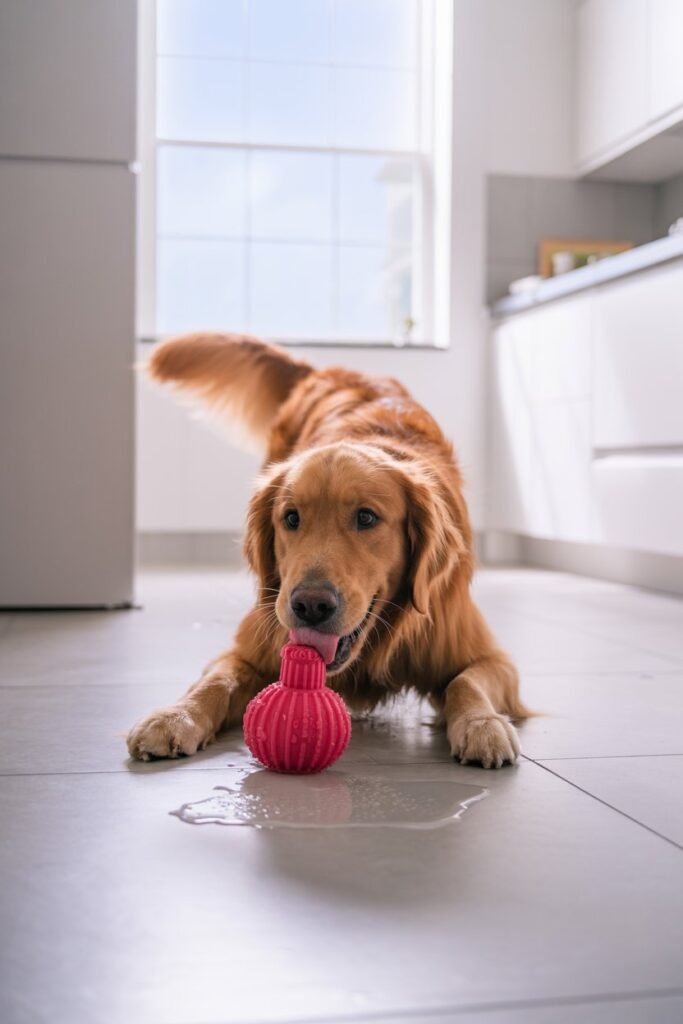
This is my personal go-to when I need a peaceful moment or want to help my dog settle down.
What You’ll Need:
- A hollow rubber toy or safe container
- Fillings such as:
- Plain unsweetened yogurt
- Xylitol-free peanut butter
- Mashed banana
- Wet dog food
- Optional: water or low-sodium broth
Step-by-Step Instructions:
- Plug the small hole (if your toy has one) with a soft treat to prevent leaks.
- Add a base layer of your chosen filling.
- Drop in a few small treats or kibble pieces.
- Add another layer of soft filling.
- Pour a small amount of water or broth to help everything freeze together.
- Place in the freezer for at least 3–4 hours (overnight works best).
How to Introduce It:
If your dog is new to frozen toys, let them try it unfrozen first so they understand food comes out of it.
Why This Works So Well:
- Licking is naturally calming
- It keeps your dog focused for longer periods
- It combines reward + challenge
Ways to Level It Up:
- Freeze in layers (freeze halfway, then add more filling)
- Use mixed textures (crunchy + soft)
- Insert a long chew stick in the center for added challenge
When to Use It:
- During alone time
- When guests visit
- On hot days
- When your dog needs calming
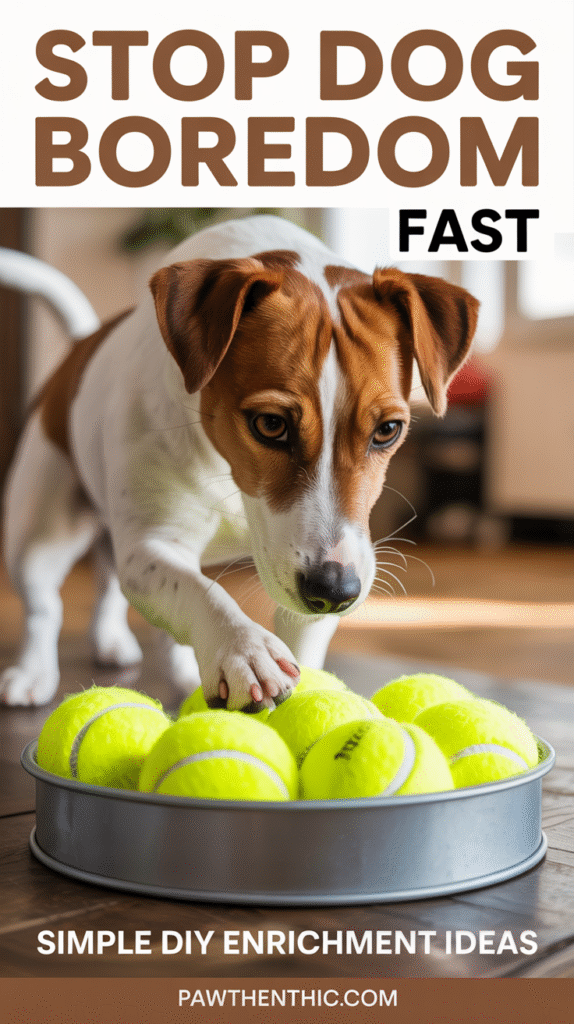
4. Muffin Tin Puzzle (Simple but Surprisingly Challenging)
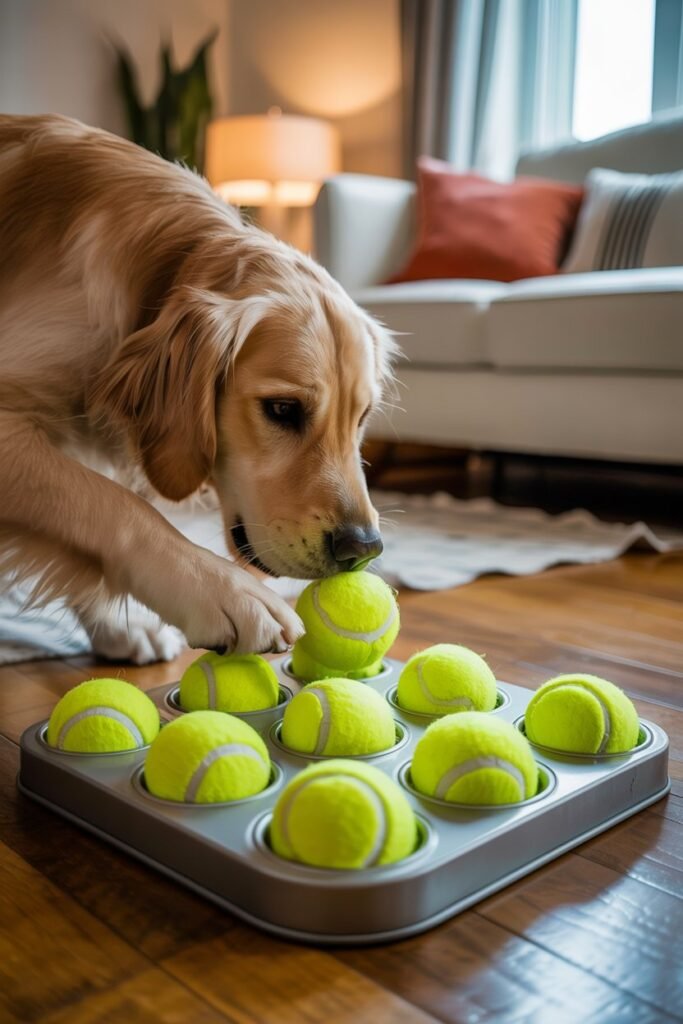
This activity looks basic, but it really gets your dog thinking.
What You’ll Need:
- A muffin tin (6 or 12 cup)
- Tennis balls or similarly sized balls
- Treats or kibble
Step-by-Step Instructions:
- Place treats into several of the muffin cups (not all, especially for advanced dogs).
- Cover each cup with a tennis ball.
- Place the tray on the floor in a non-slip area.
- Encourage your dog to explore and remove the balls.
How to Introduce It:
Start with 2–3 uncovered cups so your dog quickly understands the goal.
Why This Works So Well:
It encourages:
- Problem-solving
- Curiosity
- Persistence
Make It More Challenging:
- Use heavier balls that are harder to remove
- Only bait a few cups so your dog has to search
- Rearrange positions between rounds
Common Mistake:
Making it too hard too fast always build confidence first.
5. Hide-and-Seek (Connection + Mental Stimulation)
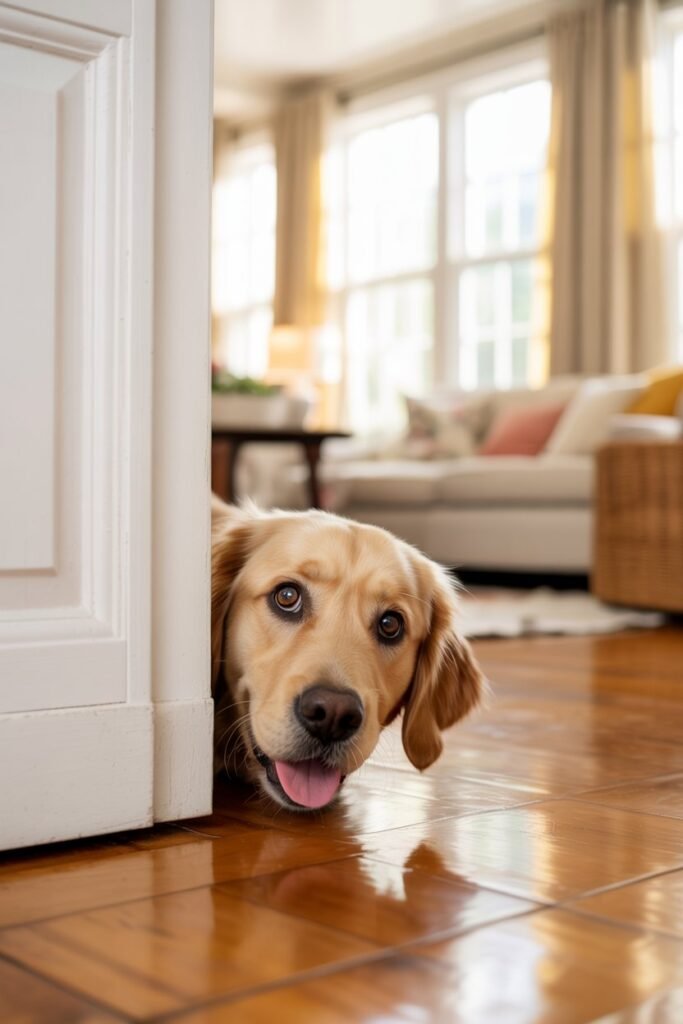
This is one of those activities that feels so playful but delivers real mental benefits.
Step-by-Step Instructions:
- Ask your dog to stay (or have someone gently hold them).
- Walk into another room and hide behind furniture, doors, or corners.
- Call your dog’s name in a cheerful, inviting tone.
- Reward them with praise or treats when they find you.
How to Introduce It:
Start with very easy hiding spots where your dog can still partially see you.
Why This Works So Well:
- Builds trust and bonding
- Strengthens recall skills
- Engages your dog emotionally and mentally
Ways to Make It More Challenging:
- Hide completely out of sight
- Stay silent and let your dog rely on scent
- Add multiple “fake” hiding spots
6. Cardboard Destruction Box (A Safe Way to Let Them Shred)
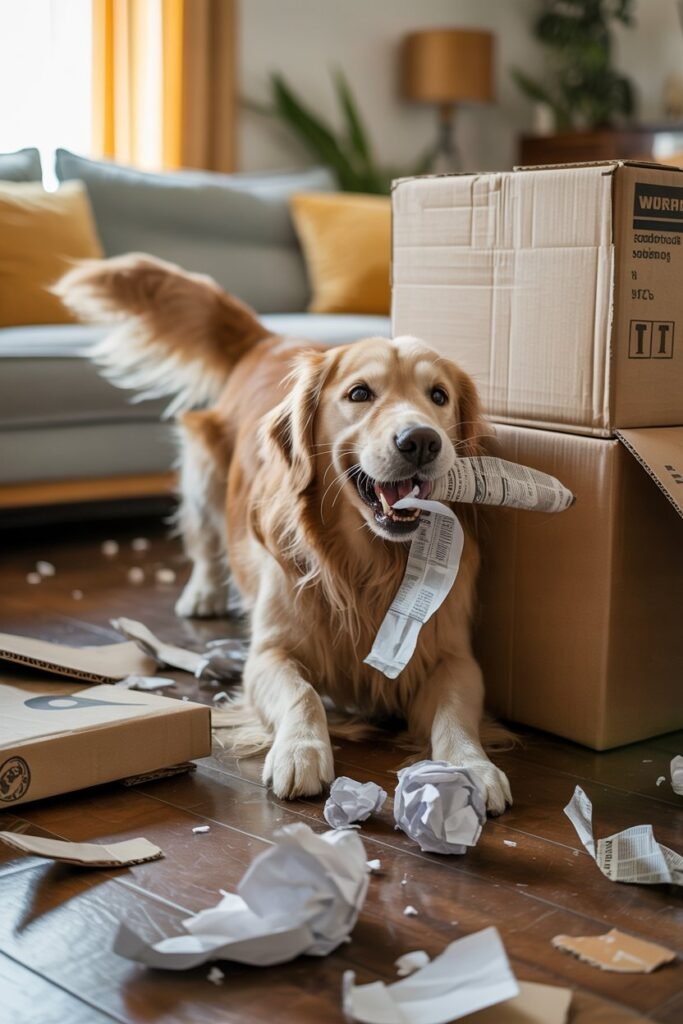
If your dog loves tearing things apart, this is an absolute must.
What You’ll Need:
- A large cardboard box
- Smaller boxes, paper rolls, or paper
- Treats
Step-by-Step Instructions:
- Wrap treats loosely in paper or place them inside smaller boxes.
- Put those inside the larger box.
- Close the box lightly (don’t tape it shut tightly).
- Present it to your dog and let them explore.
Why This Works So Well:
It satisfies natural chewing and shredding instincts without damaging your belongings.
How to Make It More Challenging:
- Add multiple layers of boxes
- Hide treats in harder-to-reach areas
- Use thicker cardboard
Safety Tips:
- Supervise at all times
- Remove large swallowed pieces immediately
7. The Cup Game (Focus & Brain Training)
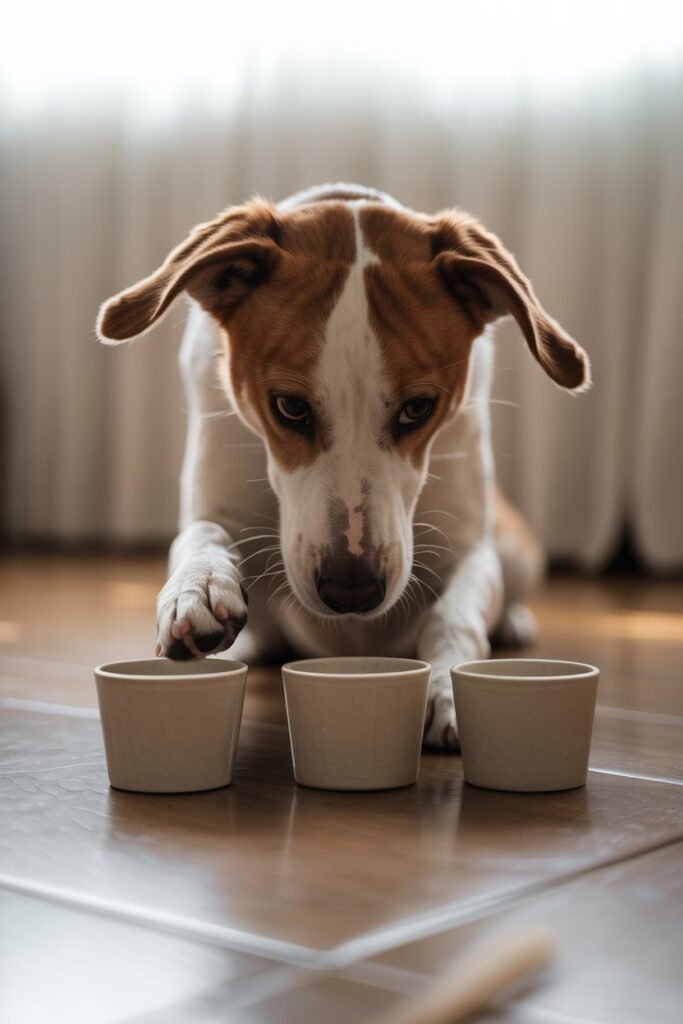
This simple game is surprisingly powerful for mental stimulation.
What You’ll Need:
- 3 cups
- Small treats
Step-by-Step Instructions:
- Place a treat under one cup while your dog watches.
- Slowly shuffle the cups.
- Encourage your dog to choose one.
- Lift the chosen cup and reward if correct.
How to Introduce It:
Skip the shuffle at first let your dog clearly see where the treat is.
Why This Works:
It improves:
- Focus
- Memory
- Problem-solving
Make It More Challenging:
- Shuffle faster
- Add more cups
- Occasionally leave a cup empty
8. DIY Obstacle Course (Energy + Confidence Building)
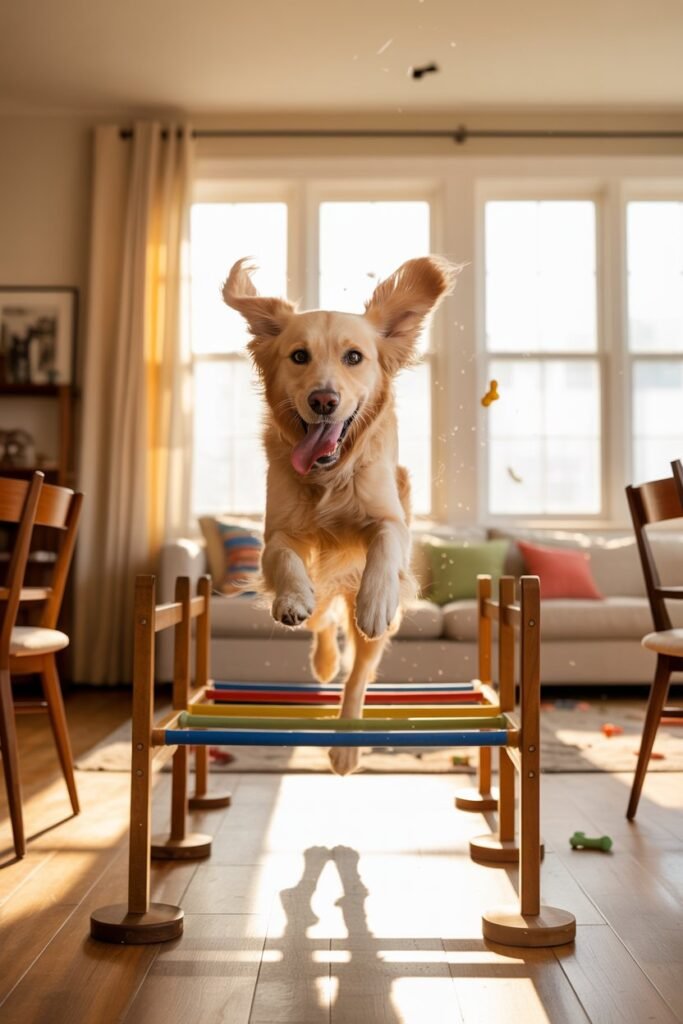
Perfect for days when your dog has extra energy but you’re stuck indoors.
What You’ll Need:
- Chairs, cushions, broomsticks, low tables
Step-by-Step Instructions:
- Set up a simple course:
- Chairs for weaving
- Cushions for jumping
- Table for crawling under
- Guide your dog using treats.
- Reward each successful movement.
- Repeat and build flow.
Why This Works:
It combines:
- Physical exercise
- Mental focus
- Confidence building
Ways to Improve:
- Add new obstacles weekly
- Change layout often
- Introduce simple commands like “jump” or “under”
9. Scent Trails (Deep Instinct Fulfillment)
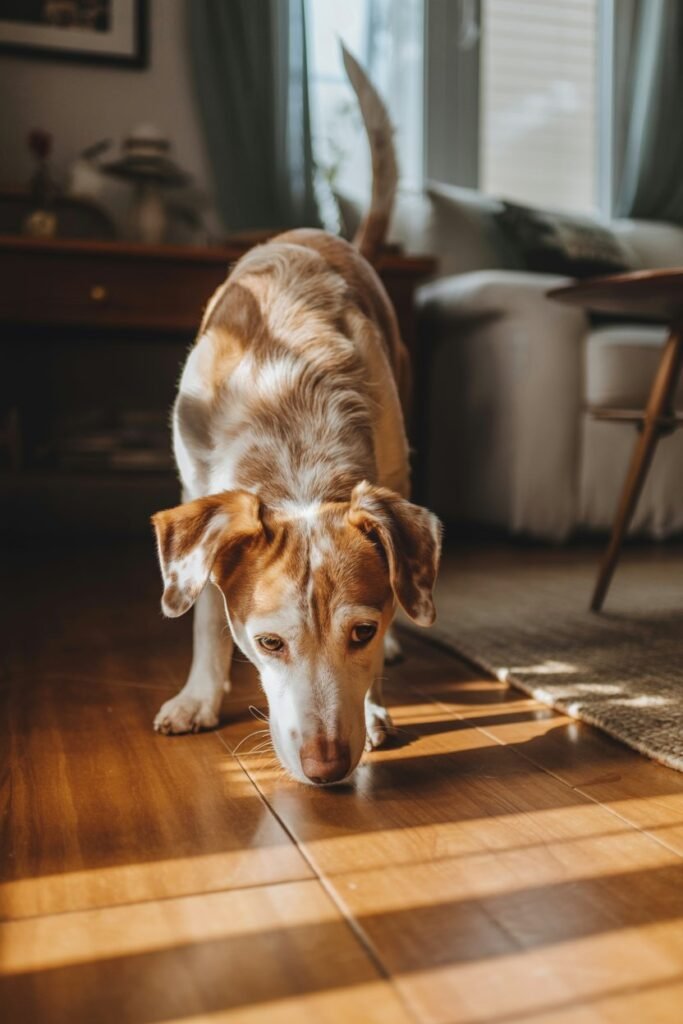
This taps into one of your dog’s strongest natural abilities their nose.
Step-by-Step Instructions:
- Take a small treat and drag it along the floor.
- Create a short trail leading to a hidden reward.
- Let your dog sniff and follow the path.
How to Introduce It:
Keep trails short and straight at first.
Why This Works:
Sniffing engages your dog’s brain deeply and provides intense satisfaction.
Make It More Advanced:
- Add turns and obstacles
- Create multiple trails
- Hide rewards in elevated spots
10. DIY Lick Mats (Instant Calm Tool)

No fancy mat needed this works just as well.
What You’ll Need:
- Plate, tray, or textured surface
- Peanut butter, yogurt, or mashed fruit
Step-by-Step Instructions:
- Spread a thin, even layer across the surface.
- Press food into grooves if available.
- Serve immediately or freeze.
Why This Works:
Licking releases calming hormones and reduces anxiety.
Make It More Engaging:
- Mix different flavors
- Freeze for longer use
- Add small crunchy bits
11. Rotate Toys (Make Old Toys Feel New Again)
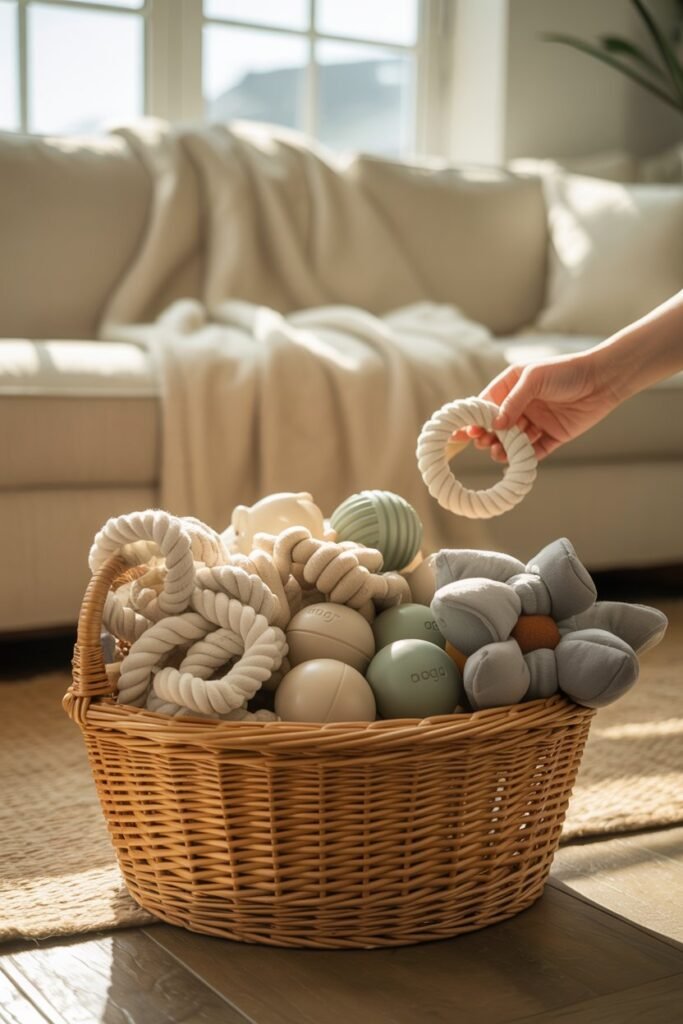
This is one of the simplest but most powerful tricks.
Step-by-Step Instructions:
- Gather all your dog’s toys.
- Divide them into 2–3 groups.
- Keep only one group available at a time.
- Rotate every 3–5 days.
Why This Works:
Dogs get bored with constant access. Rotation creates excitement and novelty.
12. Turn Mealtime Into an Enrichment Activity
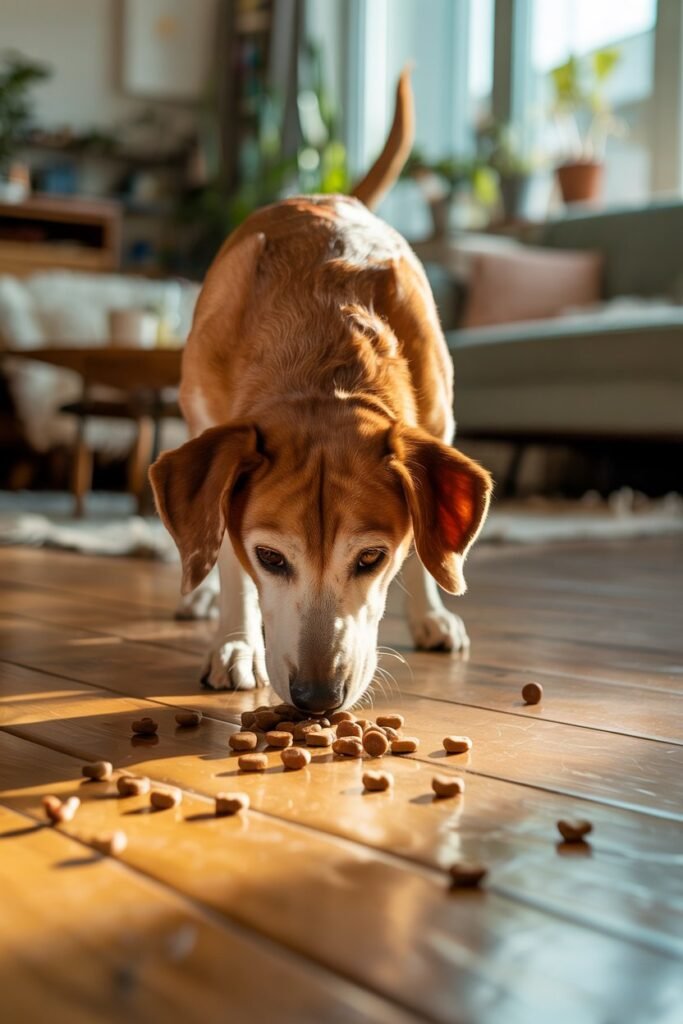
This is the easiest way to add stimulation daily no extra time needed.
Step-by-Step Ideas:
- Scatter kibble across the floor or yard
- Hide food in corners or under objects
- Use towel puzzles or snuffle boxes
Why This Works:
It turns eating into a mental challenge instead of a passive routine.
How to Build an Enrichment Routine (Without Feeling Overwhelmed)
You don’t need to do everything.
Start Here:
Pick 1–2 activities per day.
Keep It Simple:
Even 10 minutes makes a difference.
Mix It Up:
Variety keeps your dog engaged.
Common Mistakes to Avoid
1. Doing the Same Thing Every Day
Dogs crave novelty.
2. Making It Too Hard
Frustration can backfire.
3. Skipping Supervision
Safety always comes first.
The Emotional Side of Enrichment (Something I Didn’t Expect)
What surprised me most wasn’t just the behavioral changes—it was the emotional shift.
My dog seemed happier. More relaxed. More fulfilled.
And I felt better too.
Because I knew I wasn’t just meeting his basic needs I was giving him a richer, more engaging life.
Final Thoughts: Small Changes, Big Impact
You don’t need expensive toys. You don’t need hours of free time.
What your dog really needs is simple:
- Variety
- Challenge
- Interaction
Even one enrichment activity a day can transform your dog’s behavior and happiness.
If your dog has been showing signs of boredom, try one of these ideas today.
Start small. Stay consistent.
And watch that spark come back—because once you see it, you’ll never want to go back to “just a walk” again.