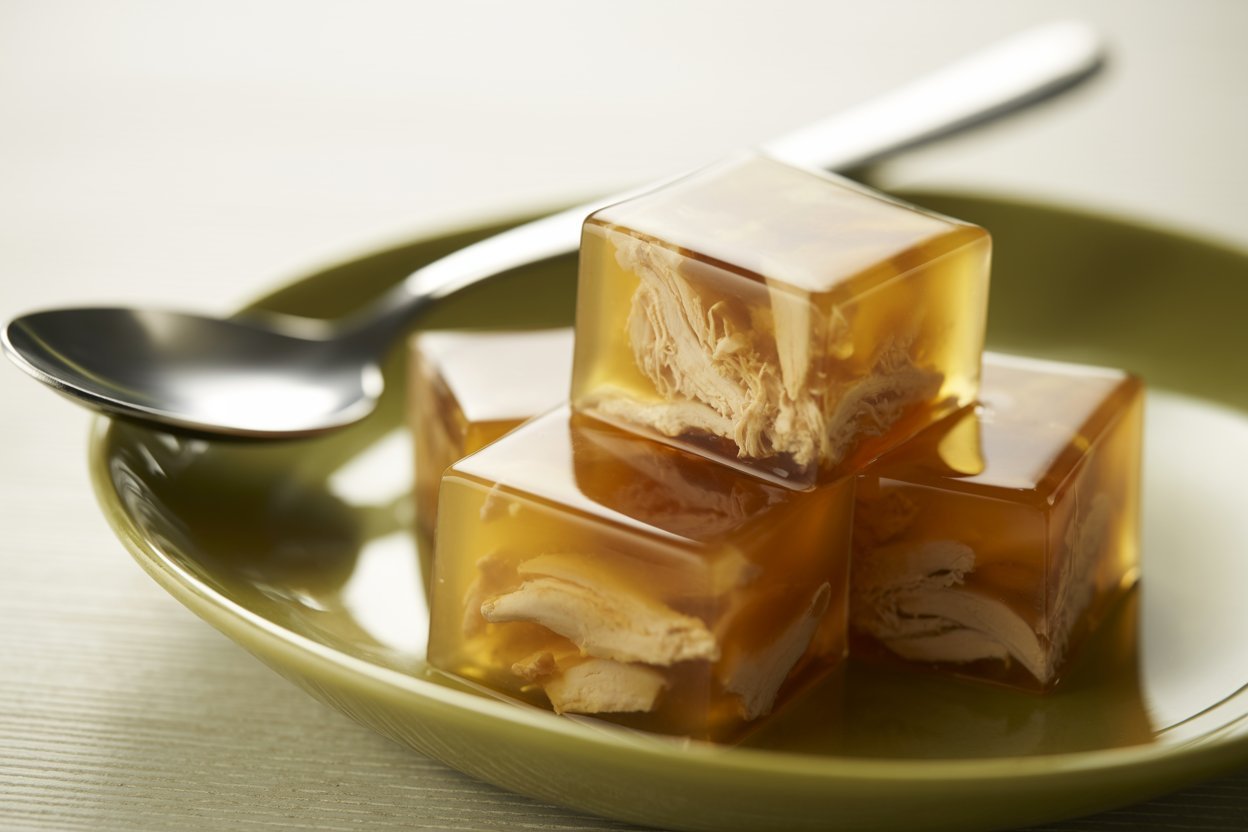
Ingredients
Equipment
Method
- Prepare the chicken — Cook plain chicken in plain water until it reaches a safe internal temperature, then cool enough to handle. Check carefully for bones, cartilage, and fat, then finely shred or chop.
- Prepare the gelatin — Place the cool water in a small bowl. Sprinkle the gelatin evenly over the surface and let sit for several minutes to bloom.
- Warm the broth — Pour the unsalted chicken broth into a small saucepan and warm gently over low to medium-low heat. Add the bloomed gelatin and stir until fully dissolved and the liquid looks smooth.
- Add the chicken — Remove from heat and stir in the finely shredded chicken until evenly distributed.
- Pour into molds — Spoon the mixture into small silicone molds or a shallow food-safe container. Keep portions small for easier serving control.
- Refrigerate — Chill until completely set, usually a few hours depending on depth. The finished jelly should be soft and firm, easy to break apart with a fork.
Notes
Never add onion, garlic, leeks, chives, or any powdered versions of these they're harmful to cats.
Avoid salt, pepper, chili, stock cubes, gravy powder, seasoning blends, bouillon, or herb mixes use only plain broth.
Never include cooked chicken bones in the finished jelly, even though it's called "bone broth" jelly cooked bones can splinter and pose a choking or gastrointestinal hazard. If making broth from bones, strain it thoroughly and ensure no fragments remain, or simply use plain boneless chicken and water.
No dairy needed milk, cream, cheese, or butter aren't necessary and many cats don't digest lactose well.
Use only plain, unflavoured gelatin no added sugar, sweeteners, flavoring, or fruit additives.
This is a treat or topper, not a complete meal it isn't nutritionally formulated to meet a cat's full daily needs.
Storage: refrigerate in a clean, covered container; make small batches rather than large ones. Freeze individual portions for longer storage if needed texture may change slightly after thawing. Discard if you notice any unusual smell, discoloration, mold, or texture change.
Start with a very small portion when first introducing this treat, and watch how your cat responds.
Kittens and senior cats with health conditions should only have this with veterinary guidance. Consult your vet if your cat has kidney disease, diabetes, digestive issues, or other dietary restrictions.