How To Get Rid Of Dog Smell In Your Home
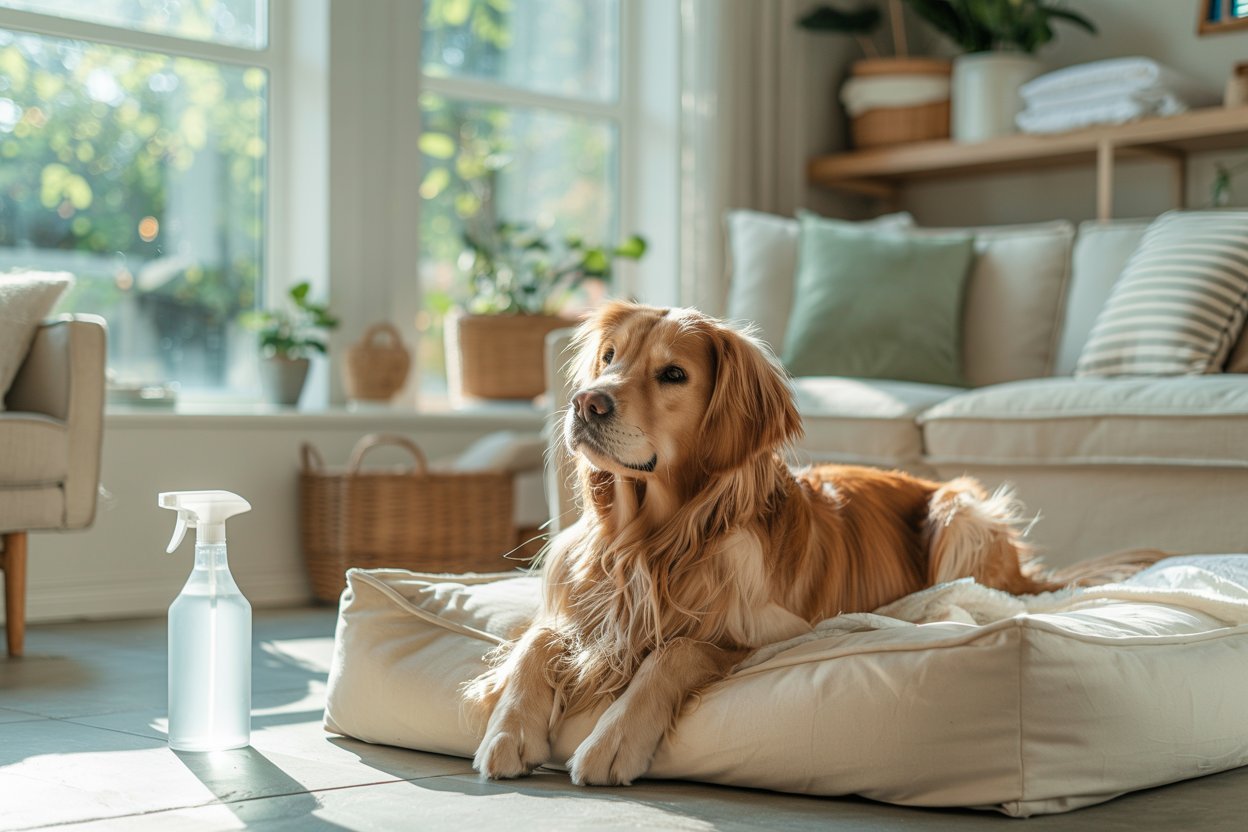
I’ve lived with dogs long enough to know that a cozy, pet-friendly home doesn’t have to smell like well, dogs.
When friends walk in and tell me, “I can’t even tell you have pets,” it’s one of the biggest compliments I get because trust me, it takes intention, routine, and the right little tricks.
Over the years, I’ve learned which habits actually keep that fresh, clean scent in the air, and which ones are just a waste of energy.
If you’ve been wondering why your house smells a little “doggy” no matter how often you clean, or you feel like the odor returns just as fast as you tackle it, you’re not alone.
Let me gently walk you through what’s really going on and the exact steps I use to keep my home smelling like me, not my pets.
Why Does My Dog Smell? (A More Realistic + Better Version)
Before we start fixing the odor in your home, it really helps to understand why your dog might be carrying those smells around.
Even the most loved, well-groomed pups can develop odors for reasons that have nothing to do with cleanliness.
Over the years, I’ve learned that every smell whether it’s musty, sour, or just “doggy” usually has a cause hiding in plain sight.
Here are the most common ones I see as a long-time dog keeper:
1. Yeast or Bacterial Overgrowth
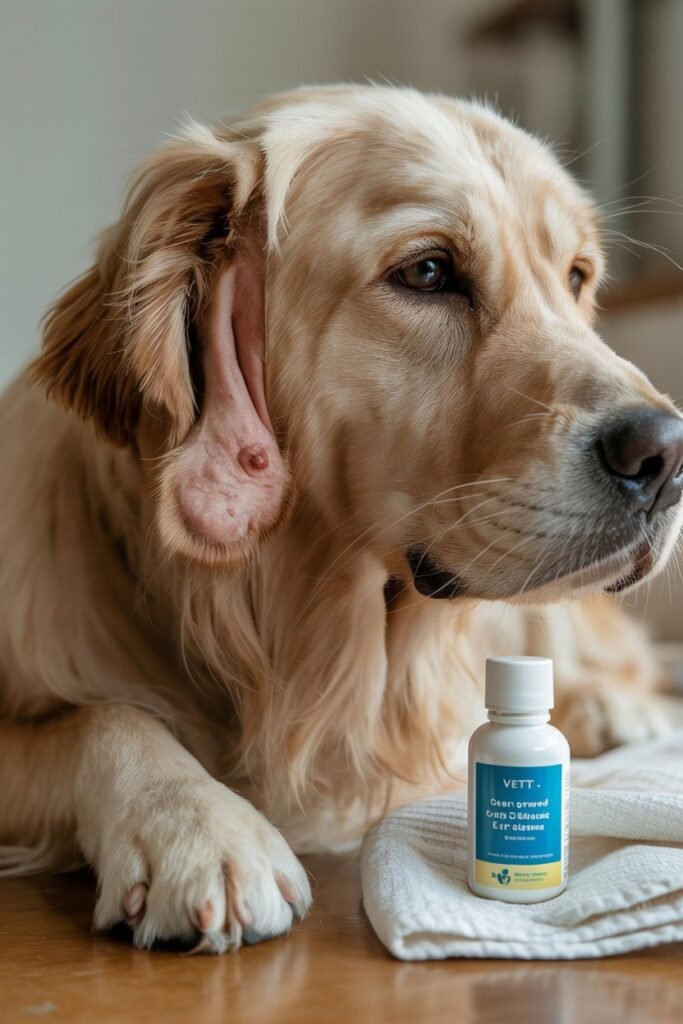
If you’ve ever leaned down to kiss your dog and caught a whiff of something cheesy, musty, or almost like old corn chips, that’s often yeast.
It usually shows up in the ears, between the toes, or in folds of skin.
And here’s the truth:
You’ll smell it long before you see it.
These infections make dogs itchy and uncomfortable, so if your pup is constantly licking their paws or scratching at their ears, it may be time to speak with your vet.
A quick cleaning routine can soothe things in the meantime, but always check with a professional before applying anything.
2. Rolling in “Mystery Scents” Outdoors
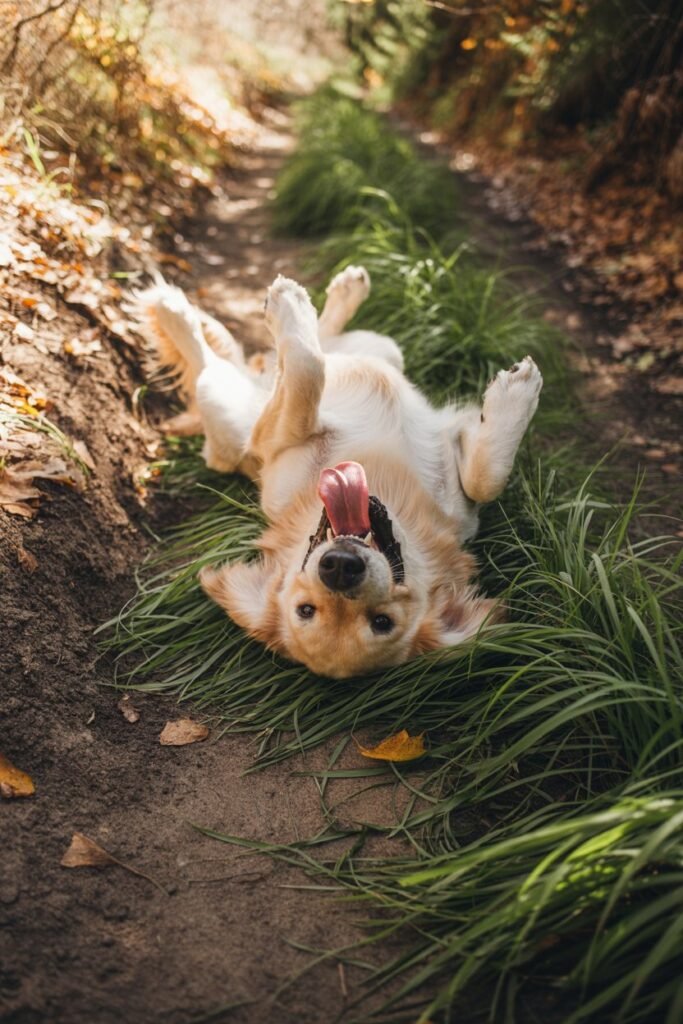
Some dogs have a talent for finding the single smelliest thing in a mile radius then rolling in it as if it’s their new perfume.
It’s instinctual, but it does leave you wondering why your sweet dog suddenly smells like:
• damp soil
• fishy riverbank mud
• dead grass
• or something you really don’t want to identify
And unfortunately, whatever they roll in usually ends up on your sofa, your rug, and your blankets once they wander back inside.
3. Digestive Gas (Yes the Farts)
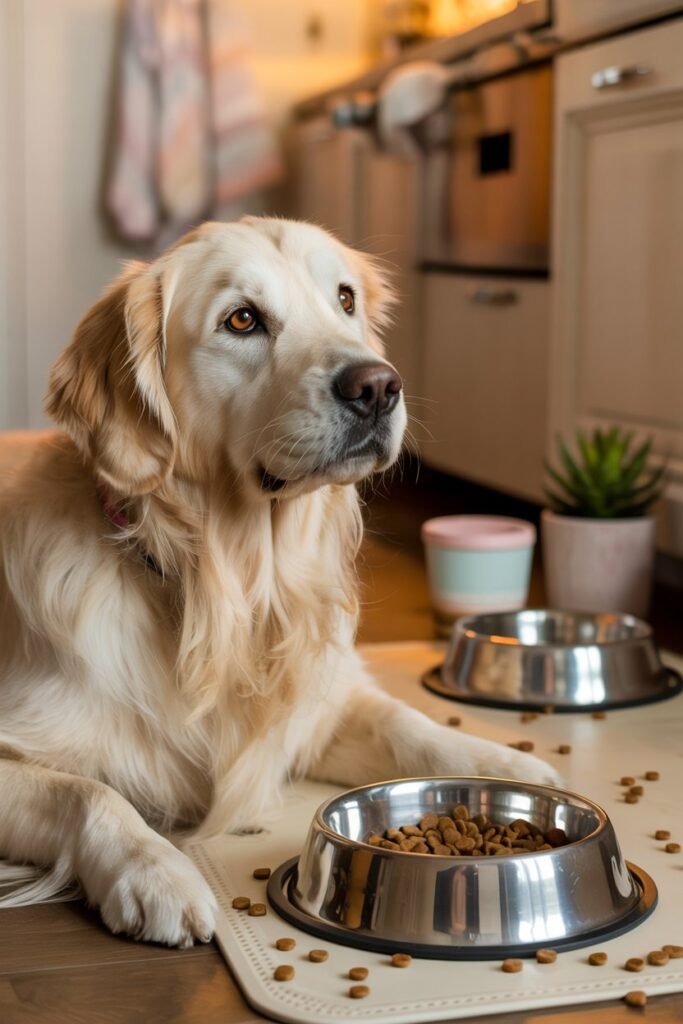
Almost every dog passes gas, but persistent, smelly flatulence can mean something else is going on usually related to their diet.
Common causes include:
- sudden diet changes
- table scraps that don’t sit well
- food intolerances
- eating too fast
- low-quality fillers in kibble
If the smell seems stronger than usual, it may be worth looking at what they’re eating or discussing a sensitive-stomach diet with your vet.
4. Sweat, Moisture & Everyday Dog Life

Dogs don’t sweat the same way we do, but the areas they do sweat like their paws and bellycan leave a scent behind, especially on rugs and couches.
Moisture amplifies dog smell.
A slightly damp dog (after rain, baths, or morning dew) releases a strong “wet dog” odor that sticks to:
- carpets
- blankets
- furniture
- your clothes if they climb into your lap
If your dog sleeps on the same spot every day, that area absorbs more scent than you realize.
5. Urine Residue
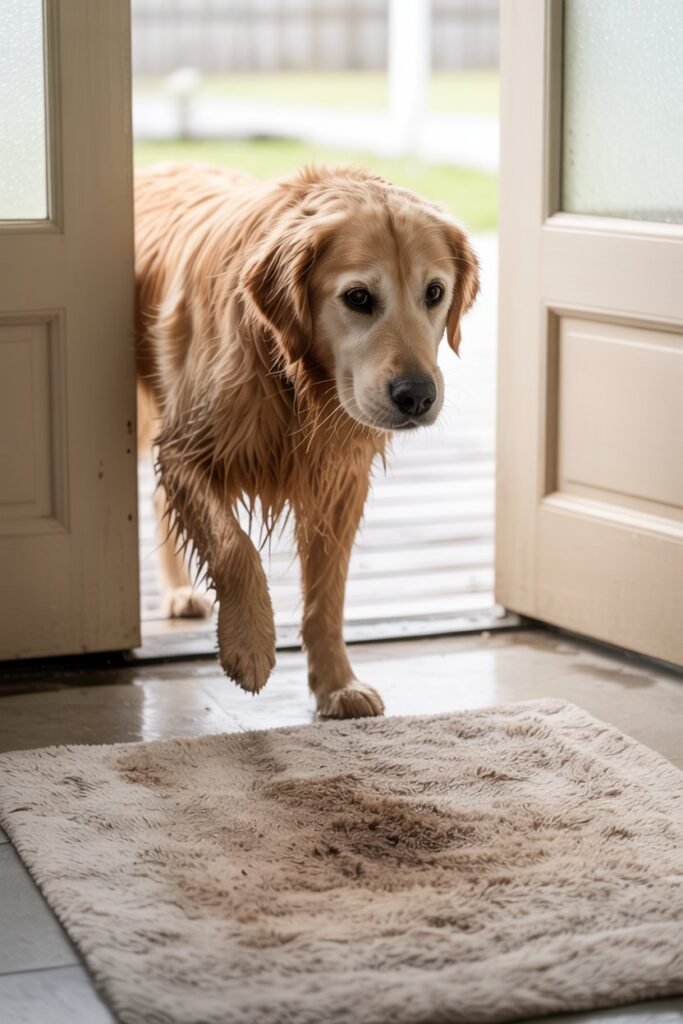
Most dogs don’t fully “drip,” but even a tiny bit of urine caught in their fur can transfer onto bedding or carpet.
And here’s something many dog owners don’t know:
Dried urine smells much stronger than fresh urine.
It becomes concentrated over time and sinks deep into fibers, which is why you can’t always see or find the source but you can definitely smell it.
6. Old Saliva, Tear Stains & Damp Fur
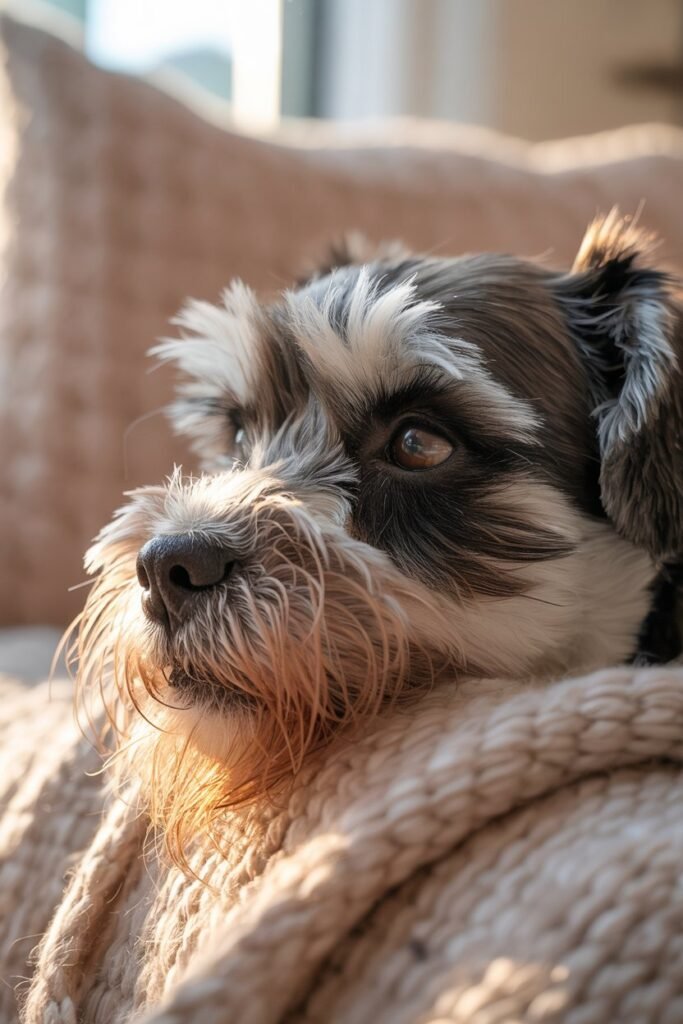
Dogs with longer hair around the mouth or eyes collect drool and tear stains throughout the day.
Bacteria grow in those damp areas, and the smell eventually spreads to furniture wherever their face rests.
Breeds with beards or folds (like Poodles, Schnauzers, Shih Tzus, or Bulldogs) need extra attention here.
7. Underlying Health Issues
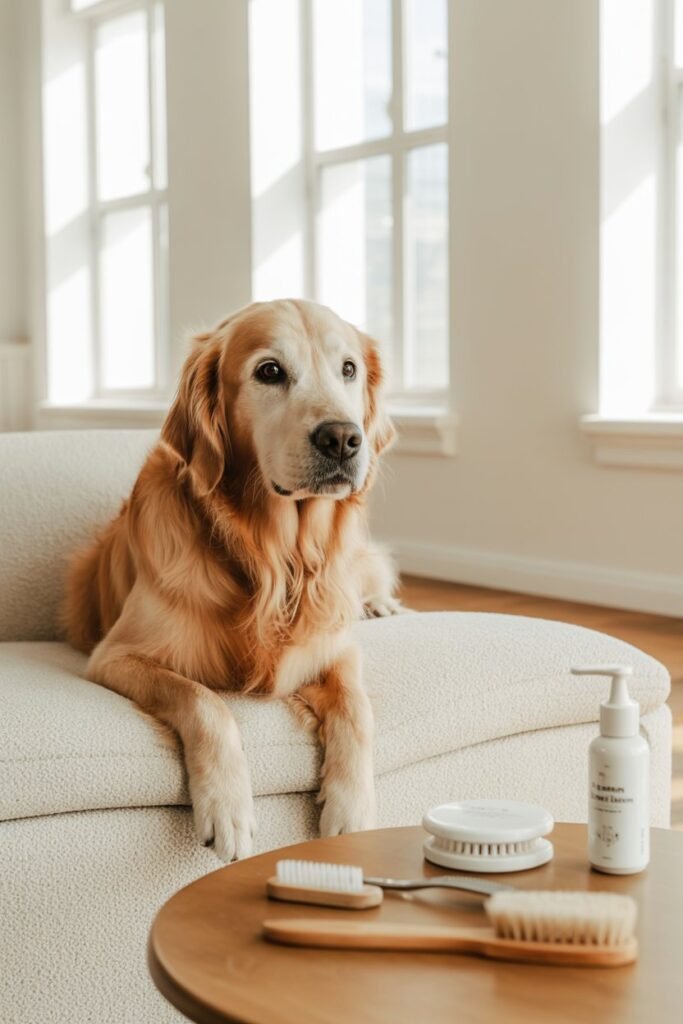
Odors can sometimes be the body’s way of telling you something needs attention.
Common medical-related smells include:
- sour odors from infected skin
- metallic smells from dental disease
- fishy smells from anal glands
- yeasty scents from allergies
If the odor seems unusually strong or persistent, a vet check can save both your home and your dog a lot of discomfort.
How To Get Rid Of Dog Smell In Your Home: 17 Easy, Real-Life Hacks
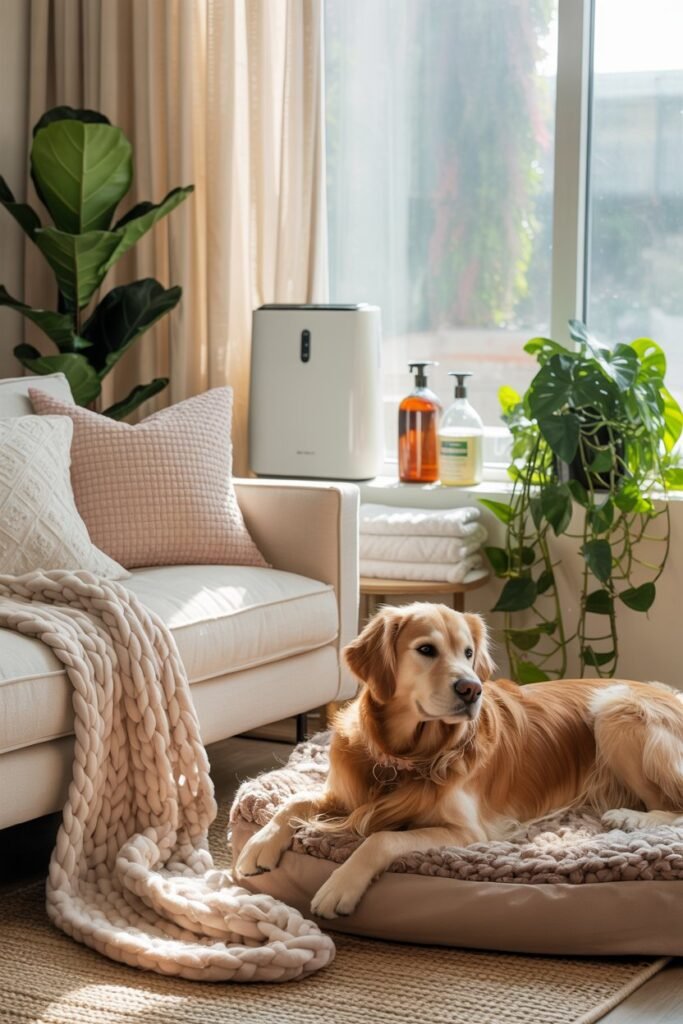
These are the exact habits that have kept my home smelling fresh through muddy paws, rainy-day walks, wet fur zoomies, and every couch-cuddle moment in between.
Every tip is simple, affordable, and doable no need to turn your home into a science lab or spend all weekend cleaning.
1. Wash Dog Bedding Weekly (Non-Negotiable)
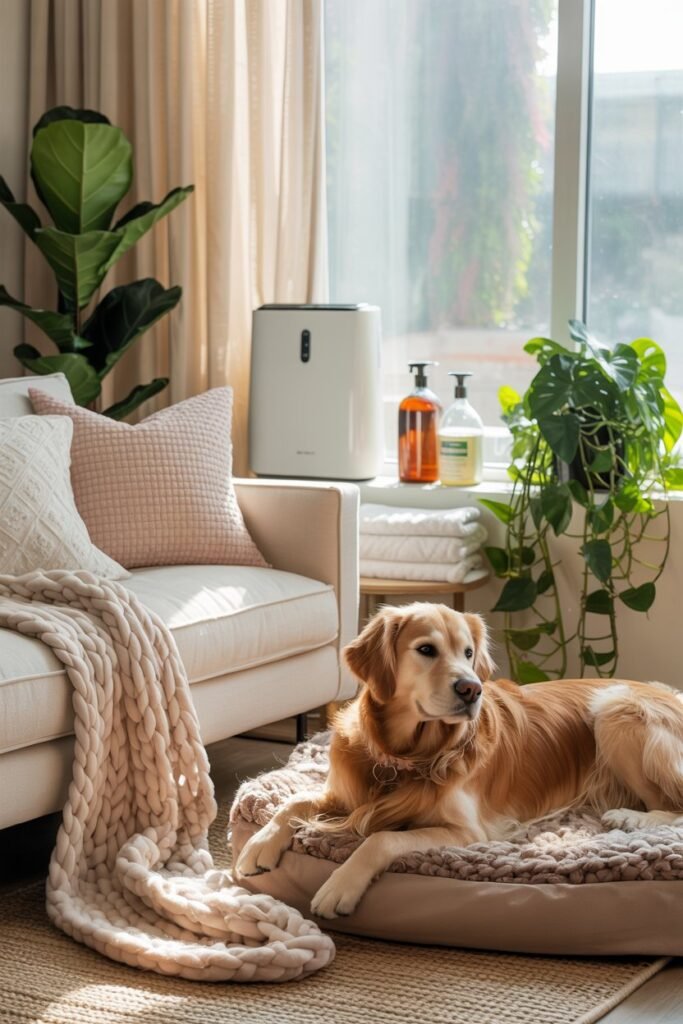
Your dog’s bed is the #1 source of lingering odor worse than carpets, worse than paws, worse than anything.
Natural oils, drool, paw sweat, and whatever your dog rolls in outside all end up here.
Wash their bedding once a week with:
- warm water
- a pet-safe, enzyme-based detergent
- an extra rinse cycle if the smell is stubborn
If the cover is removable, wash the inner cushion once a month too. Trust me this alone makes a dramatic difference.
2. Vacuum Every 2–3 Days to Stop “Scent Spreaders”

Dog hair is a moving air freshener but in the worst way.
Hair traps odor, so every time it floats through your home, it spreads the smell.
Focus on:
• carpets
• furniture
• corners
• stairs
• under couches (this is a smell hotspot)
Even a quick 5–10 minute vacuuming routine resets the entire space.
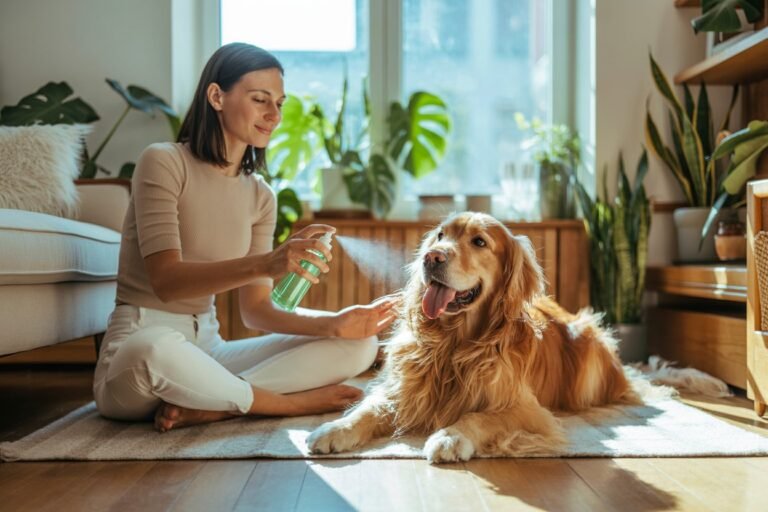
3. Refresh Fabrics With a Light, Pet-Safe Mist
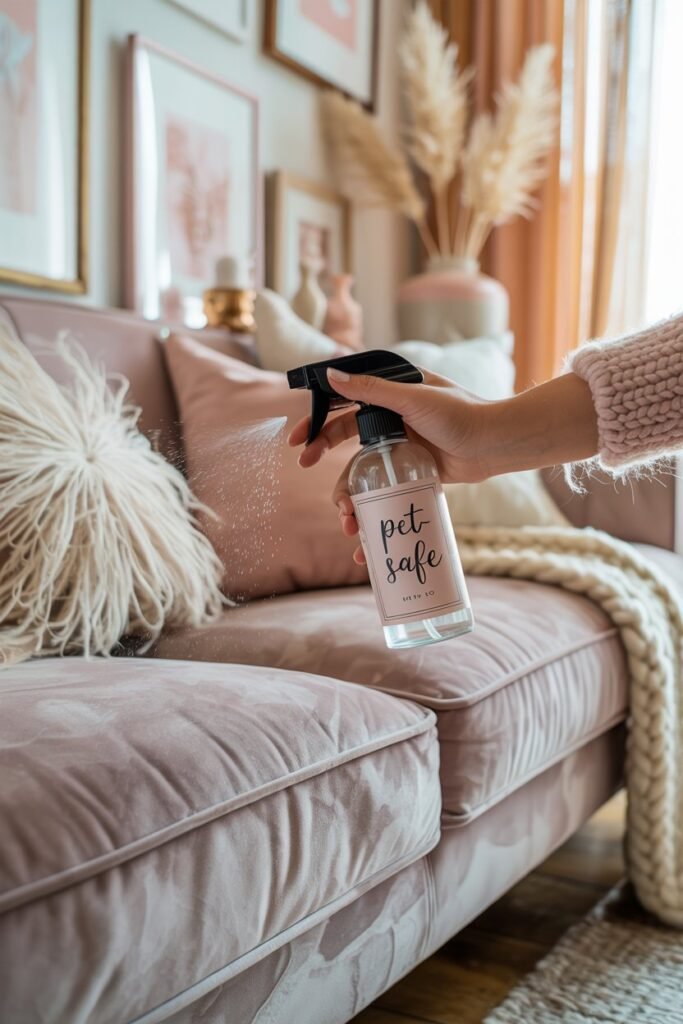
Most homes don’t smell like “dog” they smell like dog on fabric.
Make your own gentle refresher:
- Water
- A splash of white vinegar
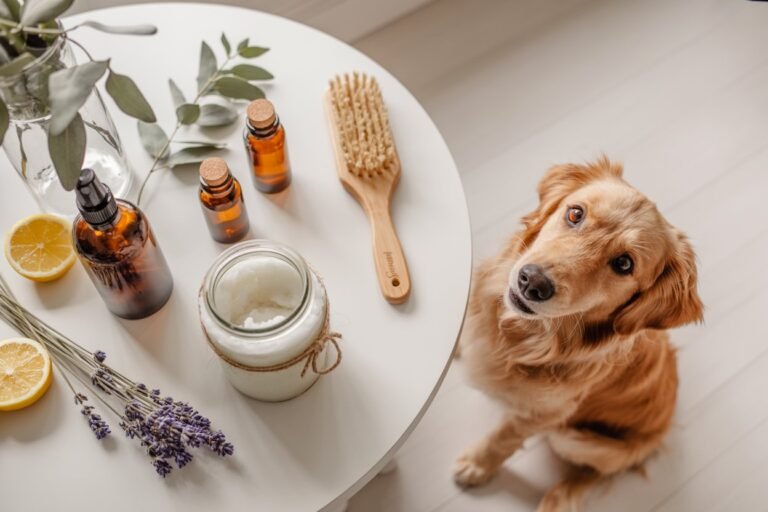
- A few drops of pet-safe essential oils (lavender or chamomile)
Lightly mist couches, curtains, throw pillows, and rugs never soak them.
It lifts odors instead of covering them.
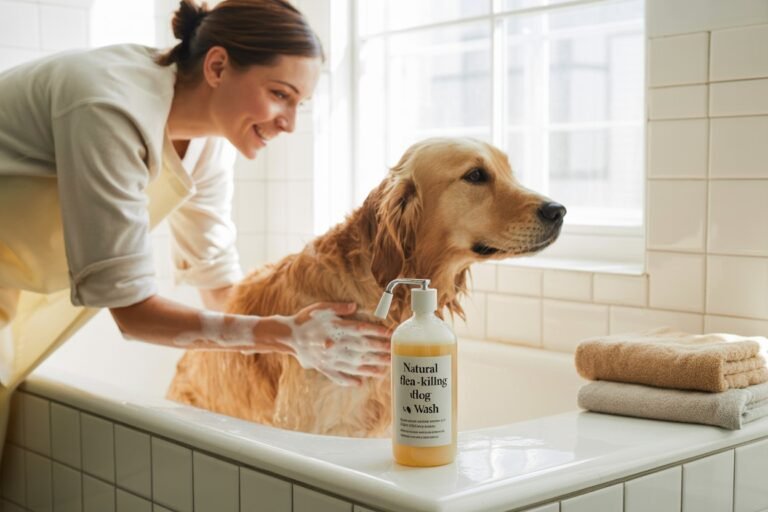
4. Groom Your Dog Often (It’s Odor Prevention)
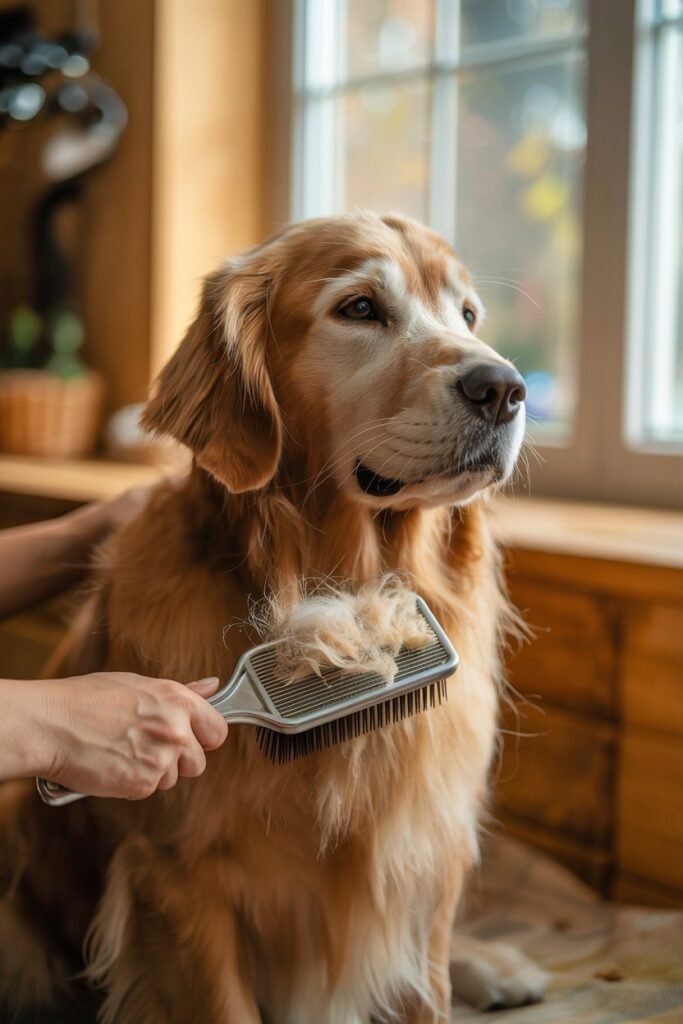
Brushing isn’t just about shedding it removes dirt, dust, and outdoor smells before they settle around your home.
Weekly routine:
• Brush 3–5 times per week
• Bath every 3–4 weeks
• Use a quick-dry towel after rainy walks
A well-groomed dog smells sweeter, and so does your home.
5. Clean Paws After Every Walk

Paws carry: mud, bacteria, pollen, puddle water, grass smell, and everything else outdoors.
A simple wipe with a damp cloth or pet wipe prevents 80% of those odors from entering your house.
Bonus: It reduces allergens and keeps your floors cleaner too.
6. Use an Air Purifier With Carbon + HEPA
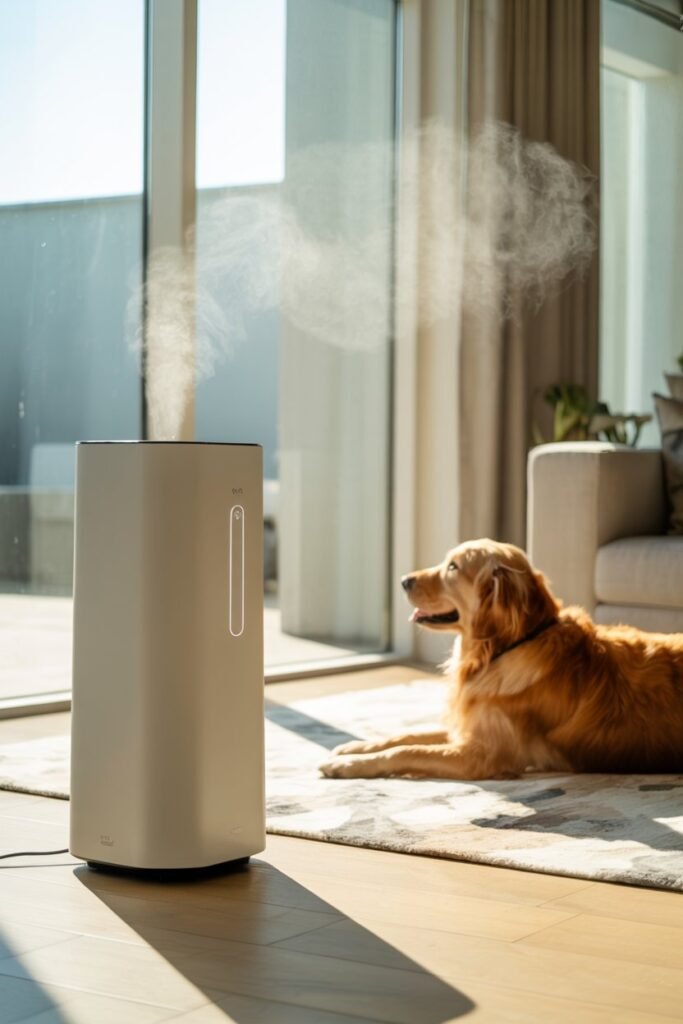
This is the “silent helper” every dog home needs.
A good purifier doesn’t just filter hair it removes odor molecules and stale air.
Place it where your dog spends most time:
• living room
• bedroom
• near their bed
You’ll notice the air feels lighter within a day.
7. Wash Couch Covers, Throws, and Pillows Regularly
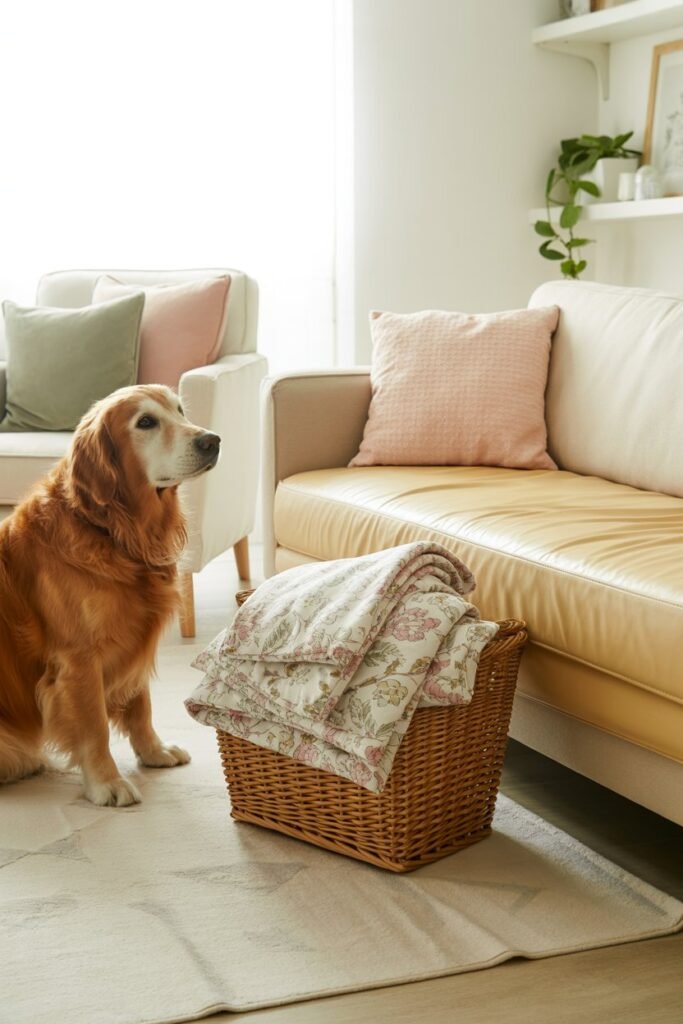
If your dog lounges on the couch (let’s be honest most do), those fabrics absorb everything.
Schedule a wash every 1–2 weeks using warm water and a mild detergent.
If you can’t wash a piece (like a fixed cushion), use a handheld steamer it kills bacteria and neutralizes odors.
8. Deep Clean Carpets Monthly
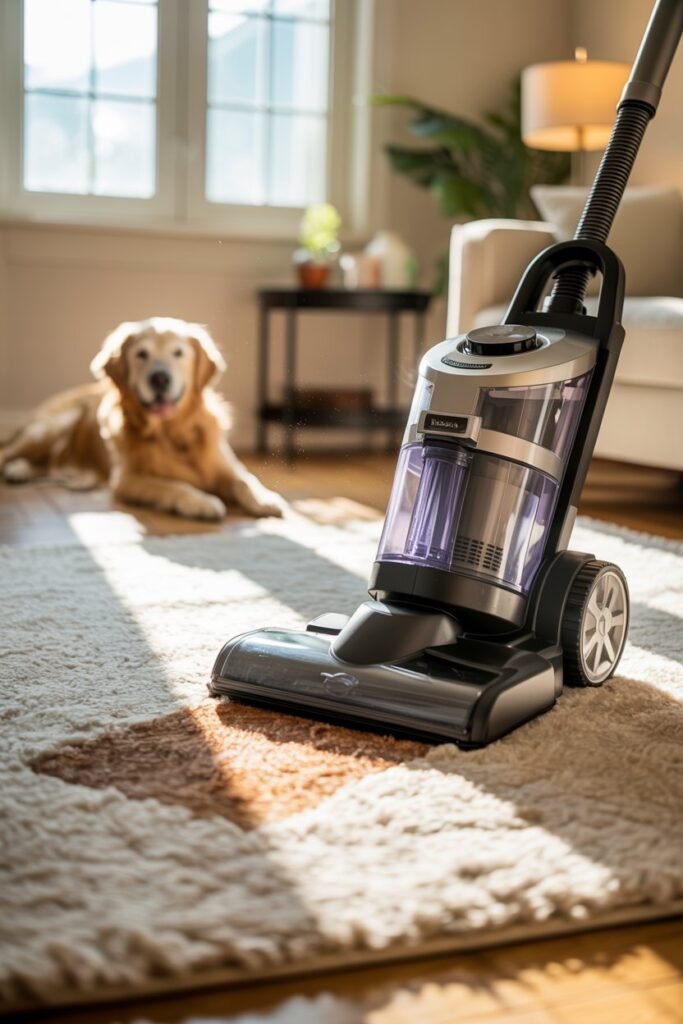
Carpets are odor sponges.
A once-a-month deep clean with a steam cleaner or carpet extractor removes the odors you can’t vacuum out.
You don’t need expensive equipment renting or using a compact home unit works perfectly.
9. Mop With a Pet-Friendly Deodorizing Solution
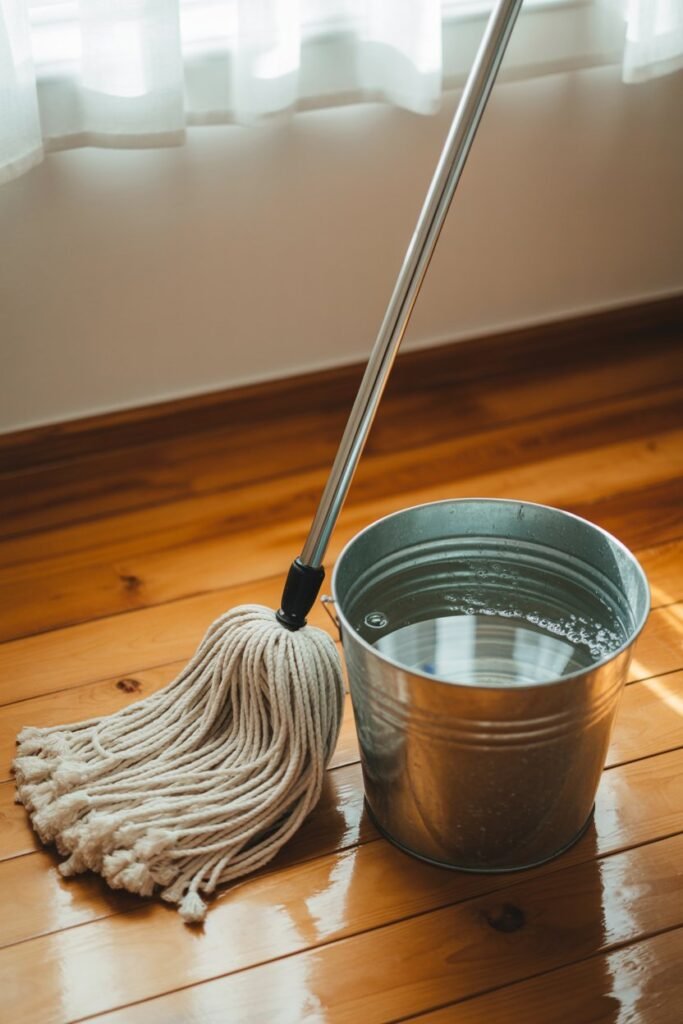
A simple mix of warm water + vinegar + a tiny drop of dish soap keeps floors fresh without harsh chemicals.
This cuts through residue from paws, food drips, drool, and everyday grime.
Avoid heavy fragrances they mix with dog smells and make things worse.
10. Use Baking Soda on Soft Surfaces (The Secret Weapon)
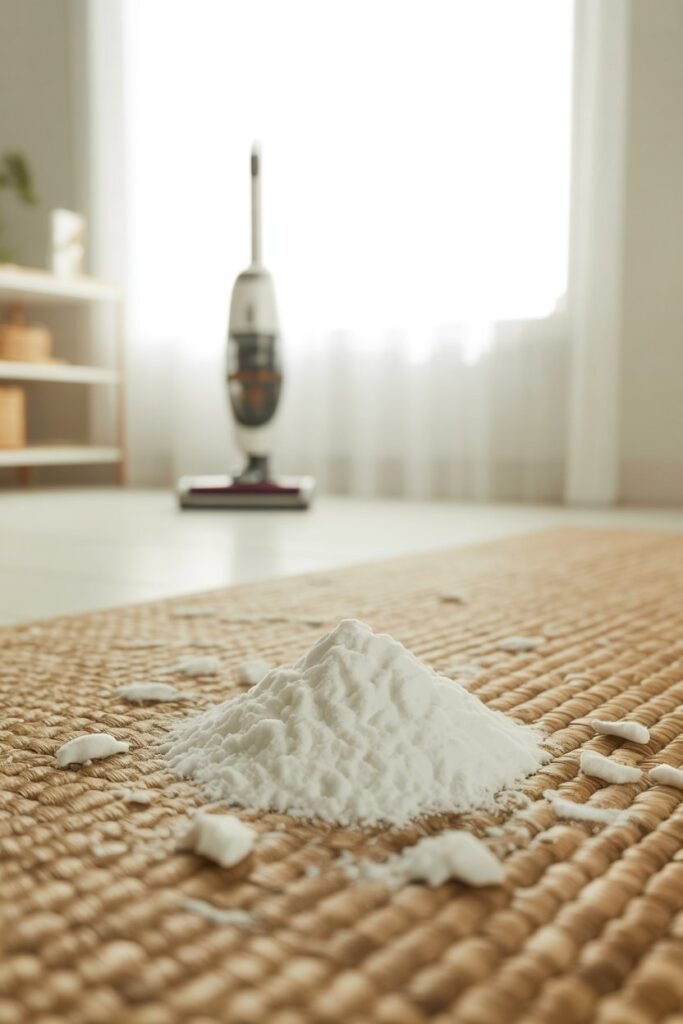
Baking soda absorbs odor at the molecular level.
Sprinkle it on:
• rugs
• sofas
• dog beds
• car seats
• any high-smell area
Let it sit for 30–60 minutes, then vacuum. It leaves everything crisp and clean.
11. Keep Toys Clean (They Hold More Smell Than You Think)
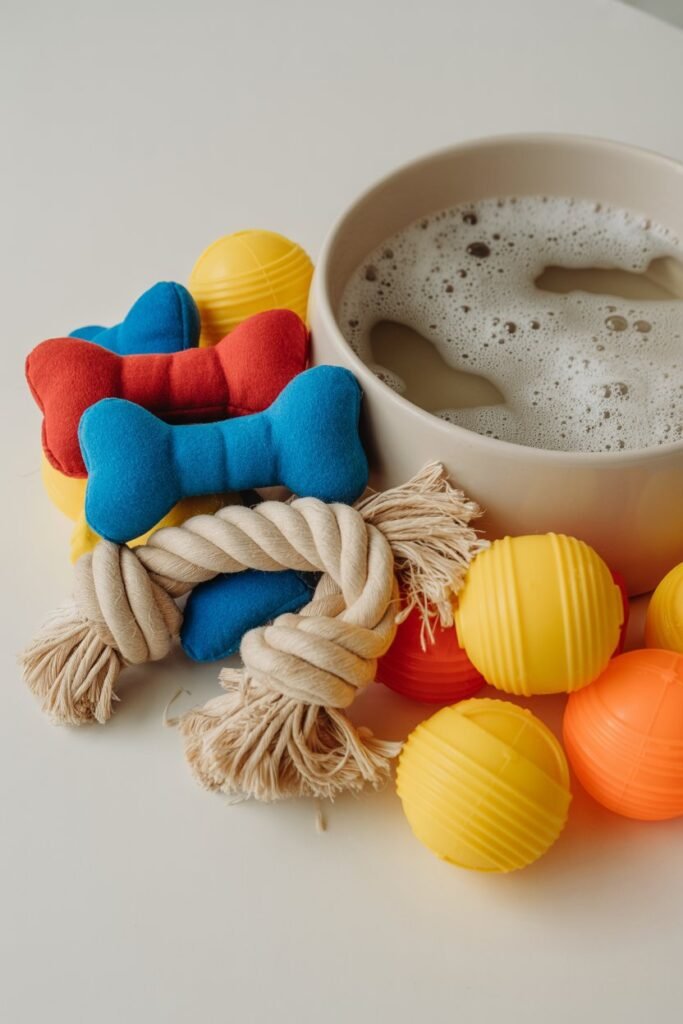
Drool + fabric + dust = bacteria party.
Rotate toys weekly:
- Fabric toys → washing machine
- Rubber or silicone toys → warm soapy soak
- Rope toys → rinse + microwave 30 seconds (kills bacteria!)
Your dog will enjoy them more, and your home will smell fresher.
12. Open Windows for 10 Minutes a Day
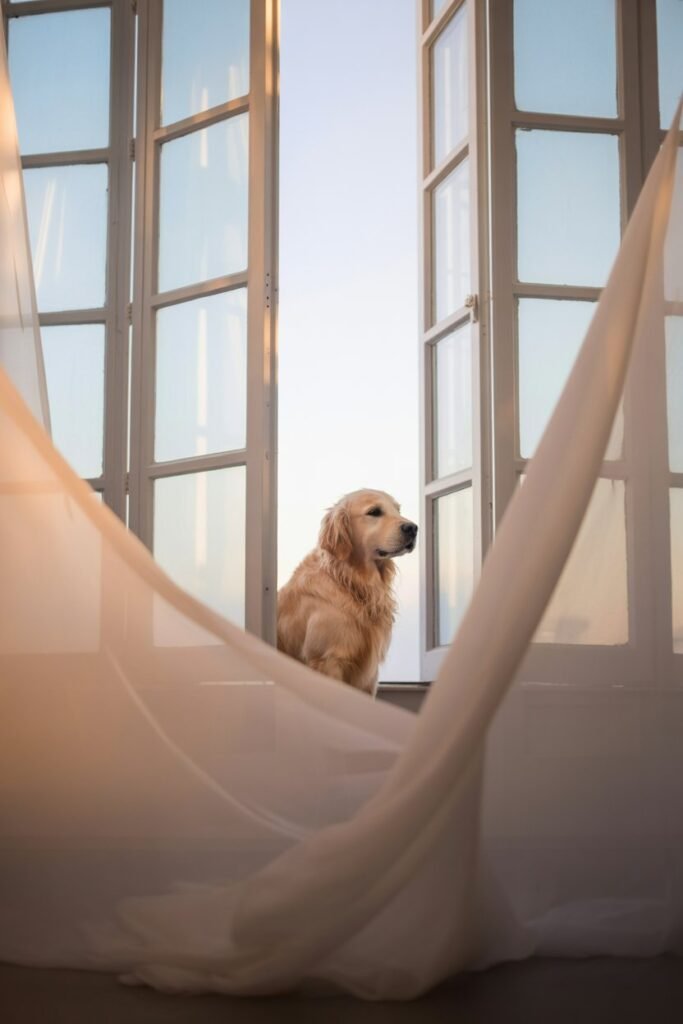
A short cross-breeze resets indoor air far better than any spray can.
Even on cooler days, crack windows on opposite sides of your home for 5–10 minutes.
It lifts trapped smells instantly.
13. Use Enzymatic Sprays for Odor “Hot Spots”
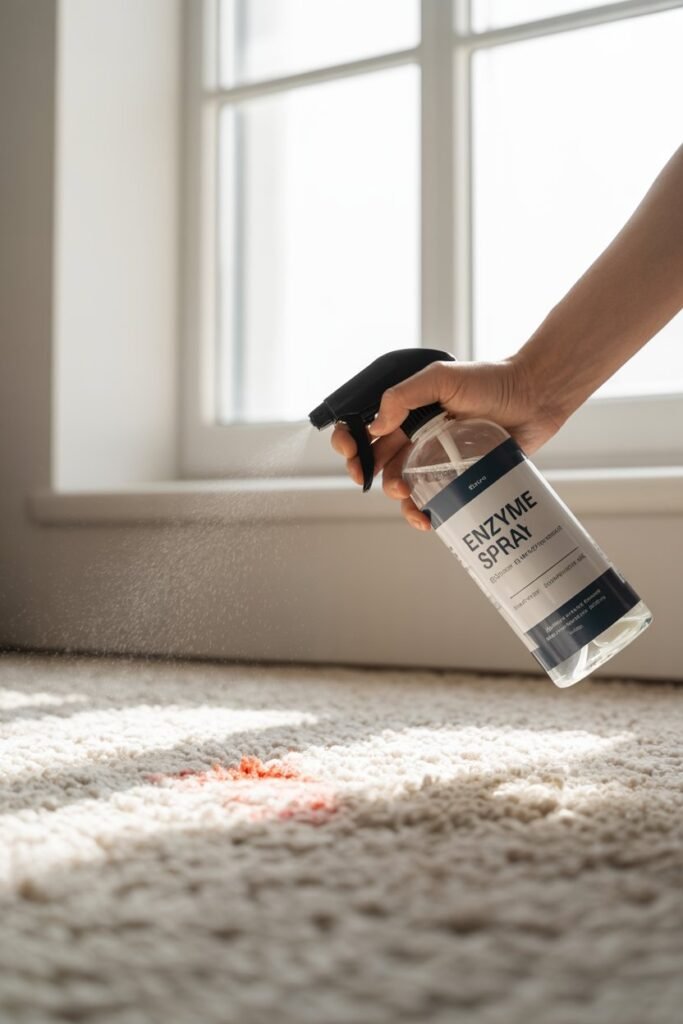
Unlike traditional cleaners, enzymes break down the actual odor-causing bacteria.
Use on:
• old pee spots
• couches
• carpets
• crate mats
• dog beds
It removes the smell completely instead of covering it.
14. Wash Collars, Harnesses & Leashes
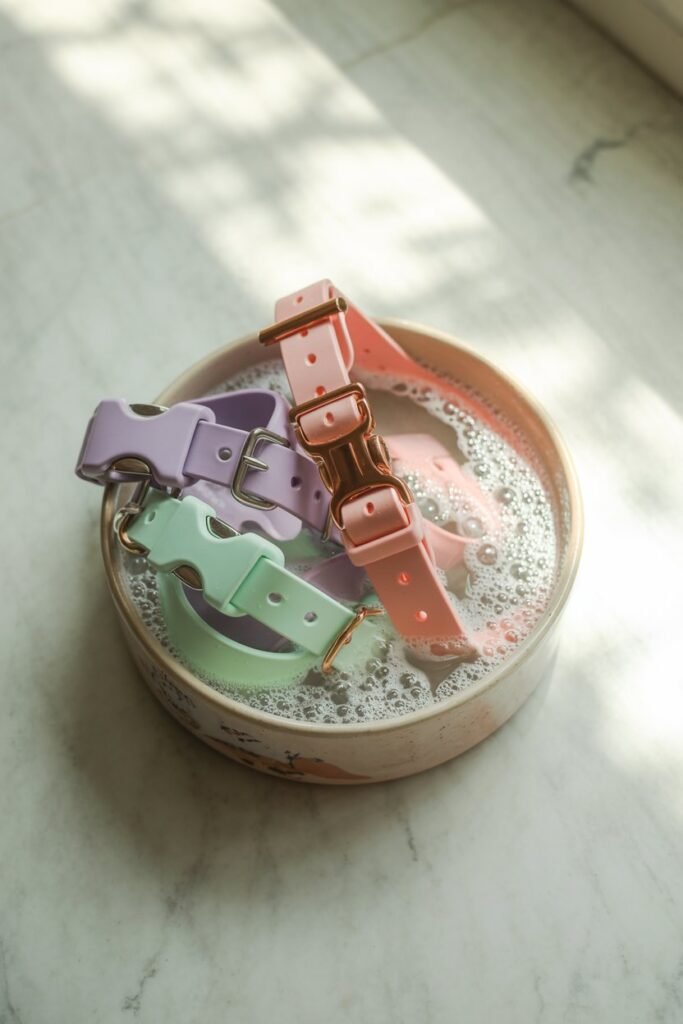
These sit against your dog’s skin, absorbing sweat and natural oils.
A smelly collar can make your entire dog smell worse.
Wash them every 1–2 weeks with warm soapy water and air dry completely.
15. Clean Dog Bowls & Feeding Area Daily
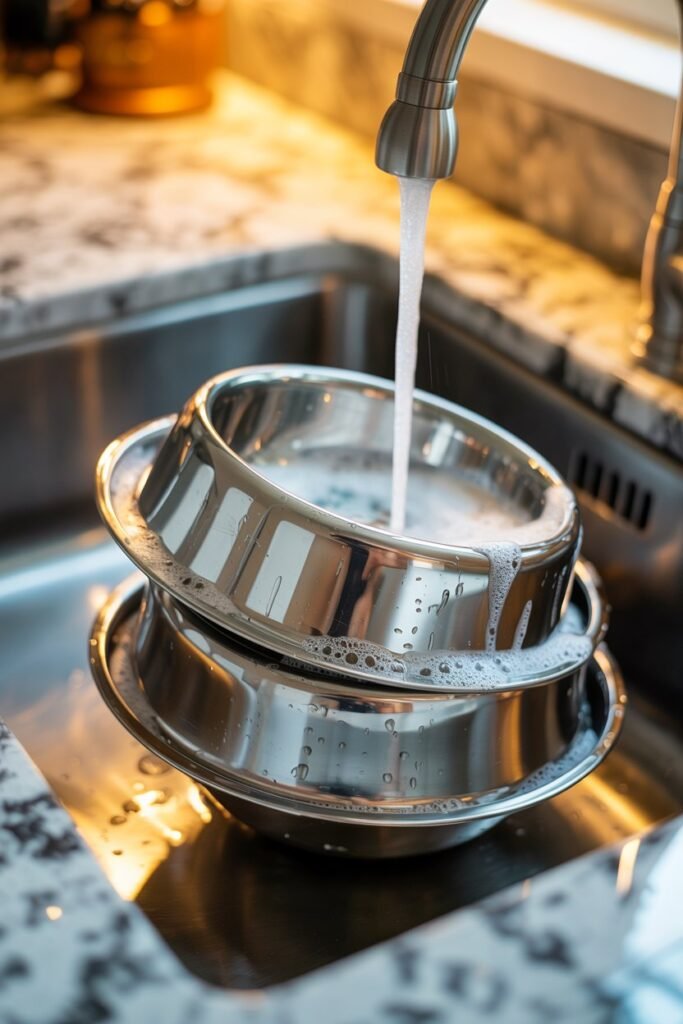
Food residue, drool, and splashed water turn into musty odors quickly.
Daily:
• wash bowls
• wipe the mat
• dry the surrounding floor
Weekly:
• deep clean bowls with hot water + baking soda
Healthy dog → healthier smell.
16. Seek Out Hidden Smell Zones
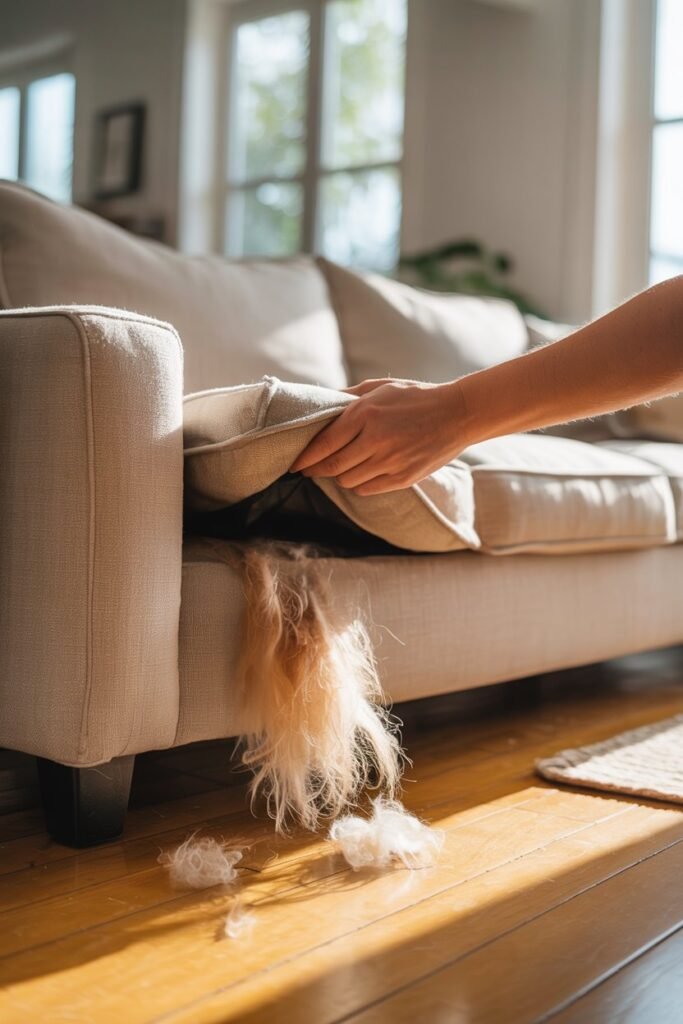
Smell likes to hide in places you’d never expect:
- under couch cushions
- behind furniture
- on baseboards
- in corners with built-up hair
- under rugs
- at door entryways
A quick weekly sweep of these areas keeps odors from sneaking back.
17. Stay Consistent With Vet-Approved Grooming
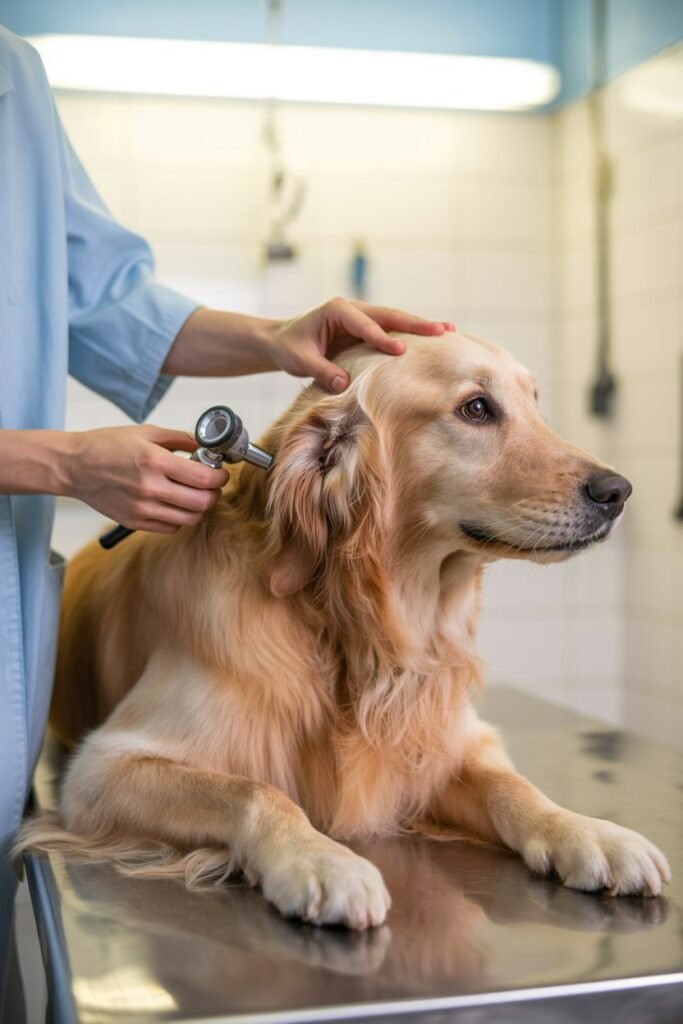
If your home still smells even after cleaning, the odor may be coming directly from your dog due to:
• ear issues
• allergies
• dental problems
• anal glands
• skin infections
A quick checkup ensures your dog is comfortable and that stubborn odor disappears at the source.
Conclusion
Keeping a home fresh when you live with a dog isn’t about perfection it’s about small, consistent habits that make everyday life feel cleaner and more comfortable for both you and your pup.
With a little routine, a few smart products, and a bit of love, your home can smell welcoming again, without ever hiding the fact that a happy dog lives there.
And honestly, that’s the best kind of home there is.