Signs of Food Allergies in Dogs

My dog Bailey used to scratch her ears so much that I’d hear her collar jingling from the next room, night after night. I tried new shampoos, new bedding, even a fancy air purifier before a vet finally asked me one simple question: “What are you feeding her?” That conversation changed everything.
It turned out Bailey wasn’t dealing with fleas or dry skin at all she had a food allergy that had been quietly making her miserable for months.
If you’re here because your pup has been itchy, gassy, or just not quite themselves, I want you to know you’re not alone, and by the end of this post, you’ll know exactly what to look for.
What Is a Food Allergy in Dogs, Really?
A food allergy happens when your dog’s immune system mistakes a specific protein in their food for a threat. Instead of digesting it like normal, the body launches a defensive response, and that response is what shows up as itching, redness, tummy trouble, or worse.
It’s a bit like your dog’s body is sounding an alarm over something that shouldn’t actually be dangerous at all.
Unlike a one-time upset stomach from eating something they shouldn’t have (looking at you, garbage-raiding pups), a true food allergy tends to be chronic.
It builds slowly, often over months or even years of eating the same ingredient, and it doesn’t go away on its own. That’s part of why food allergies are so tricky by the time you notice symptoms, your dog may have been eating the culprit ingredient for a long time.
The good news? Food allergies are manageable. Once you identify the trigger and remove it from your dog’s diet, most dogs bounce back beautifully.
Food Allergy vs. Food Intolerance: Why the Difference Matters
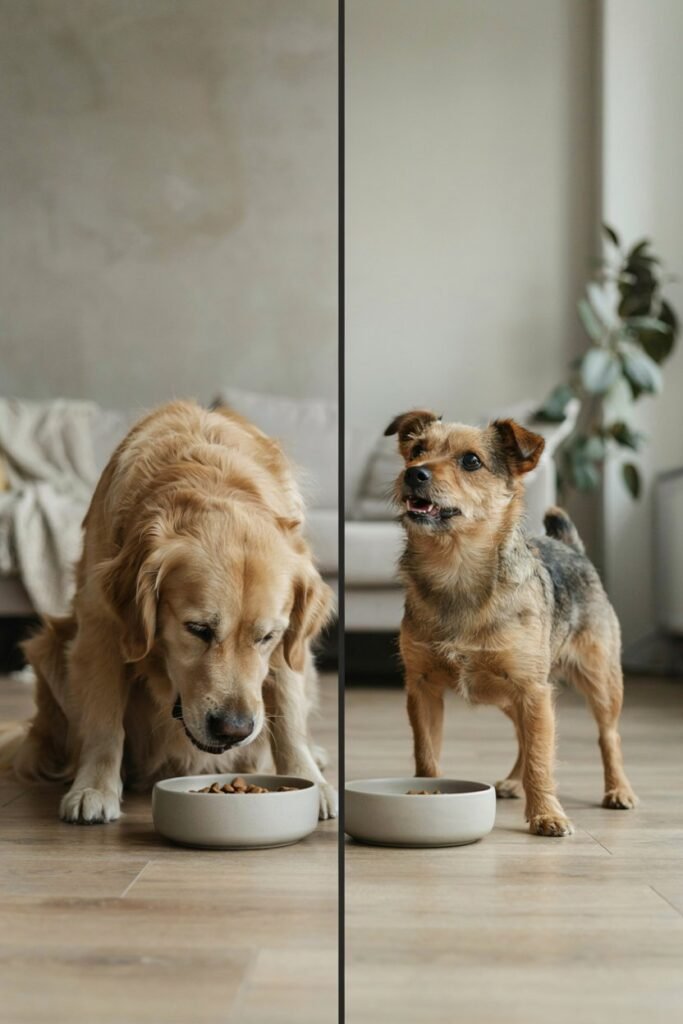
Before we go further, let’s clear up some confusion, because these two get mixed up constantly.
Food allergy is an immune system reaction. It involves antibodies and inflammation, and even a tiny amount of the allergen can trigger a response.
Food intolerance is a digestive issue, not an immune one. Think of it like lactose intolerance in people the body simply struggles to break down a certain ingredient, leading to gas, loose stools, or bloating, but without the immune involvement or the skin symptoms.
Why does this matter to you as a dog mom? Because the signs can overlap, but the treatment approach and the urgency can differ.
Allergies tend to cause more skin-related misery and can sometimes escalate, while intolerances are usually just uncomfortable rather than dangerous. Either way, your dog deserves relief, and knowing which one you’re dealing with helps your vet build the right plan.
The Most Common Signs of Food Allergies in Dogs
This is the part most of us are searching for at 11 p.m. with our dog curled up next to us, scratching. Let’s go through it symptom by symptom so you can start connecting the dots.
Skin and Coat Symptoms
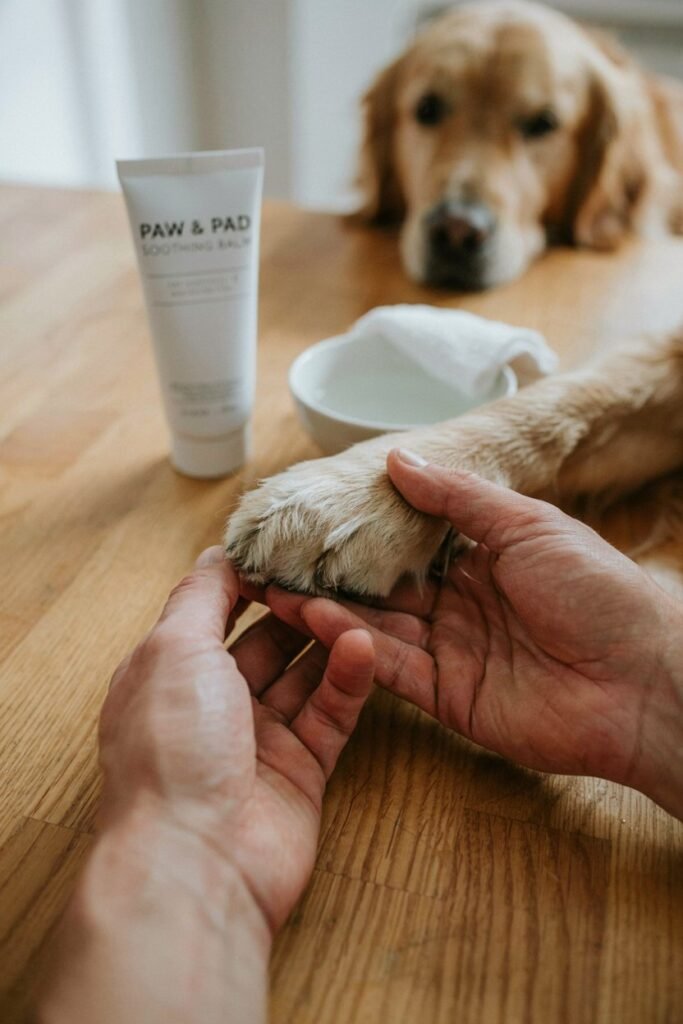
Skin issues are, by far, the most common way food allergies show up in dogs. If your pup’s skin could talk, here’s what it might be saying:
- Constant itching (pruritus) — especially around the paws, belly, armpits, groin, and face. This is often the very first sign owners notice.
- Red, inflamed skin — patches that look angry or irritated, sometimes with a rash-like appearance.
- Hot spots — those raw, moist, painful patches that seem to appear overnight and that your dog just won’t leave alone.
- Hair loss or thinning fur — usually from excessive licking, scratching, or chewing at one spot.
- Recurrent skin infections — bacterial or yeast infections that keep coming back no matter how many rounds of medication your vet prescribes.
- A greasy or unusually smelly coat — sometimes caused by secondary yeast overgrowth linked to chronic allergies.
- Chronic paw licking or chewing — dogs with food allergies often obsessively lick their paws, sometimes leaving them stained a rusty brown color from saliva.
If you find yourself constantly reaching for the anti-itch spray or scheduling vet visits for “just another skin thing,” a food allergy could be the missing puzzle piece.
Digestive Symptoms

Food allergies don’t just affect the skin they can hit the gut hard too. Watch for:
- Chronic soft stool or diarrhea that doesn’t resolve with typical treatments
- Frequent vomiting, especially after meals
- Excessive gas that seems out of the ordinary for your dog
- Increased frequency of bowel movements — some dogs with food allergies need to go out far more often than usual
- Poor appetite or, alternatively, an oddly increased appetite as the gut struggles to absorb nutrients properly
- Weight loss or a dull, unhealthy body condition despite eating normally
Digestive symptoms are easy to write off as “sensitive stomach,” but if they’re persistent and tied to certain foods, they’re worth a closer look.
Ear and Eye Symptoms
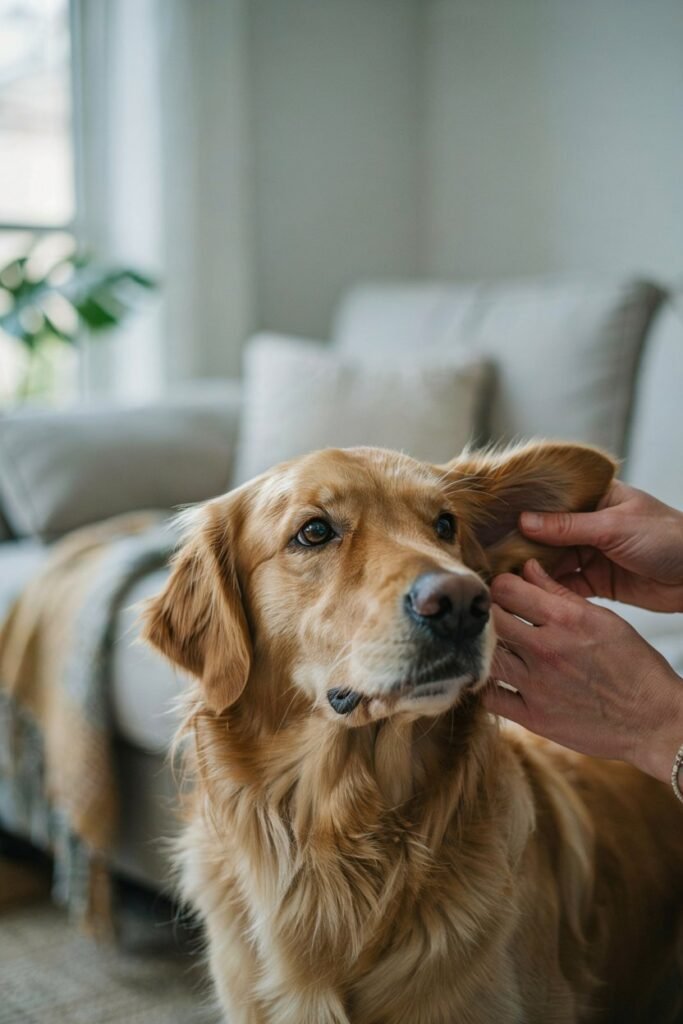
This one surprises a lot of pet owners. Recurring ear infections are one of the most classic and most overlooked signs of a food allergy.
- Chronic ear infections — red, inflamed, waxy, or smelly ears that keep coming back
- Head shaking or tilting from ear discomfort
- Watery or itchy eyes
- Dark staining under the eyes, especially in lighter-coated breeds
If your dog has been on ear infection medication more times than you can count on one hand, please ask your vet about food allergies. This was actually the very sign that finally led Bailey’s vet to connect the dots.
Behavioral Changes to Watch For

Because allergies are physically uncomfortable, they often show up in behavior too, not just symptoms you can see:
- Restlessness or difficulty settling down, especially at night when itching tends to worsen
- Increased irritability or grumpiness an itchy, uncomfortable dog is rarely a happy dog
- Excessive licking of paws, flanks, or the base of the tail
- Rubbing their face along furniture or carpet to relieve itchiness
- Reluctance to be touched in areas that are inflamed or sore
These behavioral shifts are your dog’s way of telling you something is wrong, even if they can’t point to exactly what.
The Most Common Food Allergens in Dogs
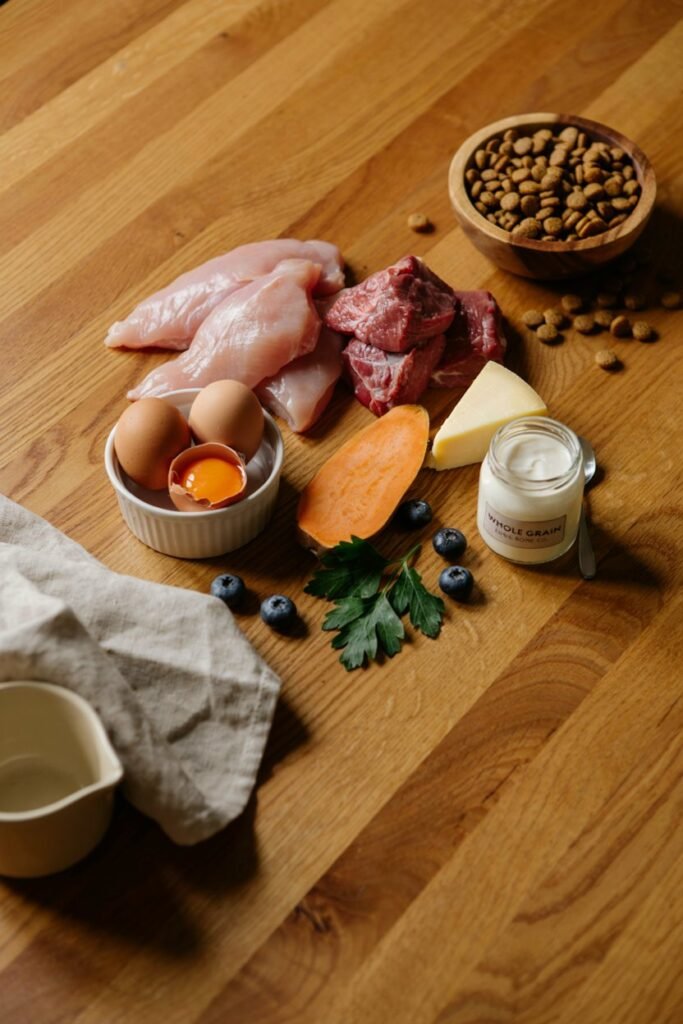
Here’s something that surprises a lot of new dog owners: grain-free doesn’t automatically mean allergy-friendly, and “beef” isn’t necessarily the safest protein just because it seems simple.
The most common allergens in dogs are actually proteins your dog has likely eaten a lot of over their lifetime, since repeated exposure is often what triggers the immune response in the first place.
The most frequent culprits include:
- Beef
- Dairy products
- Wheat
- Chicken
- Egg
- Lamb
- Soy
Notice a theme? These are staple ingredients in many popular commercial dog foods, which is exactly why they show up so often as allergens dogs simply eat them more.
How Vets Diagnose Food Allergies
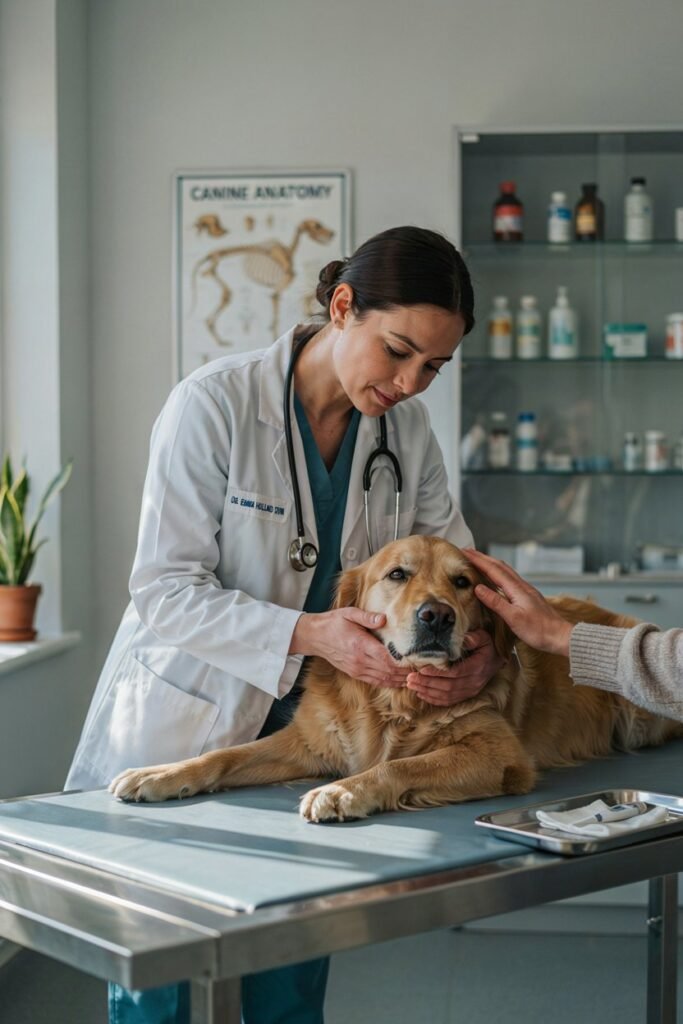
If you suspect your dog has a food allergy, please don’t just start swapping foods randomly (I know, it’s so tempting when you want relief fast). The gold standard for diagnosis is called an elimination diet trial, and here’s generally how it works:
- Your vet selects a novel protein or hydrolyzed protein diet — meaning an ingredient your dog has never eaten before, or one broken down so small the immune system can’t recognize it as a threat.
- Your dog eats only this diet for 8 to 12 weeks. No treats, no table scraps, no flavored medications during this window — consistency is everything here.
- You track symptoms closely during the trial to see if they improve.
- Your vet may reintroduce the old diet afterward to confirm symptoms return, which helps confirm the diagnosis.
- Ingredients are reintroduced one at a time to pinpoint the exact trigger, if you and your vet choose to go that route.
This process takes patience, I won’t sugarcoat that. But it’s the most reliable way to actually know what’s causing your dog’s discomfort, rather than guessing and switching foods over and over.
How to Prevent Food Allergies From Harming Your Dog

Once you know what’s triggering your dog’s allergy or if you simply want to be proactive here’s how to protect them going forward.
1. Read every label, every time. Manufacturers sometimes change formulas without much fanfare. A food that was safe for your dog last year may not be safe today.
2. Stick to a limited-ingredient diet when possible. Fewer ingredients mean fewer chances for a hidden allergen to sneak in.
3. Avoid rotating proteins constantly “just because.” While variety sounds healthy, frequent protein rotation can actually increase the risk of developing new sensitivities over time.
4. Be cautious with treats. Many dogs get “accidentally” exposed to allergens through treats, dental chews, or flavored medications rather than their actual meals.
5. Keep a food and symptom journal. Jot down what your dog eats and any symptoms you notice. Patterns often become obvious once it’s written down in front of you.
6. Avoid table scraps entirely if your dog has known allergies. Even a small bite of the wrong food can trigger a flare-up that takes weeks to calm down.
7. Work with your vet on a long-term diet plan, rather than switching foods on your own every time a new symptom pops up.
8. Support gut health. A healthy gut lining may help reduce the severity of allergic reactions over time. Ask your vet about appropriate probiotics for dogs.
9. Introduce new foods slowly, one at a time, especially with puppies, so you can catch a reaction early before it becomes chronic.
10. Don’t ignore small, recurring symptoms. Occasional ear infections, a bit of scratching, or the occasional soft stool are often written off as “normal,” but they add up to a pattern worth investigating.
Are Certain Breeds More Prone to Food Allergies?

While any dog of any breed can develop a food allergy, some breeds do seem to be more predisposed than others. If your dog falls into one of these categories, it doesn’t mean an allergy is guaranteed, but it’s worth keeping a slightly closer eye on things.
- Labrador Retrievers — one of the most commonly affected breeds, likely due to how popular and widely bred they are
- Golden Retrievers — prone to skin sensitivities in general, which can overlap with food allergy symptoms
- French Bulldogs and English Bulldogs — their skin folds already make them prone to irritation, so an underlying food allergy can make things worse
- West Highland White Terriers — known for chronic skin issues that are sometimes tied to diet
- Cocker Spaniels — frequently affected by chronic ear infections, which as we covered, can be a hidden sign of food allergies
- German Shepherds — often prone to digestive sensitivities alongside skin issues
Again, breed is just one small piece of the puzzle. Genetics play a role, but so does what’s actually in the bowl day after day.
Puppies vs. Adult Dogs: Does Age Matter?
Food allergies can technically develop at any age, but there are a few things worth knowing about timing.
Puppies are less likely to develop food allergies early on simply because they haven’t had years of repeated exposure to a single protein yet. That said, it’s not impossible, especially if they’re started on the same formula from birth through adulthood without variation.
Most food allergies actually show up in dogs between 1 and 3 years old, though they can absolutely develop later in life too, sometimes even in senior dogs who have eaten the same food for years without issue and then suddenly start reacting.
This is one of the more confusing parts of food allergies your dog doesn’t have to be a puppy trying something new for the first time. They can develop a reaction to a food they’ve eaten happily for years.
This is exactly why “but she’s always eaten this” isn’t a reason to rule out a food allergy. Sometimes long-term exposure is precisely the cause.
Common Myths About Food Allergies in Dogs
Let’s clear up a few things I wish someone had told me earlier, because misinformation is everywhere when it comes to pet food.
Myth: Grain-free food prevents allergies. Truth: Grains are actually a less common allergen than proteins like beef, chicken, or dairy. Grain-free diets don’t inherently reduce allergy risk, and in some cases, they simply swap grains for other ingredients like peas or lentils, which can carry their own issues.
Myth: If my dog has always eaten a food fine, they can’t suddenly be allergic to it. Truth: As we just covered, allergies often develop after repeated, long-term exposure. A dog can eat the same food happily for years and then develop a reaction.
Myth: Raw diets are automatically allergy-free. Truth: Raw diets still contain proteins, and if that protein is the allergen, a raw diet won’t solve the problem. The ingredient matters more than the preparation method.
Myth: A food allergy always causes vomiting or diarrhea. Truth: Many dogs with food allergies show skin symptoms only, with no digestive issues at all. Don’t rule out a food allergy just because your dog’s stomach seems fine.
Myth: You can diagnose a food allergy with a blood or saliva test. Truth: While these tests are marketed for pet owners, they’re widely considered unreliable by veterinary dermatologists. The elimination diet trial remains the most accurate diagnostic method available.
Frequently Asked Questions
How long does it take for food allergy symptoms to improve after switching diets? Most dogs show noticeable improvement in skin symptoms within 8 to 12 weeks of starting a proper elimination diet, though some dogs improve sooner and others take a bit longer. Patience really is key here.
Can food allergies come and go? Not typically. Unlike seasonal environmental allergies, food allergies tend to be present as long as the dog is eating the trigger ingredient. If symptoms seem to come and go, it may be worth checking for hidden sources of the allergen sneaking into treats or supplements.
Is it expensive to manage a food allergy long term? Prescription or limited-ingredient diets can cost more than standard kibble, but many owners find the cost is worth it compared to repeated vet visits, medications, and treatments for ongoing symptoms.
Can food allergies be cured? There’s no cure in the sense of your dog being able to eat the allergen again safely, but the allergy is fully manageable. Once the trigger is removed from the diet, most dogs live symptom-free.
Should I be worried about anaphylaxis from a food allergy? True anaphylactic reactions to food are rare in dogs compared to environmental or insect allergies, but they can happen. If your dog ever experiences sudden facial swelling, difficulty breathing, or collapse after eating, treat it as an emergency and get to a vet immediately.
A Simple Shopping Checklist for Food-Allergic Dogs
Grocery shopping for a dog with food allergies can feel overwhelming at first, especially standing in the pet food aisle reading labels for what feels like forever. Here’s a simple checklist I wish I’d had when we were first navigating Bailey’s diagnosis.
- Check the ingredient list first, not the front of the bag. Marketing claims like “natural” or “premium” don’t tell you anything about allergens.
- Look for a single named protein source, rather than vague terms like “meat meal” or “animal by-product,” so you know exactly what your dog is eating.
- Watch for hidden dairy or egg in ingredients like whey, casein, or albumin.
- Check flavored medications and supplements too. Heartworm preventatives, joint chews, and vitamins are often flavored with chicken, beef, or liver.
- Avoid treats with mixed protein blends unless you’ve confirmed every ingredient is safe for your dog.
- When in doubt, call the manufacturer. Reputable pet food companies are usually happy to answer specific ingredient questions.
- Keep a “safe list” on your phone of every brand and specific product you’ve confirmed works well for your dog, so you’re never caught off guard while shopping or traveling.
This small habit of double-checking labels becomes second nature surprisingly quickly, and it takes so much of the guesswork out of daily life.
Living Well With a Food-Sensitive Dog
I won’t pretend it isn’t an adjustment. Meal times require more thought, treats need to be double-checked, and boarding or travel takes extra planning. But here’s the truth: dogs with managed food allergies go on to live completely normal, joyful lives. Bailey is proof of that.
Once we found her trigger and removed it, the constant scratching stopped, her coat got shinier, her ear infections disappeared, and honestly, her whole personality seemed to brighten. She was more playful, more relaxed, and clearly just more comfortable in her own skin.
Managing a food allergy isn’t a life sentence of restriction it’s simply learning your dog’s unique needs and building routines around them. Over time, it becomes second nature, just another part of loving them well.
Final Thoughts From One Dog Mom to Another
If you’ve read this far because your own pup has been dealing with unexplained itching, tummy troubles, or ear infections that just won’t quit, trust your instincts.
You know your dog better than anyone, and if something feels off, it probably is. Food allergies can be frustrating to pin down, but they are absolutely manageable with the right diagnosis and a little patience.
Talk to your vet, consider an elimination diet if needed, and keep track of what you notice along the way.
Your dog can’t tell you in words that something’s wrong, but their skin, their stomach, and their behavior will. Listen closely, and you’ll get them back to feeling like themselves again just like Bailey did.