Dog Shampoo Recipe That Kills Fleas (Safe, Natural & Effective)
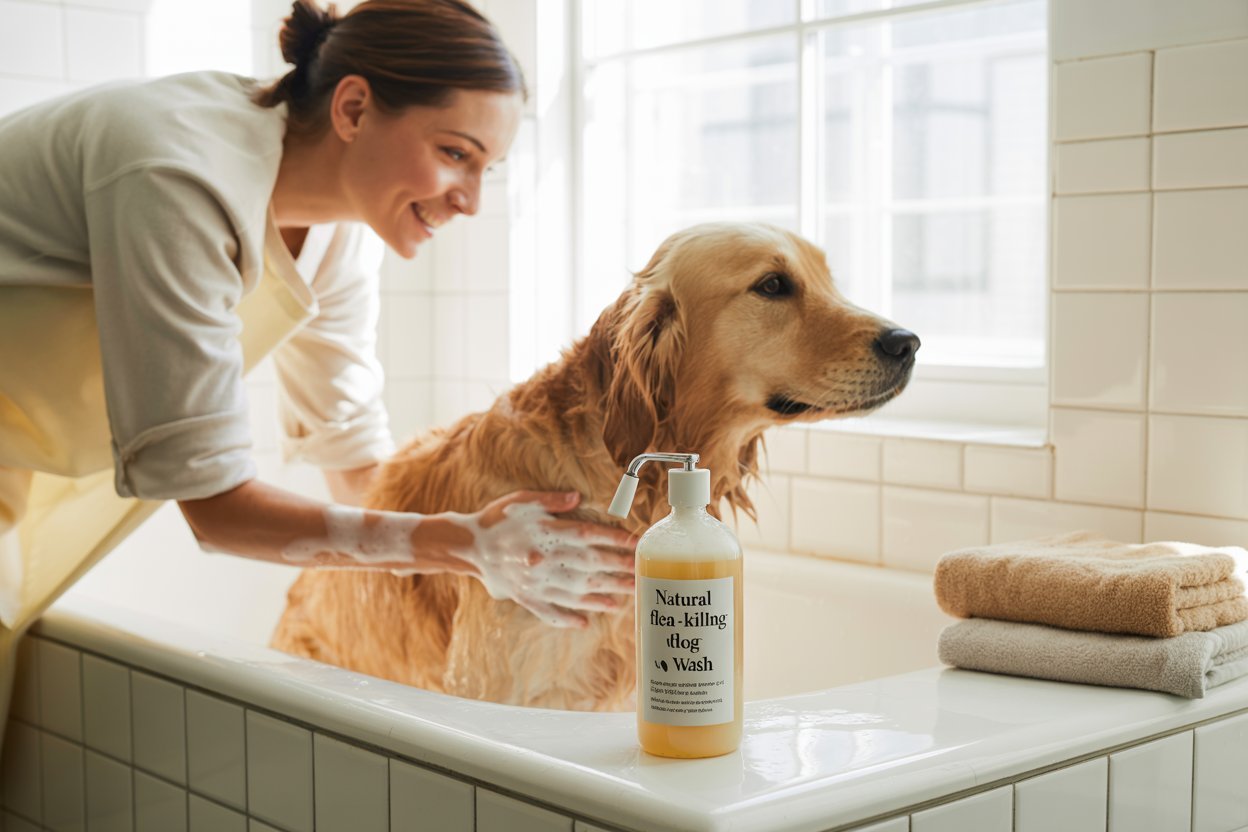
If your dog has been scratching more than usual or you’ve spotted tiny black specks in their fur, it’s likely fleas. And if you’ve ever tried dealing with those tiny, stubborn parasites, you already know they don’t give up easily.
Most flea shampoos on the market promise quick results, but many are filled with harsh chemicals that can irritate your dog’s skin, strip away natural oils, and even leave behind unpleasant residues.
That’s why a natural, homemade flea-killing shampoo is not only safer it’s surprisingly simple to make and incredibly effective when done right.
This guide will walk you through how to create your own dog shampoo that kills fleas, how each ingredient works, and exactly how to use it for the best results.
Why Make Your Own Flea Shampoo?
Before diving into the recipe, it’s important to understand why homemade flea shampoos are so valuable.
Store-bought products often contain pesticides like permethrin or pyrethrins — chemicals that can be toxic to sensitive dogs (and even humans, if not handled properly). These ingredients can cause itching, dryness, and allergic reactions.
With a DIY flea shampoo, you control the ingredients. That means no synthetic chemicals, no harsh detergents — just gentle, effective, and natural ingredients that soothe your dog’s skin while sending fleas packing.
And here’s the best part: you can make it using things you probably already have in your kitchen.
How This Shampoo Works
To get rid of fleas, you need two things: something that kills existing fleas and something that repels new ones.
The recipe below combines the best of both worlds — natural flea-killing agents (like castile soap and apple cider vinegar) with soothing, flea-repelling ingredients (like coconut oil and essential oils).
Let’s break it down:
- Castile Soap – A gentle, plant-based soap that breaks down flea exoskeletons without irritating skin.
- Apple Cider Vinegar – Alters your dog’s skin pH just enough to make it unattractive to fleas.
- Coconut Oil – Naturally antibacterial and moisturizing, it helps repair skin while suffocating fleas.
- Lemon Juice – Contains limonene, a natural flea deterrent.
- Essential Oils (Lavender, Peppermint, or Cedarwood) – Repel fleas with their natural scent compounds.
- Aloe Vera Gel (optional) – Soothes itchy or irritated skin.
What You’ll Need (Materials & Tools)
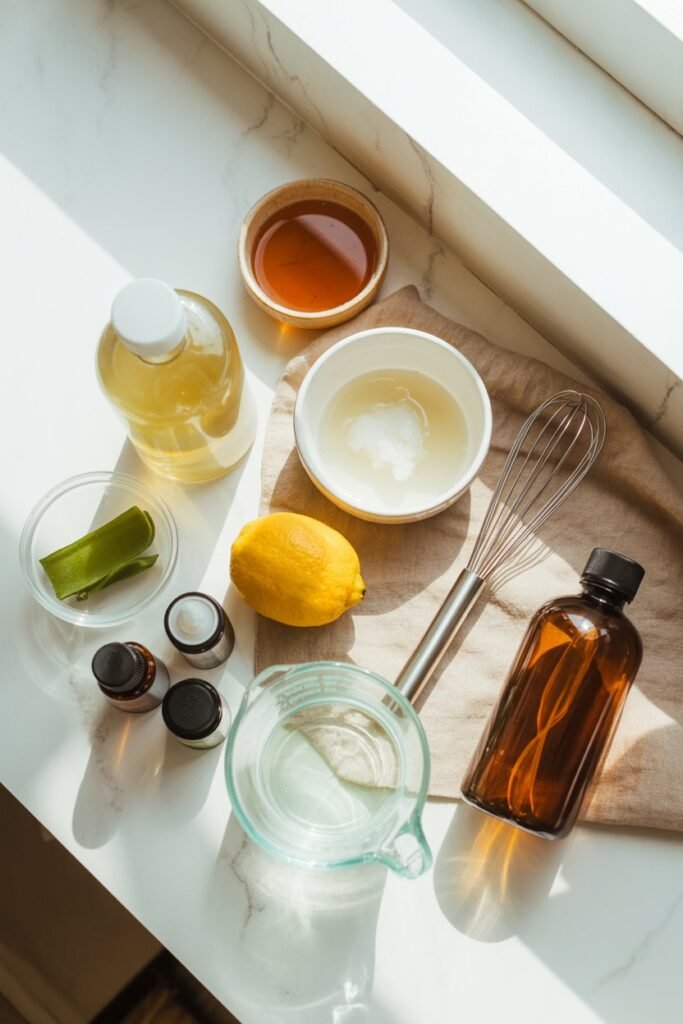
Here’s a list of what you’ll want to gather before starting:
Ingredients
- ½ cup liquid castile soap (unscented or baby-mild)
- ½ cup apple cider vinegar
- ¼ cup coconut oil, melted
- ¼ cup distilled water
- 2 tablespoons fresh lemon juice
- 1 tablespoon aloe vera gel (optional)
- 5 drops lavender essential oil
- 5 drops peppermint essential oil
- 5 drops cedarwood essential oil
Tools
- 1 mixing bowl
- 1 whisk
- 1 measuring cup
- 1 funnel
- 1 clean bottle or shampoo dispenser
Step 1: Melt and Mix the Base Ingredients
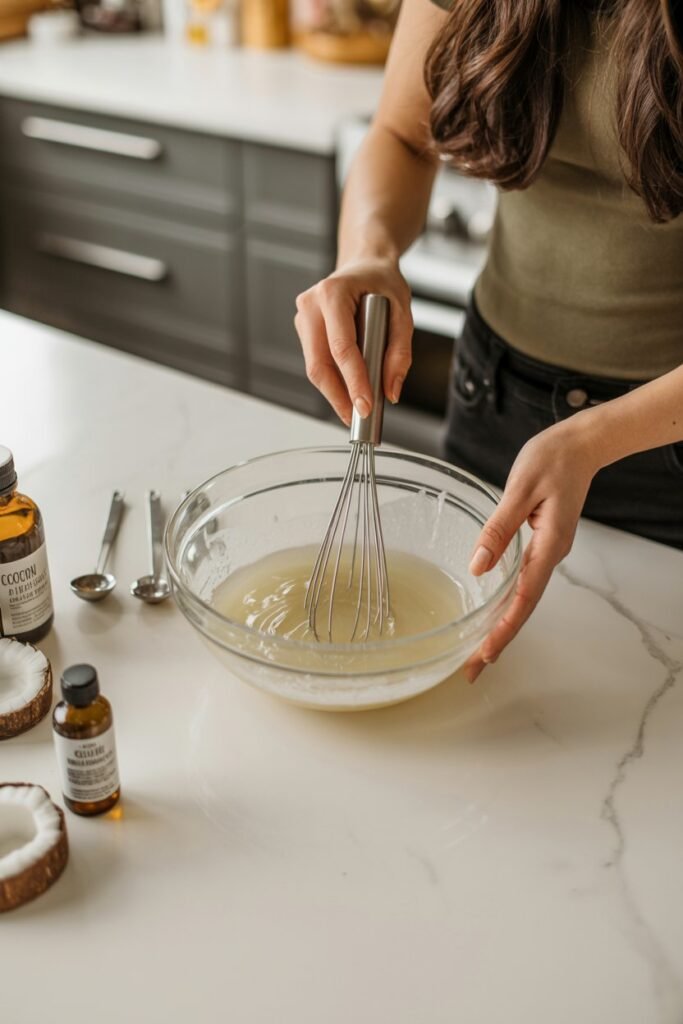
Start by gently melting the coconut oil in a small bowl until it turns liquid — not hot, just warm enough to mix easily.
Once melted, combine it with the liquid castile soap in a mixing bowl. Slowly add the distilled water and whisk until you have a smooth, even mixture.
This forms the base of your shampoo — it’s what helps lift dirt, debris, and those clingy fleas from your dog’s coat.
Pro Tip: “Use warm (not boiling) water to help the oils mix evenly without breaking down their natural properties.”
Step 2: Add the Flea-Fighting Power
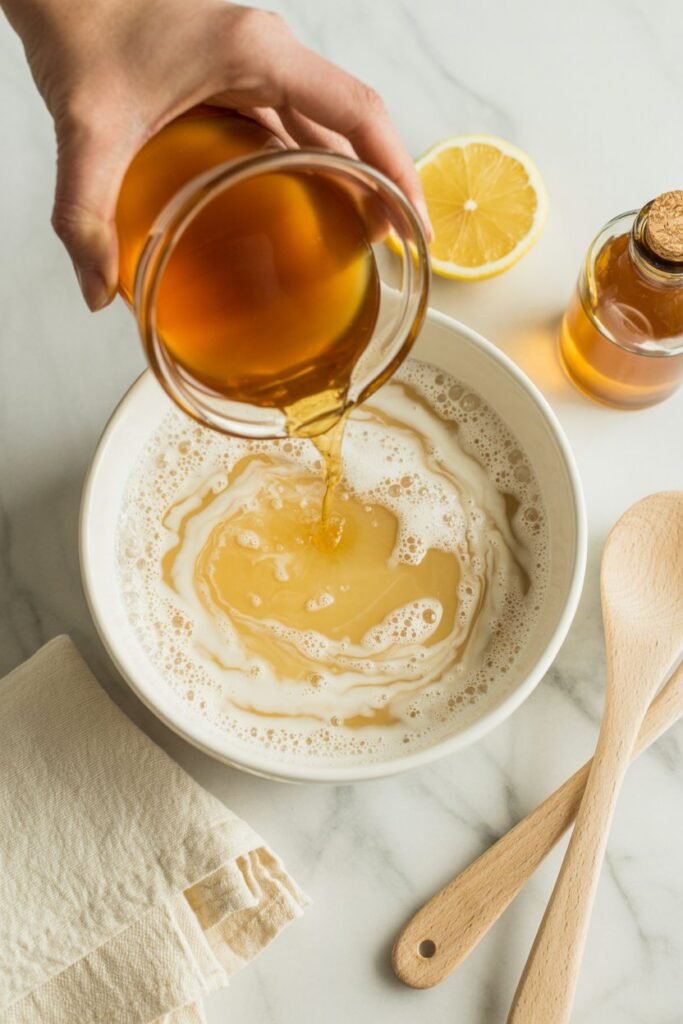
Now add your apple cider vinegar and lemon juice. These are your natural flea repellents — their acidic properties help weaken fleas’ grip and make your dog’s skin less appealing to them.
Whisk the mixture slowly to blend these ingredients thoroughly.
Pro Tip: “If your dog has sensitive skin, start with half the vinegar amount and test a small patch first.”
Step 3: Add the Essential Oils
Next, add your essential oils — lavender, peppermint, and cedarwood. These not only smell amazing but create a natural barrier fleas hate.
Each has its own bonus effect:
- Lavender – Calms the skin and reduces itching.
- Peppermint – Naturally cooling and fresh.
- Cedarwood – Destroys flea larvae and repels adults.
Whisk well so the oils are evenly distributed.
Pro Tip: “Avoid using tea tree oil — while effective against pests, it can be toxic to dogs even in small doses.”
Step 4: Add Aloe Vera for Soothing Relief
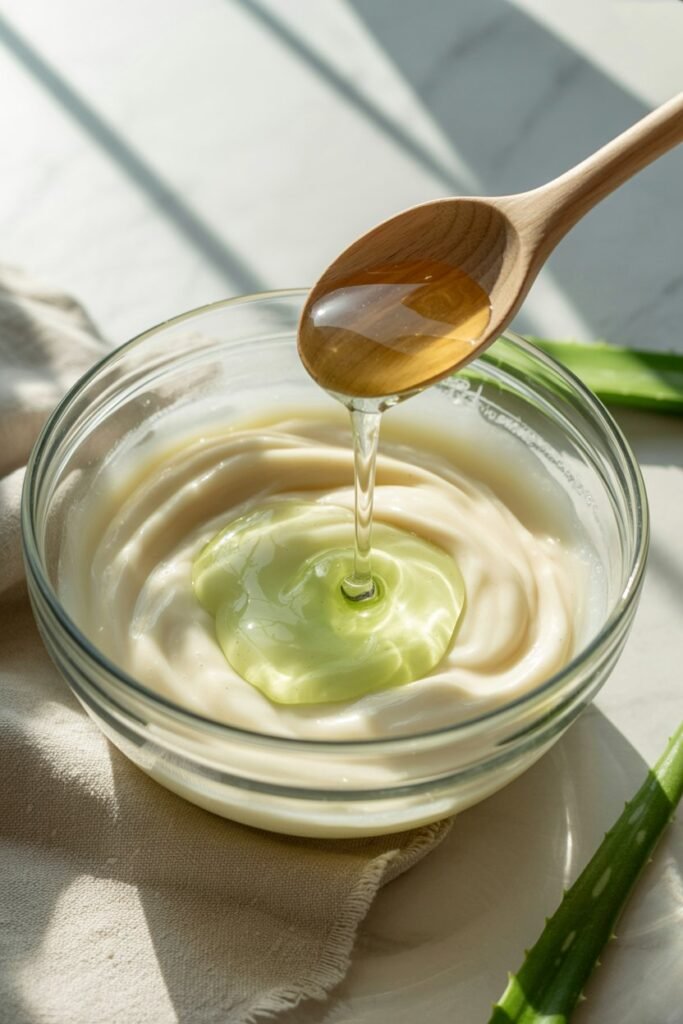
If your dog has been scratching a lot or has irritated skin, this step makes a huge difference.
Add one tablespoon of aloe vera gel to the mix. It cools inflammation and helps the skin recover faster from flea bites.
Mix thoroughly and transfer the final shampoo into a clean bottle using your funnel. Shake well before each use.
Step 5: Bath Time – Using Your Homemade Flea Shampoo
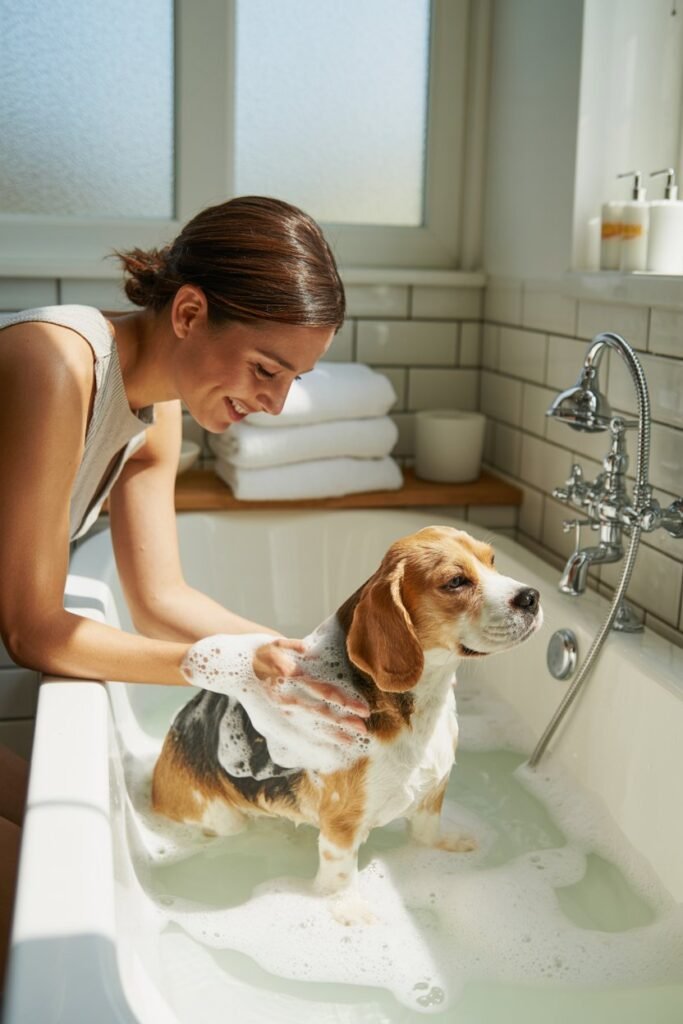
Here’s how to use your new shampoo for maximum effectiveness:
- Wet your dog’s coat completely with warm (not hot) water.
- Apply a small amount of the shampoo and gently massage it into the fur — start from the neck down to the tail, avoiding the eyes and inside of the ears.
- Let it sit for 5 minutes — this gives the flea-killing ingredients time to work.
- Rinse thoroughly until no residue remains.
- Towel-dry your dog or let them air-dry naturally.
Pro Tip: “For heavy flea infestations, repeat this bath every 3–4 days for two weeks, then once weekly for maintenance.”
Step 6: Preventing Future Fleas Naturally
A great shampoo helps get rid of fleas, but prevention is where the real magic happens.
To keep fleas away long-term:
- Wash your dog’s bedding weekly in hot water.
- Vacuum carpets and furniture regularly.
- Brush your dog daily with a fine-tooth flea comb.
- Spray a light vinegar-water solution on your dog’s collar or harness (avoid direct skin contact).
Combining these habits with your homemade shampoo keeps your dog flea-free year-round — safely and naturally.
Safety Notes & Things to Avoid
Homemade shampoos are safe when done right, but here are a few things to keep in mind:
- Don’t use essential oils on puppies under 10 weeks, pregnant dogs, or those with skin conditions without consulting a vet.
- Always test a small patch before a full bath.
- Don’t store your shampoo for more than one month — it’s all-natural and can spoil.
- Avoid using tea tree, eucalyptus, clove, or pennyroyal oils, as they can be toxic to dogs.
Pro Tip: “Store your shampoo in a cool, dark place — light and heat can weaken the oils and vinegar.”
Optional Variations
If you’d like to switch it up, try one of these variations:
For Sensitive Skin:
Use baby castile soap and replace vinegar with chamomile tea for a milder effect.
For a Deep-Cleaning Shampoo:
Add one teaspoon of baking soda to the mix — it helps neutralize odors and deep-clean fur.
For a Fresh Outdoor Scent:
Swap lavender for lemongrass or rosemary essential oil to keep your dog smelling crisp and clean longer.
How Often Should You Use It?
During flea season (spring to early fall), you can safely use this shampoo once a week for maintenance.
If your dog has a current infestation, start with two baths per week for the first two weeks, then reduce frequency as fleas disappear.
Always follow up with a natural conditioner (like a light coconut oil rinse) to keep the coat soft and shiny.
Final Thoughts
Making your own dog shampoo that kills fleas isn’t just about saving money — it’s about giving your dog the best, most natural care possible. You know exactly what goes into it, you’re skipping the harsh chemicals, and you’re turning bath time into something that actually benefits their skin and coat.
Fleas may be tough, but nature gives us everything we need to fight back safely — and your homemade shampoo proves it.
With consistency, care, and a few simple ingredients, you’ll have a clean, flea-free dog who smells fresh and feels even better.