Hard-Drying Greek Yogurt Frosting Recipe for Dog Treats
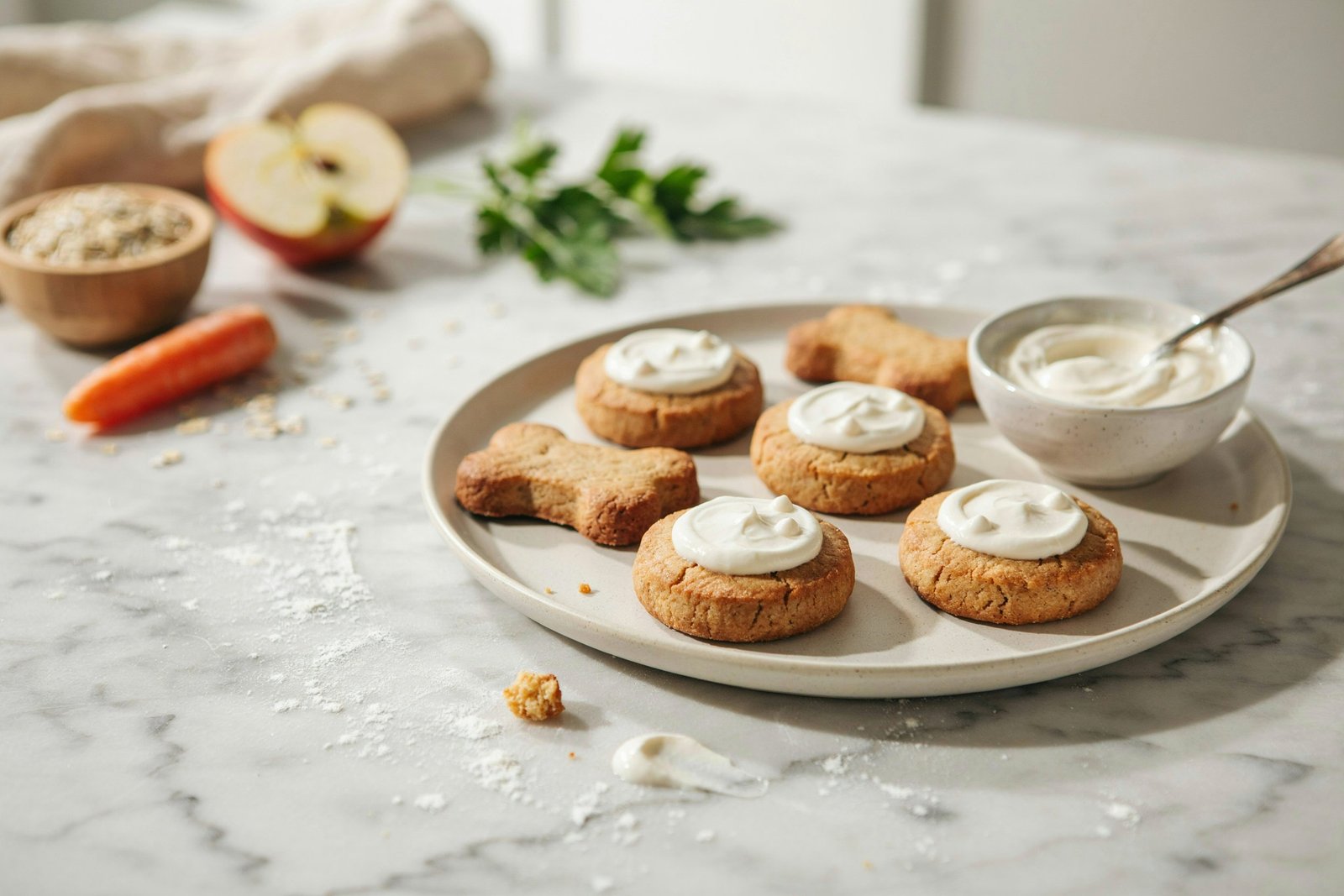
I love the little extra touch frosting can give homemade dog treats. Even a simple batch of baked biscuits feels more special when they have a pretty coating on top.
I wanted a frosting that was creamy enough to spread easily but could also dry firm enough to handle without making a huge mess.
This Greek yogurt frosting became one of my favorite options because it uses simple ingredients and is easy to prepare. The best part is that you can use it to decorate everyday biscuits, birthday treats, or homemade pupcakes without reaching for traditional sugary icing.
Why Make Greek Yogurt Frosting for Dog Treats?
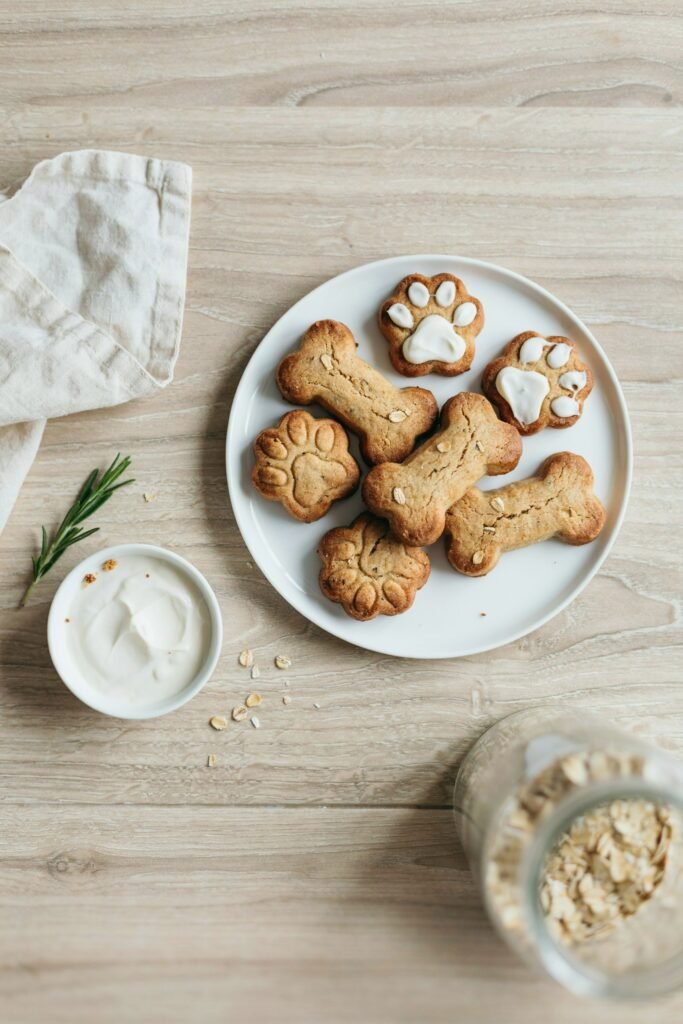
Traditional human frosting is generally not a good choice for dogs because it can contain large amounts of sugar and ingredients that aren’t appropriate for them.
A simple Greek yogurt-based frosting gives you a different option. Plain Greek yogurt can provide protein and calcium, and Greek yogurt is generally lower in lactose than regular yogurt, although some dogs can still have digestive problems with dairy.
Adding a small amount of starch helps create a thicker frosting that holds its shape better and develops a firmer surface as it dries.
This recipe works especially well when you want to:
- Decorate homemade dog biscuits
- Add a simple finish to pupcakes
- Make birthday treats look more special
- Pipe small designs onto cookies
- Create a white base for natural decorations
What You Need
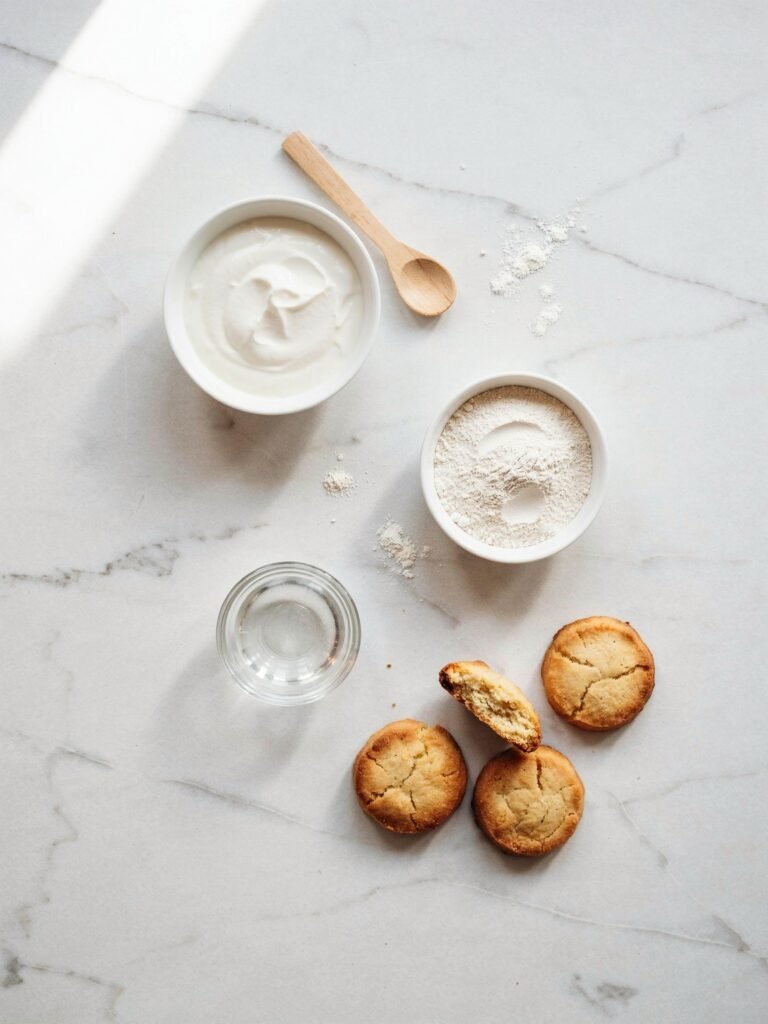
Ingredients
- 1/2 cup plain, unsweetened Greek yogurt
- 2 tablespoons tapioca starch or cornstarch
- 1 teaspoon water, only if needed
That’s it. I prefer keeping this frosting simple because dogs don’t need the sugar, butter, powdered sugar, or heavy flavorings commonly found in human frosting.
Choosing the Right Greek Yogurt
The yogurt you choose matters more than you might think.
Look for:
- Plain yogurt
- Unsweetened yogurt
- No artificial sweeteners
- No xylitol
- A short, simple ingredient list
Never use yogurt containing xylitol. Xylitol is highly toxic to dogs and can cause dangerous effects, including low blood sugar and liver damage.
Greek yogurt is often a practical choice because it is naturally thick. If your yogurt has a lot of liquid sitting on top, you can drain some of the excess whey before measuring it.
How to Make Greek Yogurt Frosting
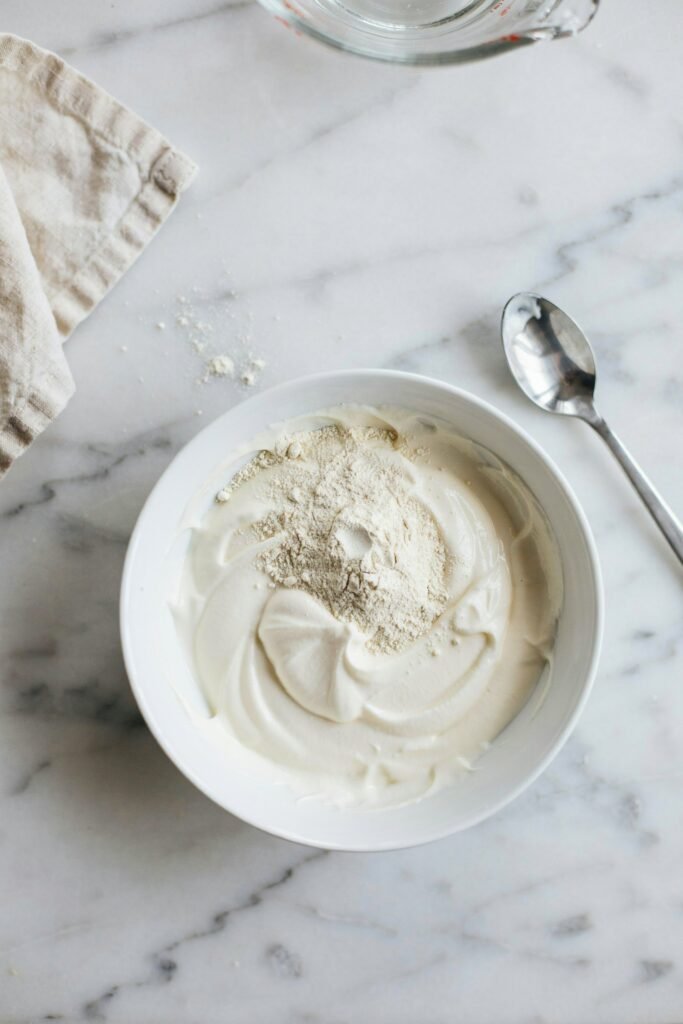
Step 1: Start With the Yogurt
Add the Greek yogurt to a clean mixing bowl.
Stir it gently until it becomes completely smooth. If the yogurt is very watery, drain some of the excess liquid first. A thicker starting point makes it much easier to create a frosting that stays on your treats.
Step 2: Add the Starch
Add the tapioca starch or cornstarch gradually.
Start by adding about 1 tablespoon and mix thoroughly. Then add the remaining tablespoon and continue stirring until the frosting looks smooth and noticeably thicker.
Don’t add all the starch at once if your yogurt is already very thick. You may need slightly less depending on the yogurt you use.
Step 3: Check the Consistency
The finished frosting should be thick enough to sit on the back of a spoon without immediately running off.
If it feels too thick for spreading or piping, add a few drops of water at a time.
Be careful here. It is much easier to thin frosting than to fix frosting that has become too watery.
Step 4: Let It Rest
Allow the mixture to sit for about 5 minutes.
This gives the starch time to absorb some of the moisture and allows the frosting to become slightly thicker.
Give it another stir before decorating.
How to Frost Your Dog Treats
Make sure your homemade dog biscuits are completely cool before applying the frosting. Warm treats can soften the frosting and make it difficult to create clean designs.
You can apply the frosting in several ways.
For a Simple Coating
Use a small spatula, spoon, or butter knife to spread a thin layer across the top of each biscuit.
For Piped Designs
Transfer the frosting to a piping bag or a small food-safe decorating bag.
Pipe small dots, lines, stars, or simple borders onto the treats.
Keep the designs relatively thin. A very thick layer contains more moisture and will take longer to firm up.
How to Make the Frosting Dry Harder
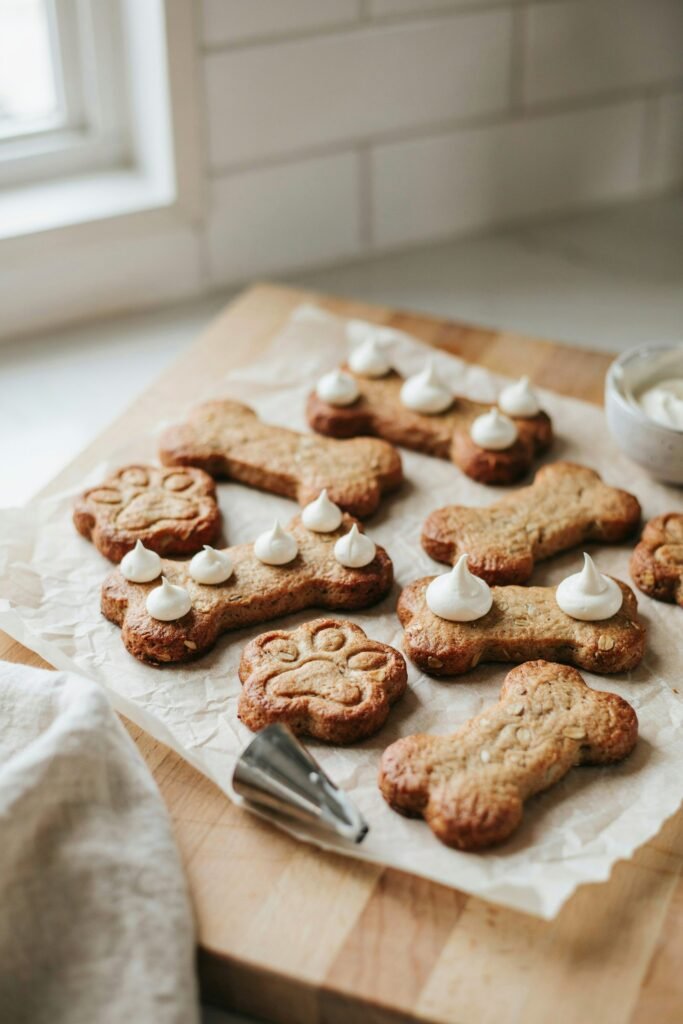
The key to a firmer finish is using a relatively thick frosting and applying a thin layer.
After decorating, place the treats on a clean parchment-lined tray with space between them.
Allow the surface to dry in a cool, dry area. Because this frosting contains yogurt, it should not be treated like a shelf-stable royal icing. The outside may become firm while the underneath remains softer.
For this reason, refrigeration is important for storage.
You can also refrigerate the decorated treats after the frosting has been applied. Chilling helps the frosting firm up, although the finished texture may still be slightly softer than traditional human cookie icing.
Helpful Tips for Better Results
Use Thick Yogurt
A thick Greek yogurt produces a much better frosting than a thin, watery yogurt.
Don’t Overdo the Starch
Too much starch can make the frosting pasty and difficult to spread. Add it gradually until you reach the consistency you want.
Keep the Frosting Layer Thin
Thin decorative layers dry and firm more effectively than thick ones.
Cool Your Treats Completely
Never frost freshly baked biscuits. Give them plenty of time to cool first.
Test One Treat First
Before decorating an entire batch, frost one biscuit and see how the mixture behaves after chilling. If it runs, add a little more starch. If it is too stiff, add a tiny amount of water.
Can Dogs Eat Greek Yogurt Frosting?
Many dogs can enjoy small amounts of plain, unsweetened Greek yogurt, but not every dog tolerates dairy well. Lactose intolerance can cause digestive symptoms such as gas, diarrhea, or vomiting.
For that reason, introduce the frosting in a small amount, particularly if your dog has never had Greek yogurt before.
Treats should also remain a small part of your dog’s overall diet. PetMD recommends keeping treats, including yogurt-based treats, to no more than about 10% of daily calories.
If your dog has a medical condition, food allergy, digestive sensitivity, or is eating a veterinary-prescribed diet, check with your veterinarian before adding new foods.
How to Store Greek Yogurt Frosting
Because this frosting contains yogurt, it is perishable.
Store leftover frosting in an airtight container in the refrigerator and use it within a few days.
Decorated treats should also be refrigerated rather than stored at room temperature for extended periods.
If you want to prepare treats ahead of time, decorate a small batch first and keep them chilled until you’re ready to serve them.
Easy Ways to Customize It
The plain white frosting is perfect on its own, but you can make the treats look more festive with dog-appropriate additions.
Try sprinkling a very small amount of:
- Finely ground blueberries
- Plain unsweetened coconut
- Finely crushed dog-safe biscuit
- A tiny amount of beet powder for color
Always check every additional ingredient for dog safety before adding it.
Frequently Asked Questions
How long does Greek yogurt frosting take to dry?
A thin layer can develop a firmer surface as it sits, but the exact drying time depends on the yogurt’s moisture content, the thickness of the frosting, and humidity. It should not be expected to become completely hard like traditional royal icing.
Can I pipe this frosting?
Yes. Make the frosting fairly thick and use a small piping tip. If it is too loose, mix in a little more starch.
Can I use regular yogurt?
You can, but Greek yogurt is usually easier to work with because it has a thicker consistency and generally contains less lactose than regular yogurt.
Can I freeze frosted dog treats?
You can freeze homemade dog treats, but yogurt-based frosting may change texture after freezing and thawing. For the best appearance, test a single decorated treat before freezing an entire batch.
Final Thought
Making homemade dog treats doesn’t have to mean creating complicated recipes or using lots of ingredients.
This Greek yogurt frosting is a simple way to make ordinary biscuits feel a little more special while keeping the ingredient list straightforward.
I especially like it for birthdays and homemade treats that I want to decorate without traditional sugary icing. Just remember to choose plain, unsweetened, xylitol-free yogurt, keep portions small, and refrigerate the finished treats.
A little frosting goes a long way when you’re making something special for your favorite four-legged family member.
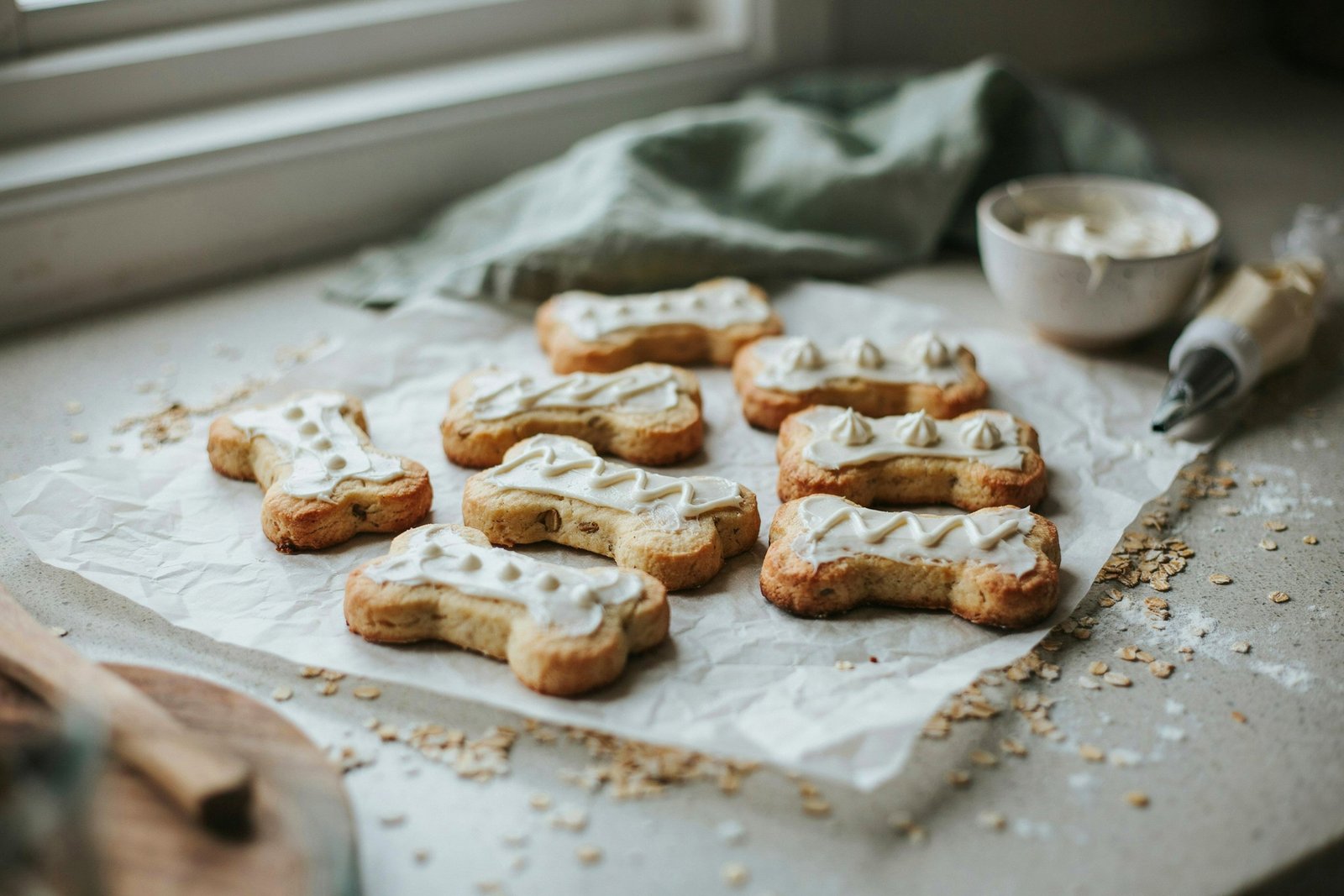
Hard-Drying Greek Yogurt Frosting for Dog Treats
Ingredients
Equipment
Method
- Start with the yogurt — Add the Greek yogurt to a clean mixing bowl and stir gently until smooth. If very watery, drain off excess liquid first.
- Add the starch — Add the tapioca starch or cornstarch gradually, about 1 tablespoon at a time, mixing thoroughly after each addition until smooth and noticeably thicker.
- Check the consistency — The frosting should sit on the back of a spoon without immediately running off. If too thick, add a few drops of water at a time — it's easier to thin frosting than to fix one that's too watery.
- Let it rest — Allow the mixture to sit for about 5 minutes so the starch can absorb moisture and thicken further. Stir again before decorating.
- Frost the treats — Make sure biscuits are completely cool. Spread a thin layer with a small spatula, spoon, or butter knife, or transfer to a piping bag for dots, lines, or borders. Keep the layer thin for the best firming results.
- Dry and chill — Place decorated treats on a parchment-lined tray with space between them and let the surface dry in a cool, dry area. Refrigerate afterward to help the frosting firm up further.