Learn How To Make Cat Gravy – 4 Delicious Recipes for Your Feline
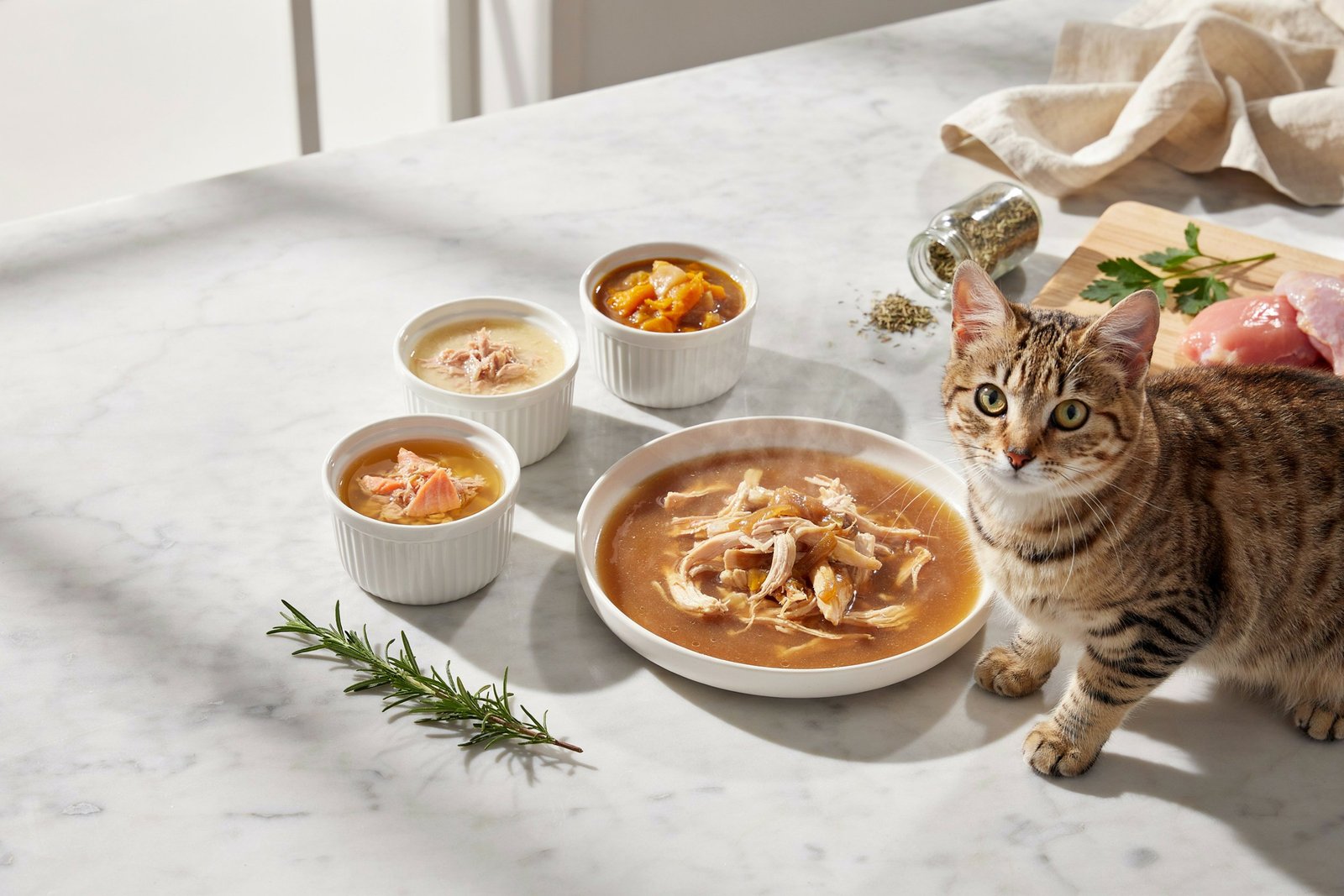
I’ve always loved the way a little extra gravy can turn an ordinary meal into something a cat suddenly becomes very interested in.
Some cats can be surprisingly particular about texture, moisture, and smell, which is why homemade cat gravy can be such a useful addition to their meals.
Whether your feline is getting bored with the same food, needs extra moisture in their diet, or simply enjoys a delicious topper, making gravy at home is easier than you might think.
In this guide, I’ll show you four simple cat-friendly gravy recipes, along with tips for choosing ingredients, preparing them safely, storing leftovers, and serving the gravy without upsetting your cat’s regular diet.
Why Make Homemade Gravy for Cats?
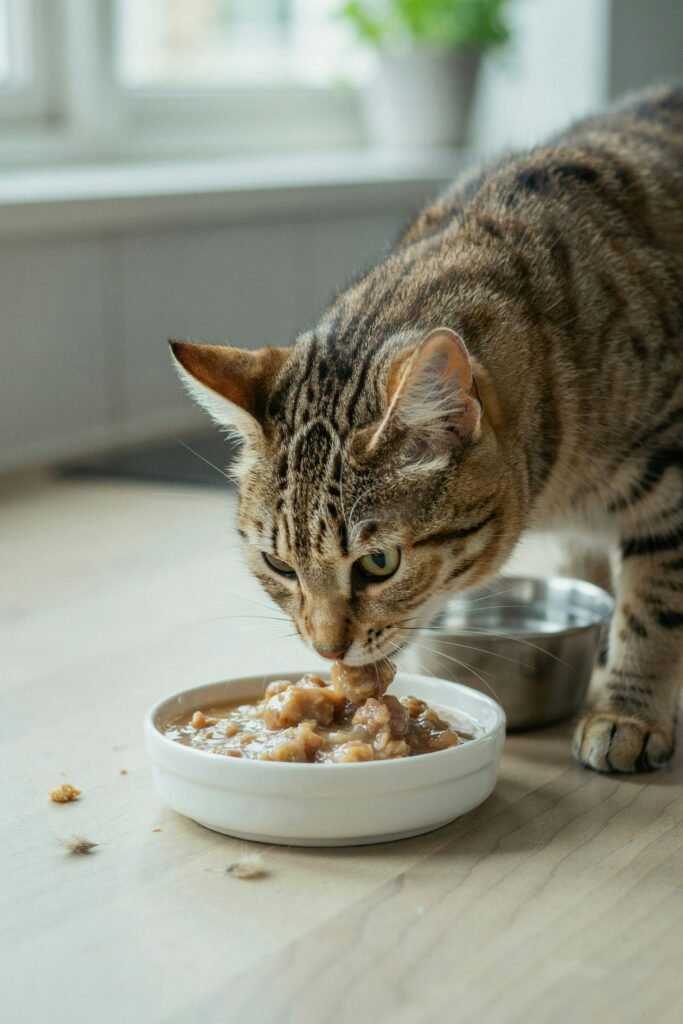
Cat gravy isn’t just about making dinner look more appealing. A properly prepared gravy can add moisture and aroma to a cat’s meal, which may be particularly useful for cats that don’t naturally drink much water.
Many cats get a significant portion of their daily moisture from food, especially when they eat wet food. Adding a small amount of suitable gravy can increase the moisture in a meal while making the food more enticing.
Homemade gravy can also be useful when you’re trying to encourage a picky cat to eat their normal food. A spoonful mixed into their usual meal can make familiar food smell and taste different without completely changing what they are accustomed to eating.
However, gravy should be treated as an addition or topper, not as a replacement for a nutritionally complete cat food unless the entire homemade diet has been formulated by a veterinary nutrition professional.
Cats have specific nutritional requirements. They need nutrients such as taurine, arachidonic acid, vitamin A, and other essential nutrients that aren’t automatically provided by simply combining meat and vegetables.
So, think of these recipes as tasty extras rather than complete meals.
What Makes a Good Cat Gravy?

The best homemade cat gravy is usually quite simple.
Cats don’t need the same seasonings and ingredients that people enjoy. In fact, many common ingredients found in human gravies can be dangerous for cats.
A cat-friendly gravy should generally be:
- Made from plain, cat-safe ingredients
- Low in unnecessary fat
- Free from added salt
- Free from onion and garlic
- Free from spicy seasonings
- Easy to digest
- Moist and smooth enough to mix with regular food
- Served in appropriate portions
The easiest base is often plain cooked meat or fish combined with water or an appropriate unsalted cooking liquid.
You can blend the ingredients until smooth or leave a slightly textured consistency, depending on what your cat prefers.
Ingredients to Avoid in Cat Gravy

Before getting into the recipes, it’s important to talk about ingredients that should stay out of homemade cat gravy.
Onion and Garlic
Onions, garlic, leeks, chives, and related allium plants can be harmful to cats. This includes fresh, cooked, dried, and powdered forms.
That means human gravy mixes, stock cubes, seasoning powders, and sauces should generally be avoided because they may contain onion or garlic even when you can’t see them.
Excessive Salt
Cats need some sodium as part of a balanced diet, but adding unnecessary salt to homemade gravy isn’t a good idea.
Avoid salty broth, stock cubes, gravy granules, and heavily seasoned cooking liquids.
Milk and Cream
Although cats are often portrayed drinking milk, many adult cats don’t digest lactose particularly well. Milk or cream can cause digestive upset.
For that reason, these recipes don’t rely on dairy.
Spices and Hot Seasonings
Chili, pepper-heavy sauces, spicy seasoning blends, and other strongly seasoned ingredients aren’t necessary for cats.
Their gravy doesn’t need to taste exciting to us. It needs to smell appealing and be appropriate for them.
Fatty Pan Drippings
Human gravy often starts with meat drippings, butter, or other rich fats.
That isn’t necessary for cat gravy. Using lean, plain cooked meat and water gives you a much simpler option.
Recipe 1: Simple Chicken Cat Gravy
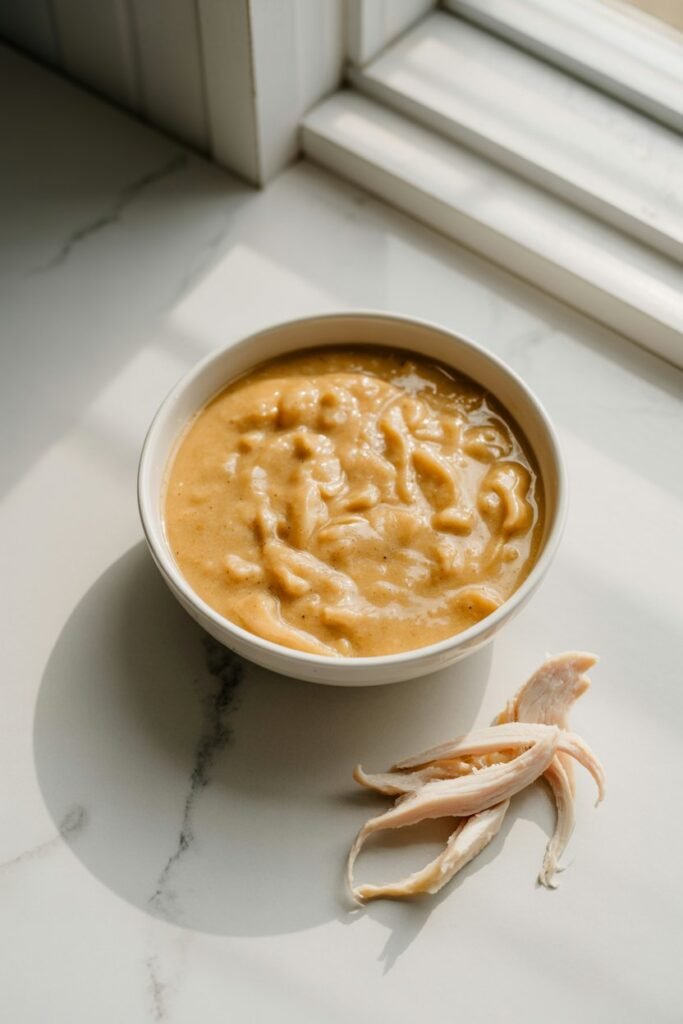
This is one of my favorite starting points because it’s simple, mild, and made with ingredients that many cats already recognize.
If your cat enjoys chicken, this recipe can make an excellent topper for their normal wet or dry food.
Ingredients
- 100 g plain boneless chicken
- 1 to 1½ cups water
- 1 teaspoon of plain cooked chicken juices, if available and unsalted
- Optional: a small amount of the cooked chicken meat for texture
How to Make It
Start by cooking the chicken thoroughly without adding salt, garlic, onion, butter, seasoning, or sauces.
Once the chicken is completely cooked, allow it to cool enough to handle safely.
Place the cooked chicken into a blender.
Add about 1 cup of water and blend until smooth.
If the mixture is too thick, gradually add more water until you reach a gravy-like consistency.
For cats that enjoy texture, you can finely shred a tiny amount of the chicken and stir it into the finished gravy.
How to Serve It
Allow the gravy to cool to room temperature before serving.
Start with a small spoonful mixed into your cat’s normal food.
You don’t need to completely cover the meal. A little gravy spread over the food can be enough to add extra moisture and aroma.
If your cat prefers a thinner gravy, add a little more water before serving.
Why I Like This Recipe
Chicken has a familiar smell and flavor for many cats, and the recipe doesn’t require a long ingredient list.
It’s also easy to adjust.
If your cat likes licking gravy but doesn’t enjoy chunks, blend it completely smooth.
If they prefer bits of meat, leave a small amount of finely shredded chicken in the mixture.
Recipe 2: Tuna Cat Gravy
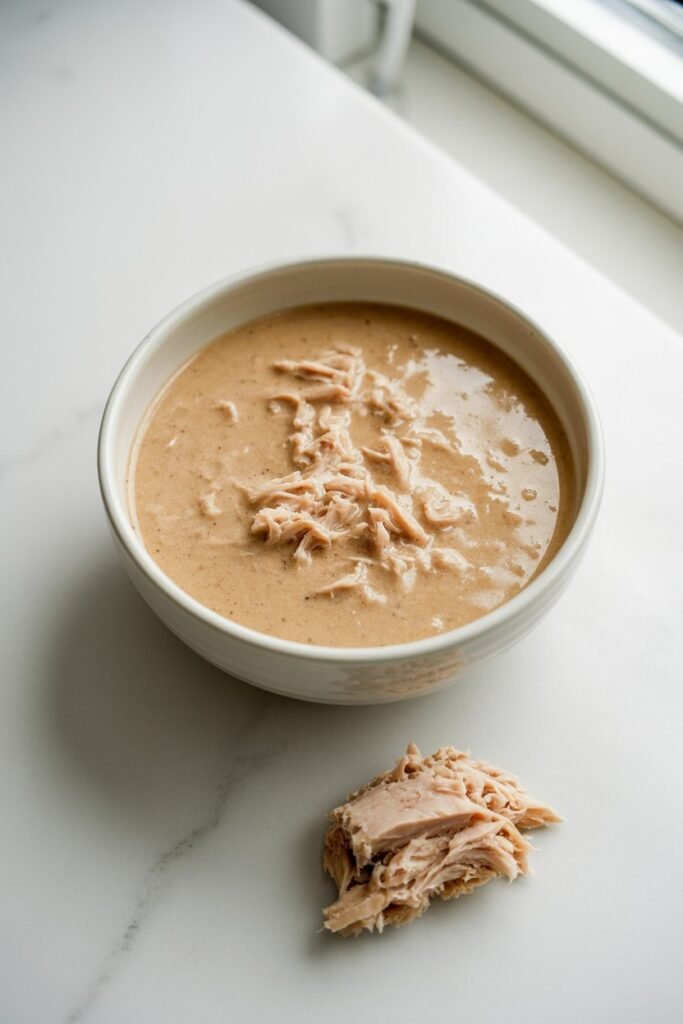
Tuna has a strong smell, which can make it particularly appealing to cats.
This recipe is useful when you’re looking for a flavorful topper, but tuna should not become the foundation of your cat’s entire diet.
Ingredients
- 1 small portion of tuna packed in water
- 1 cup water
- 1 teaspoon of the tuna’s unsalted liquid, if suitable
- Optional: a small amount of cooked plain chicken
Choose tuna packed in water rather than tuna prepared with sauces, spices, or salty seasonings.
Preparation
Drain the tuna if necessary.
Place a small amount of tuna into a blender with approximately 1 cup of water.
Blend until the tuna is finely incorporated.
Add more water if needed to create a thin gravy.
For additional flavor and texture, you can mix in a small amount of plain cooked chicken.
Serving Suggestions
Mix a small amount into your cat’s regular food rather than replacing the complete meal with tuna gravy.
The strong aroma means you may not need much.
Start with a teaspoon or less and see how your cat responds.
A Note About Tuna
Tuna is best treated as an occasional ingredient rather than something that makes up a large portion of a cat’s daily diet.
Using tuna occasionally as a topper gives your cat a little variety without encouraging an unbalanced eating pattern.
If you’re using canned tuna intended for people, check the label carefully and avoid products containing added salt, sauces, seasonings, onion, garlic, or other unsuitable ingredients.
Recipe 3: Salmon Cat Gravy
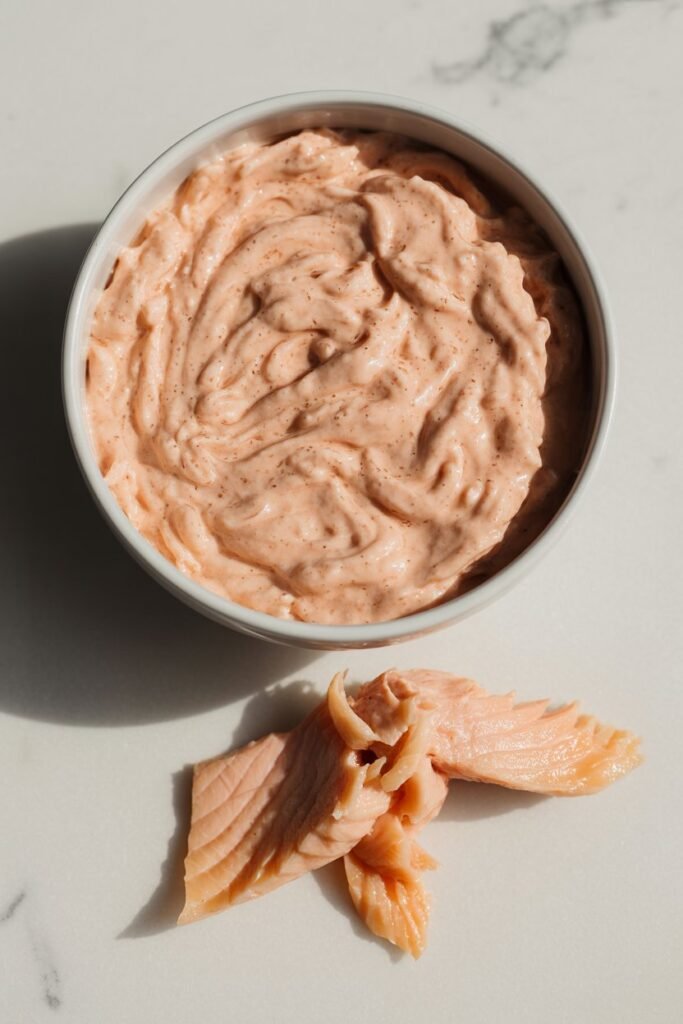
Salmon can make a rich-smelling gravy that many cats find appealing.
For this recipe, use plain salmon that has been thoroughly cooked and hasn’t been prepared with butter, garlic, onion, salt, sauces, or seasoning.
Ingredients
- 100 g plain cooked salmon
- 1 to 1½ cups water
- Optional: a small amount of plain cooked chicken
Preparing the Salmon
Cook the salmon thoroughly.
Before blending, carefully check the fish for bones.
Even if you purchased a fillet that was labeled boneless, it’s worth checking carefully because small bones can occasionally remain.
Break the salmon into smaller pieces.
Add it to a blender with about 1 cup of water.
Blend until smooth.
Add additional water gradually until you reach your preferred consistency.
Creating a Smoother Gravy
If your cat prefers very smooth textures, blend the mixture thoroughly and strain it through a fine food-safe sieve if necessary.
This can help remove larger particles.
Always allow the gravy to cool before offering it.
How to Serve Salmon Gravy
A small spoonful can be mixed into your cat’s normal meal.
You can also drizzle a little across the surface of wet food.
Because salmon has a noticeable aroma, a small amount can go a long way.
Why This Recipe Can Be Useful
Some cats are particularly attracted to the smell of fish.
If your cat is temporarily less interested in their regular food, a small amount of an appealing topper may encourage them to investigate the meal.
However, if your cat suddenly refuses food altogether, don’t simply rely on increasingly tasty gravy. A significant change in appetite can sometimes indicate an underlying health problem and should be discussed with a veterinarian.
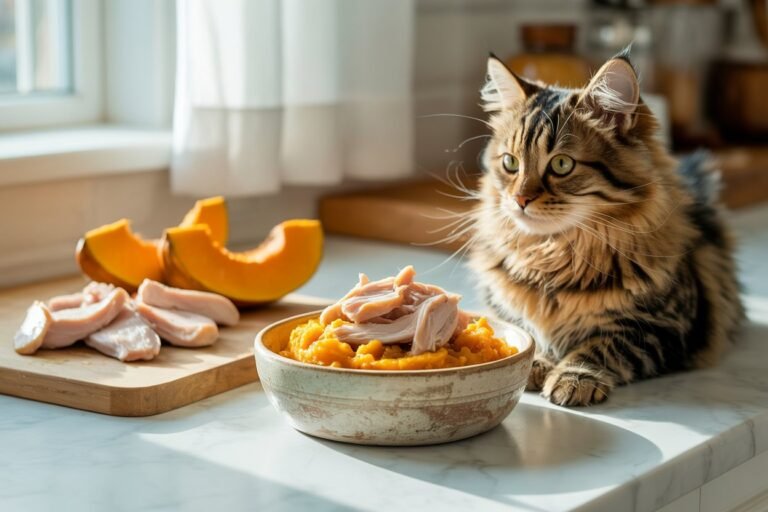
Recipe 4: Chicken and Pumpkin Cat Gravy
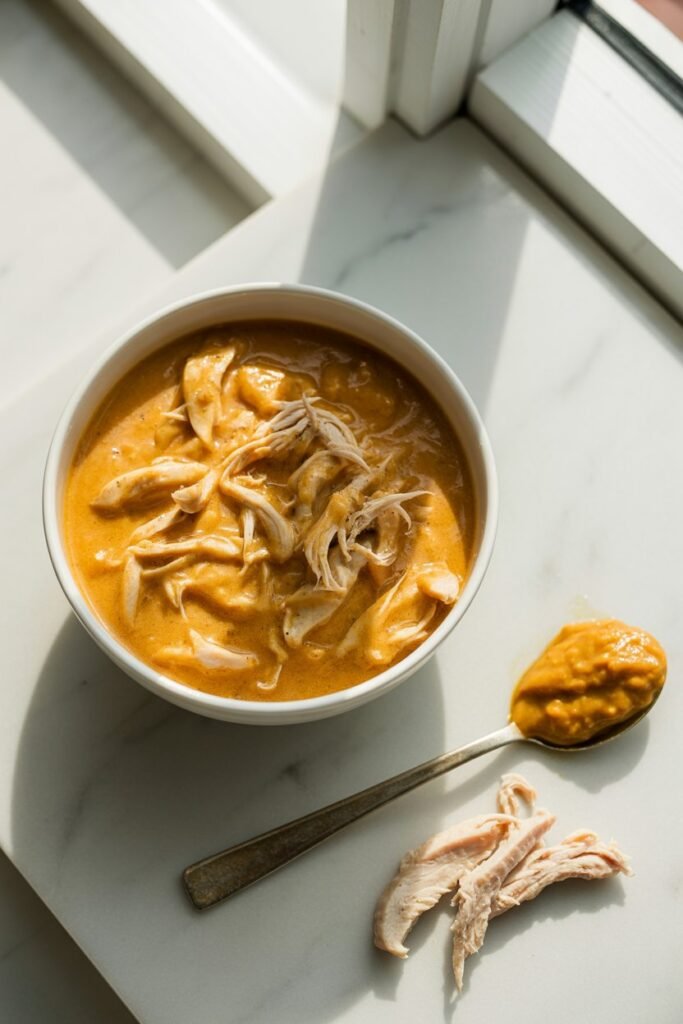
This recipe combines plain chicken with a small amount of plain pumpkin.
Pumpkin can add texture and fiber, but it should be used in moderation and isn’t necessary for every cat.
Ingredients
- 75–100 g plain cooked chicken
- 1–2 teaspoons plain pumpkin purée
- 1 to 1½ cups water
Use plain pumpkin purée, not pumpkin pie filling.
Pumpkin pie filling can contain added sugar, spices, and other ingredients that aren’t appropriate for cats.
How to Make It
Cook the chicken thoroughly without seasoning.
Allow it to cool slightly.
Add the chicken, pumpkin purée, and water to a blender.
Blend until smooth.
If the gravy is thicker than your cat prefers, add more water gradually.
Serving
Start with a very small amount mixed into your cat’s regular food.
Because pumpkin contains fiber, introducing too much at once may cause digestive problems in some cats.
If your cat has never eaten pumpkin before, start particularly small.
Why Add Pumpkin?
Pumpkin is sometimes used as a source of fiber in pet diets, but it isn’t a cure-all for digestive problems.
If your cat has persistent diarrhea, constipation, vomiting, abdominal discomfort, or other digestive symptoms, homemade gravy shouldn’t be used as a substitute for veterinary care.
How to Make Cat Gravy Without a Blender
You don’t actually need special equipment.
If you don’t have a blender, you can still make a simple gravy.
Cook your plain chicken or fish thoroughly.
Finely mince the meat with a knife or shred it very finely with a fork.
Place it in a bowl and gradually add warm water.
Mash everything together until the liquid becomes slightly cloudy and contains very fine pieces of meat.
For an even smoother result, press the mixture through a fine food-safe strainer.
The final consistency doesn’t have to look exactly like human gravy.
Cats don’t care whether your homemade gravy looks restaurant-worthy. The goal is simply to create a safe, moist topper that your cat enjoys.
How Thick Should Cat Gravy Be?
There’s no single perfect consistency.
Some cats enjoy a thin, almost broth-like liquid.
Others prefer something thicker that sticks to their food.
You can experiment with the amount of water.
For a thinner gravy:
Add more water.
For a thicker gravy:
Use less water or add a little more of the blended meat.
If your cat is more interested in licking liquid than eating chunks, a thinner consistency may work better.
If your cat likes pâté-style food, a thicker blended mixture may be more appealing.
How Much Cat Gravy Should You Give?
Start small.
A teaspoon mixed into a normal meal is a reasonable way to see whether your cat enjoys the addition.
If your cat tolerates it well, you can adjust the amount according to the recipe and your cat’s overall diet.
Remember that homemade gravy should generally function as a topper rather than replacing a complete and balanced cat food.
Treats and toppers should make up only a small part of a cat’s overall intake.
If your cat has a medical condition, follows a prescription diet, or has dietary restrictions, ask your veterinarian before introducing homemade toppers.
How to Introduce Homemade Gravy
Cats can be creatures of habit.
A sudden change in their food can sometimes result in a cat refusing the new mixture altogether.
Instead of pouring a large amount of gravy over the food, start with a small quantity.
Try this approach:
Day 1
Add a very small amount to your cat’s regular food.
Day 2
If your cat tolerated it well, slightly increase the amount.
Day 3 and Beyond
Continue adjusting gradually based on your cat’s preferences and diet.
You don’t necessarily need to give gravy at every meal.
Using it occasionally can keep it special while allowing your cat to continue enjoying their normal food.
How to Store Homemade Cat Gravy
Homemade cat gravy contains perishable ingredients, so proper storage matters.
Place leftover gravy in a clean, covered container and refrigerate it promptly.
For the safest approach, make small batches that can be used quickly rather than keeping a large quantity for an extended period.
You can also freeze small portions.
An ice cube tray can be useful for creating individual portions. Once frozen, transfer the portions to a suitable freezer-safe container.
Label the container with the date.
When you’re ready to use a portion, thaw it safely in the refrigerator and mix it into the meal once it has reached a suitable serving temperature.
Don’t leave wet food or homemade gravy sitting out for long periods.
Discard food that has been sitting at room temperature for an extended time, especially in a warm environment.
Can You Warm Cat Gravy?
Yes, gently warming refrigerated gravy can make it smell more appealing.
Cats rely heavily on their sense of smell when deciding whether food is interesting.
However, the gravy should never be served hot.
Warm it gently and stir thoroughly before checking the temperature.
Room temperature is also perfectly fine.
Avoid microwaving in a way that creates hot spots. If you use a microwave, heat very briefly, stir well, and check the temperature carefully.
Can Cat Gravy Replace Water?
No.
Gravy can contribute moisture to your cat’s overall intake, but it shouldn’t be considered a replacement for fresh drinking water.
Your cat should always have access to clean, fresh water.
You can place water bowls in several quiet areas of the home if your cat doesn’t naturally drink much.
Some cats also prefer moving water, although individual preferences vary.
Can You Use Store-Bought Broth?
Be careful.
Many human broths and stocks contain ingredients that aren’t appropriate for cats, particularly onion, garlic, and excessive sodium.
Always check the ingredient list.
When in doubt, plain water is the easiest and safest base for these recipes.
You don’t need commercially prepared broth to make tasty cat gravy.
Can Kittens Have Homemade Cat Gravy?
Kittens have different nutritional requirements from adult cats because they’re growing rapidly.
A kitten’s primary food should be an appropriate, nutritionally complete kitten diet.
Homemade gravy may be used only as an occasional topper if the ingredients are appropriate and your veterinarian agrees.
Avoid allowing gravy or treats to displace the kitten’s complete food.
For very young kittens, especially those that are not yet fully weaned, don’t introduce homemade foods without professional veterinary guidance.
What If My Cat Refuses the Gravy?
Don’t worry.
Not every cat likes the same texture or flavor.
Try changing the consistency rather than immediately adding more ingredients.
If your cat doesn’t like thick gravy, thin it with water.
If they don’t like smooth gravy, try finely shredded meat mixed with a little liquid.
You can also try serving the gravy alongside the regular food rather than mixing it throughout the entire meal.
This allows your cat to investigate it without changing the entire dish.
And if your cat simply doesn’t like homemade gravy, that’s completely fine.
A complete commercial cat food remains perfectly suitable when chosen appropriately.
Important Safety Reminder
Homemade cat gravy should remain simple.
Never add:
- Onion
- Garlic
- Chives
- Leeks
- Excessive salt
- Spicy seasonings
- Chocolate
- Alcohol
- Xylitol-containing products
- Sauces made for human meals
- Highly seasoned stock cubes
Be especially careful with leftovers from your own dinner.
A sauce that seems harmless to you may contain several ingredients that aren’t suitable for cats.
Plain is usually better.
Frequently Asked Questions
Can I make cat gravy with chicken broth?
You can use a broth only if you have verified that it contains no onion, garlic, excessive sodium, or other unsuitable ingredients. Plain water is a simpler option.
Can I make cat gravy with dry cat food?
Yes, you can soften a small amount of dry food with warm water and blend it into a gravy-like consistency. This can create a familiar flavor for cats that already enjoy that food.
Can I add gravy to dry cat food?
Yes. A small amount can soften kibble and increase moisture. Serve it soon after adding the liquid rather than leaving moistened food sitting out.
Can I make cat gravy every day?
You can prepare a simple topper regularly if it fits your cat’s overall diet, but it shouldn’t replace nutritionally complete cat food. For cats with medical or dietary needs, consult your veterinarian before making homemade toppers a daily habit.
Which recipe is best for picky cats?
Chicken or fish-based gravy may be a good place to start because these ingredients can have a noticeable aroma. However, cats have individual preferences, so there’s no guarantee that one flavor will work for every cat.
Can I freeze cat gravy?
Yes. Freezing small portions can make homemade gravy more convenient. Thaw portions safely in the refrigerator and serve at an appropriate temperature.
Final Thoughts
Making homemade cat gravy doesn’t have to be complicated. With a few simple ingredients, plain cooked meat or fish, and water, you can create a moist topper that makes your cat’s regular meal a little more exciting.
My biggest tip is to keep the recipes simple and resist the temptation to season them like human gravy. Cats have very different nutritional needs, and what makes a meal delicious for us isn’t necessarily appropriate for them.
Start with a tiny serving, pay attention to your cat’s response, and introduce new ingredients gradually. Most importantly, keep complete and balanced cat food at the center of their diet and think of homemade gravy as a tasty little extra.
Whether you choose chicken, tuna, salmon, or chicken and pumpkin, the goal is the same: a simple, safe, moisture-rich addition that helps make mealtime enjoyable for your feline friend.