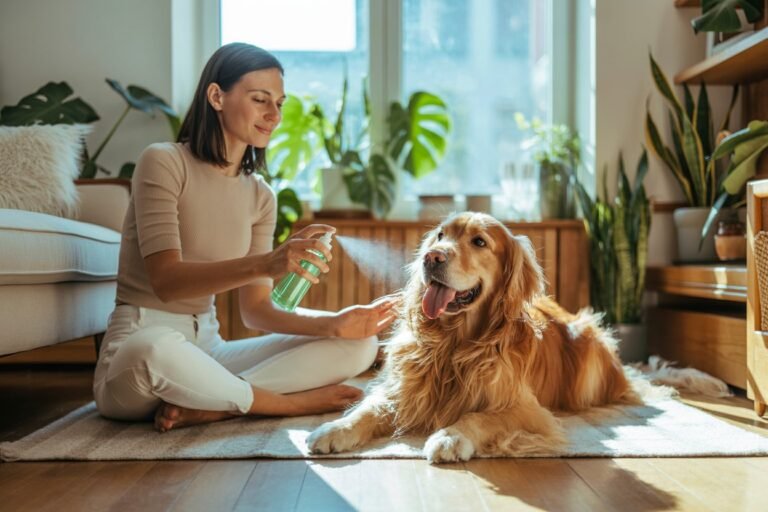
Shade Ideas for Dogs in Summer: Creative Ways to Keep Your Pup Cool and Comfortable
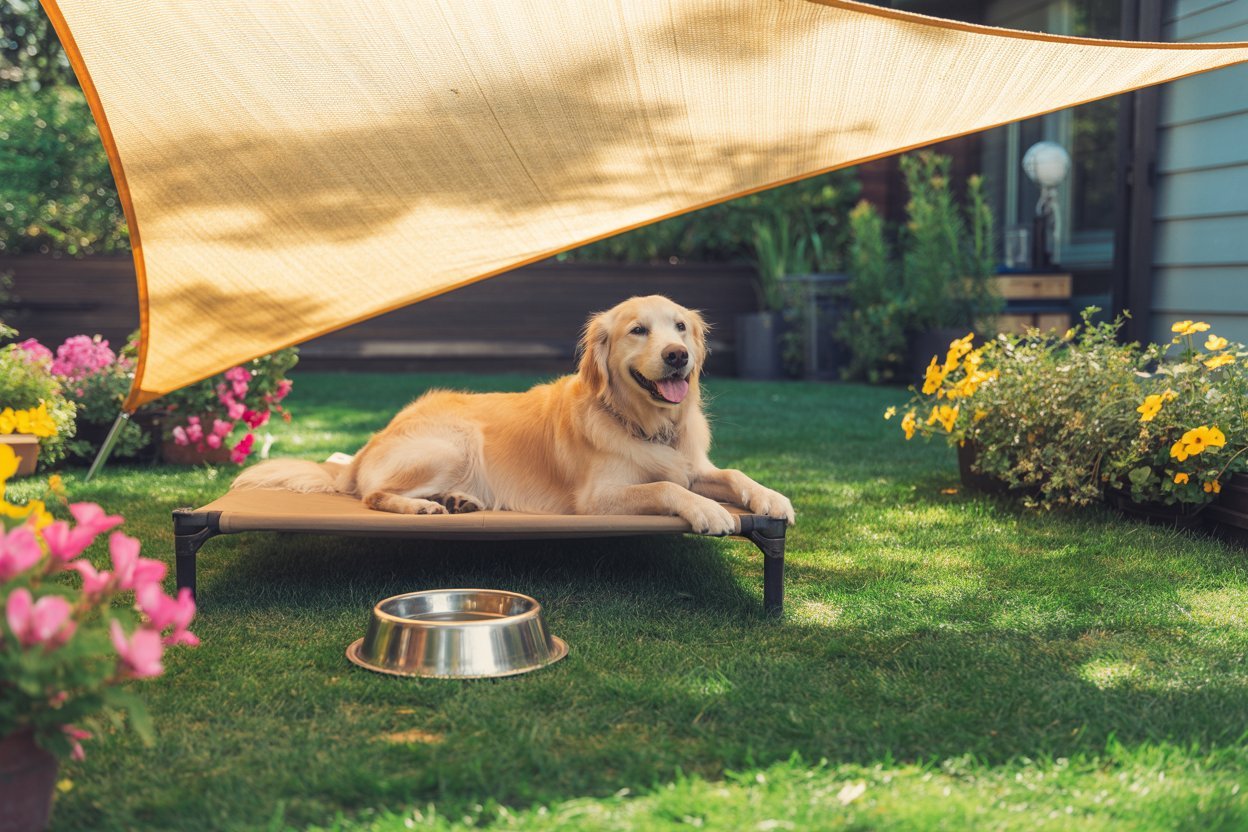
Summer is one of my favorite seasons because it means spending more time outdoors with my dogs. Whether we’re gardening, relaxing in the backyard, or simply enjoying the sunshine, they love being outside just as much as I do.
But I quickly realized that while I was comfortable under an umbrella with a cool drink, my dogs were constantly searching for a shady spot to escape the heat.
That little observation inspired me to make our yard more comfortable for them. Since then, I’ve discovered several easy and affordable ways to create cool, shaded spaces that help keep dogs safe, happy, and comfortable all summer long.
In this guide, I’ll share my favorite shade ideas and show you exactly how to build them.
Why Shade Is So Important for Dogs During Summer
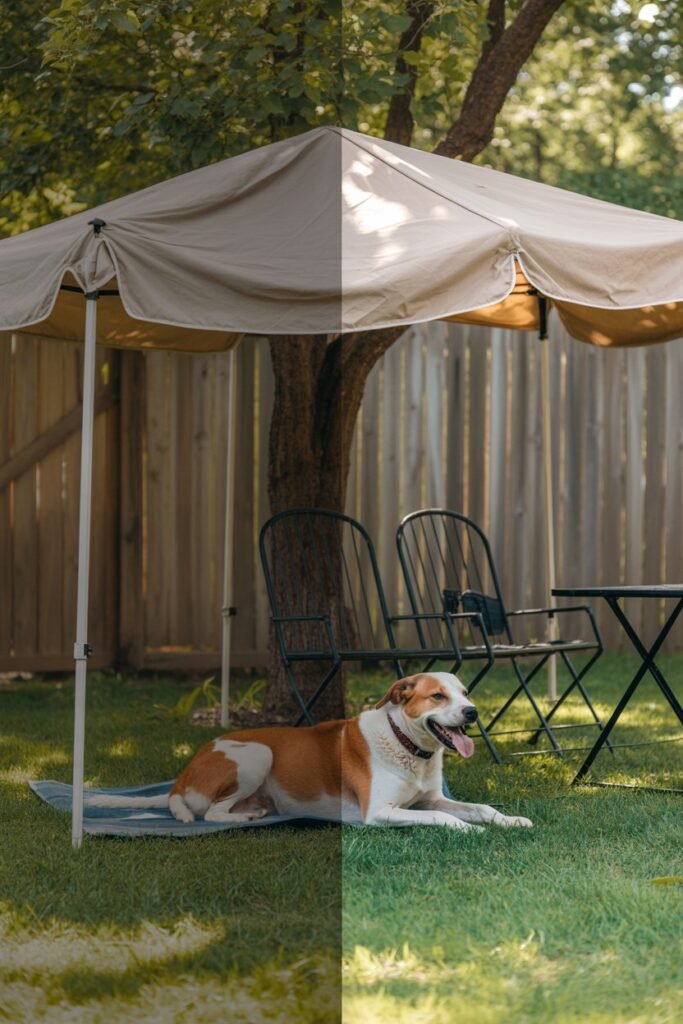
As much as dogs enjoy playing outside, they are much more vulnerable to hot weather than many people realize. Unlike humans, dogs don’t cool themselves by sweating over most of their bodies.
Instead, they rely mainly on panting and a small amount of sweating through their paw pads. On especially warm days, these natural cooling methods simply aren’t enough.
Providing proper shade helps regulate your dog’s body temperature and greatly reduces the risk of overheating. A shaded area gives your dog a comfortable place to rest after playing, allowing them to recover without being exposed to direct sunlight.
Here are some of the biggest benefits of creating shaded areas for your dog:
- Helps prevent heat exhaustion and heatstroke.
- Protects sensitive skin from harmful UV rays.
- Keeps drinking water cooler for longer.
- Reduces the temperature of the ground where your dog rests.
- Makes outdoor playtime much safer.
- Encourages your dog to spend time outside comfortably.
- Protects puppies, senior dogs, and thick-coated breeds that struggle with heat.
- Creates a relaxing outdoor retreat your dog can enjoy throughout the day.
While shade is essential, remember that it should always be paired with fresh drinking water, proper airflow, and regular supervision during extremely hot weather.
Fortunately, you don’t need a huge budget to create an inviting shaded space. Many of the ideas below are beginner-friendly DIY projects that can be completed over a weekend.
1. DIY Shade Sail
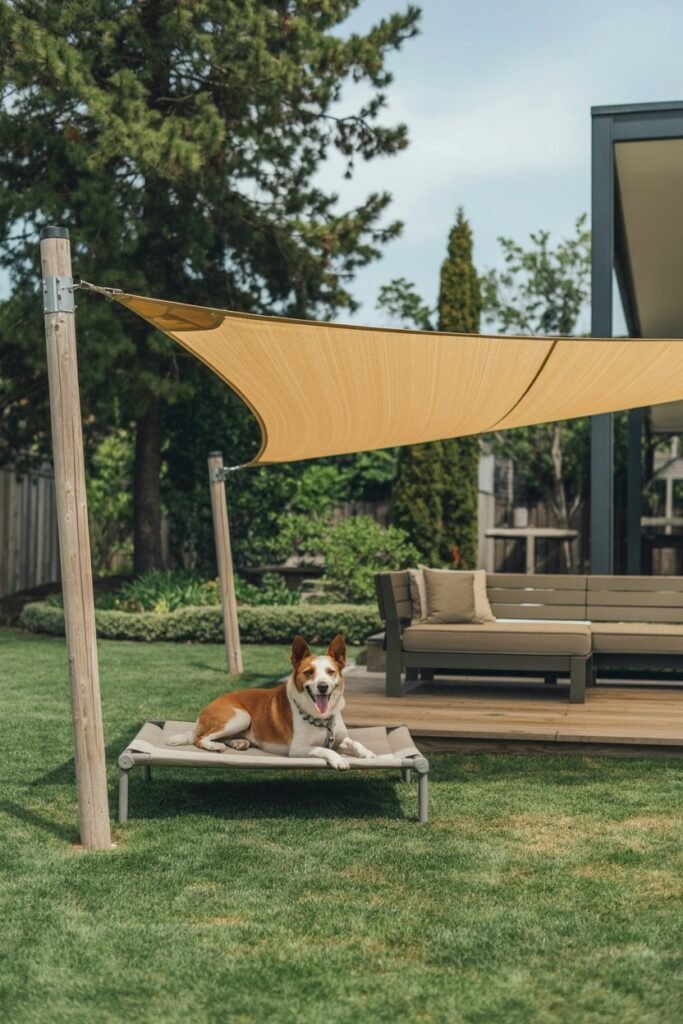
A shade sail is one of the simplest ways to create a spacious, cool outdoor area while allowing fresh air to circulate freely underneath.
What You’ll Need
- UV-resistant shade sail
- Four pressure-treated wooden posts or steel poles
- Concrete mix
- Post hole digger or shovel
- Measuring tape
- Level
- Eye bolts
- Turnbuckles
- Stainless steel cable or heavy-duty rope
- Drill
- Ladder
- Safety gloves
How to Create the Shade
A shade sail is one of the most effective solutions because it covers a large area while still allowing air to move underneath, keeping your dog much cooler than a fully enclosed structure.
Step 1: Choose the Best Location
Spend a day observing how sunlight moves across your yard. Pick a location that receives the strongest afternoon sun, as this is when your dog needs shade the most. Make sure the area is level and free of sharp objects or debris.
Step 2: Measure the Space
Measure the area you want to shade and choose a sail that’s slightly smaller than the space. This leaves room for proper tension when installing it.
Step 3: Install the Posts
Mark the four corners where the posts will stand. Dig holes approximately 2 feet deep, or deeper if you live in a windy area.
Place each post into its hole and use a level to ensure it stands perfectly straight. Fill each hole with concrete and allow it to cure according to the manufacturer’s instructions, usually 24 to 48 hours.
Step 4: Attach the Hardware
Install eye bolts into each post near the top. Attach turnbuckles to the eye bolts, then connect the shade sail using heavy-duty cables or rope.
Step 5: Tighten the Sail
Gradually tighten each corner until the fabric becomes firm and evenly stretched. A tight sail prevents rainwater from pooling and extends the life of the material.
Step 6: Create a Comfortable Resting Area
Once the shade is complete, place an elevated dog bed, cooling mat, or outdoor rug underneath. Add a large bowl of fresh water nearby so your dog always has easy access to hydration.
Maintenance Tips
- Check the sail tension once a month.
- Wash the fabric with mild soap and water when it becomes dirty.
- Remove leaves and branches after storms.
- Inspect cables, hooks, and turnbuckles for rust or wear.
- Take the sail down before severe storms or high winds if recommended by the manufacturer.
- Replace damaged hardware immediately to maintain safety.
Read How To Create A Completely Odorless Balcony Potty For Your Dog
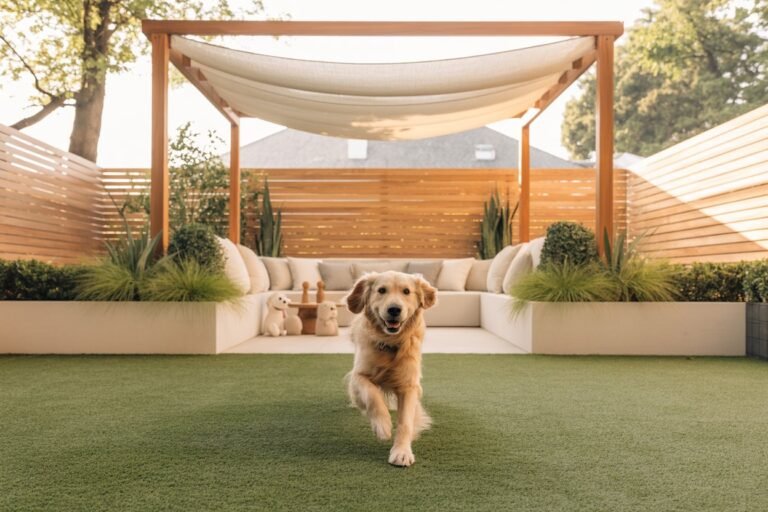
2. Backyard Pergola with Climbing Plants
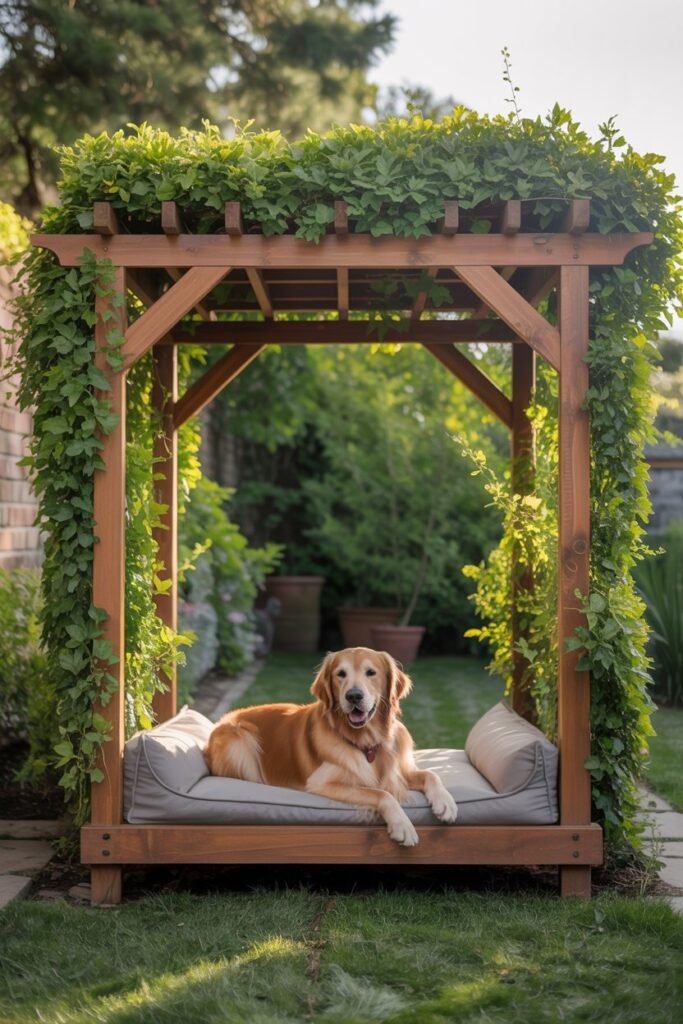
A backyard pergola creates long-lasting shade while climbing plants gradually provide natural cooling, extra beauty, and a peaceful outdoor retreat for your dog.
What You’ll Need
- Pressure-treated lumber
- Concrete mix
- Deck screws
- Drill
- Saw
- Measuring tape
- Level
- Outdoor wood stain or sealant
- Climbing plants such as jasmine, grapevine, or climbing roses
- Garden twine or plant ties
- Mulch
- Dog bed or cooling mat
How to Create the Shade
A pergola is a wonderful investment if you’re looking for a permanent backyard feature that keeps your dog comfortable while adding charm to your outdoor space.
Step 1: Select the Perfect Spot
Choose a level area with enough room for your dog to move around comfortably. Ideally, position the pergola where it will receive climbing plants that can thrive in your climate.
Step 2: Build the Frame
Measure and mark the corners before digging holes for the support posts. Secure the posts in concrete and allow them to cure completely.
Once the posts are stable, attach the horizontal beams and rafters according to your measurements. Make sure every connection is secure and level before moving on.
Step 3: Protect the Wood
Apply an outdoor wood sealant or stain to help protect the pergola from moisture, insects, and sun damage. Allow the finish to dry completely.
Step 4: Plant the Climbers
Plant climbing vines around each support post. As they grow, gently guide them upward using garden twine or plant clips.
Over time, the foliage will create additional natural shade while allowing cooling breezes to pass through.
Step 5: Create a Comfortable Space
Cover the ground with mulch, grass, or outdoor pavers to reduce heat buildup. Place a cooling bed, water bowl, and a few favorite toys beneath the pergola to encourage your dog to relax there.
Maintenance Tips
- Reapply wood sealant every year or two.
- Trim climbing plants regularly to encourage healthy growth.
- Remove dead leaves and branches.
- Tighten loose screws or bolts.
- Inspect the structure after storms.
- Check for signs of termites or wood rot annually.
Read 10+ Interactive Dog Boutiques with Play Zones That Redefine Pet Shopping
3. Pop-Up Canopy Tent
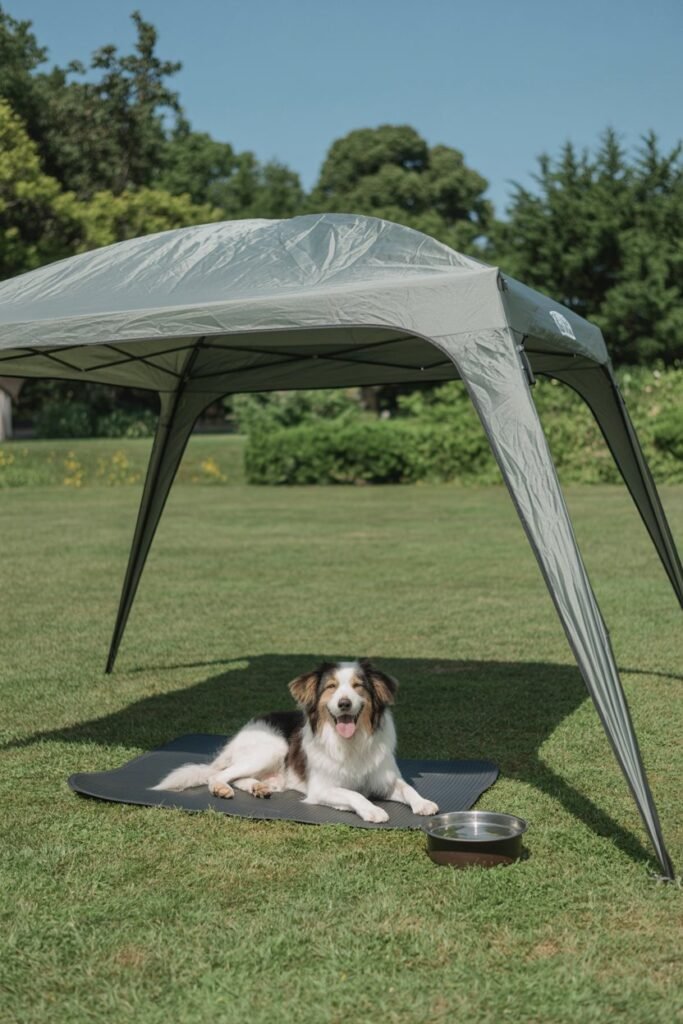
A portable canopy tent provides quick, flexible shade that’s easy to move, making it perfect for changing outdoor activities throughout the summer.
What You’ll Need
- Pop-up canopy tent
- Ground stakes
- Sandbags or weighted anchors
- Rubber outdoor mat
- Elevated dog bed
- Cooling mat
- Large water bowl
- Optional side panels for additional shade
How to Create the Shade
One of my favorite things about a pop-up canopy is how quickly it transforms a sunny backyard into a comfortable resting area. It’s also an excellent option if you rent your home or don’t want to install permanent structures.
Step 1: Choose a Flat Surface
Find level ground that’s free of rocks, sticks, and uneven surfaces. Grass works best because it stays cooler than concrete or asphalt.
Step 2: Set Up the Frame
Open the canopy frame according to the manufacturer’s instructions. Extend the legs evenly and lock them securely into place.
Step 3: Secure the Tent
Never rely solely on the canopy’s weight. Use ground stakes if you’re setting it up on grass, or weighted sandbags if you’re placing it on a patio or deck. This prevents the structure from tipping over in windy conditions.
Step 4: Add Cooling Features
Place an elevated dog bed underneath to improve airflow beneath your dog’s body. Adding a cooling mat can make the area even more comfortable on especially hot afternoons.
Keep a bowl of fresh, cool water within easy reach.
Step 5: Adjust Throughout the Day
As the sun moves, reposition the canopy if necessary to maintain consistent shade. Since it’s portable, you can easily move it wherever your dog prefers to relax.
Maintenance Tips
- Fold and store the canopy during severe weather.
- Clean the fabric regularly using mild soap and water.
- Allow the canopy to dry completely before storing it.
- Inspect the frame for bent or damaged parts.
- Tighten loose joints and fasteners.
- Replace torn fabric as soon as possible to maintain effective shade.
4. Outdoor Dog Gazebo
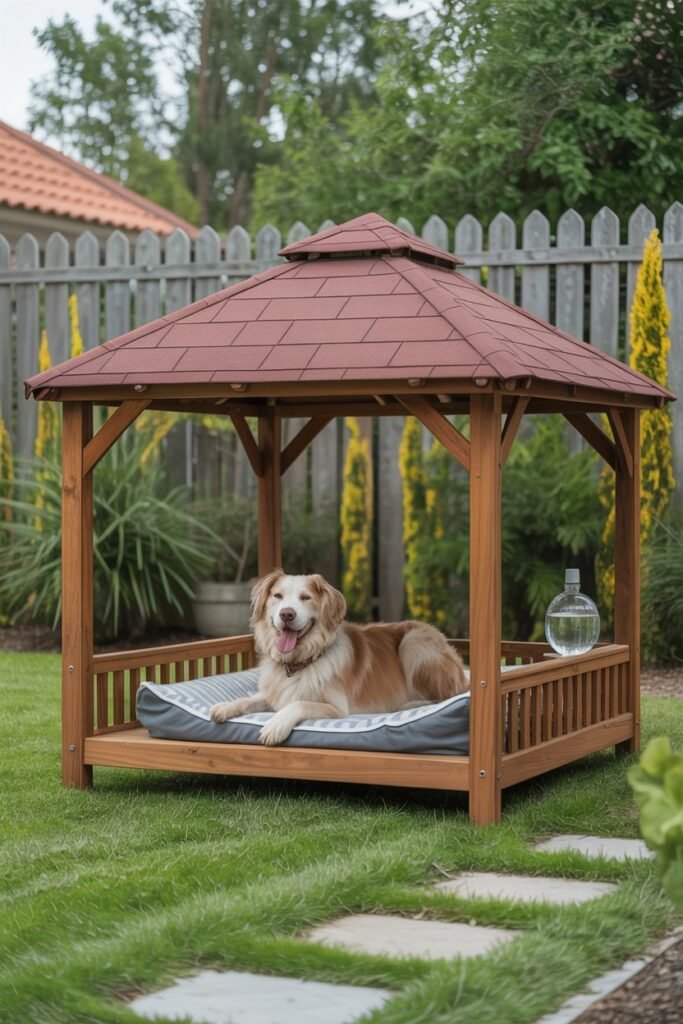
A dog gazebo creates a cozy outdoor retreat that provides reliable shade, excellent airflow, and a relaxing space your dog can enjoy every day.
What You’ll Need
- Dog gazebo kit or small outdoor gazebo
- Concrete anchors or ground stakes
- Rubber flooring or outdoor pavers
- Cooling mat or elevated dog bed
- Outdoor curtains or mesh panels (optional)
- Water bowl
- Cordless drill
- Wrench
- Measuring tape
- Level
- Outdoor storage basket for toys (optional)
How to Create the Shade
If you’re looking for a permanent shaded retreat that offers both comfort and style, an outdoor gazebo is a wonderful choice. It protects your dog from harsh sunlight while allowing plenty of fresh air to circulate, making it much cooler than a traditional dog house during summer.
Step 1: Choose the Best Location
Pick a flat area of your yard that drains well after rain. Avoid placing the gazebo in low spots where water can collect. If possible, position it where it will receive some natural morning shade and maximum protection from the afternoon sun.
Step 2: Prepare the Ground
Remove grass, rocks, weeds, and debris from the area. Level the ground carefully so the gazebo sits evenly.
For extra comfort, install outdoor pavers, rubber flooring, or compacted gravel beneath the structure. These materials help reduce mud while providing a stable foundation.
Step 3: Assemble the Gazebo
Follow the manufacturer’s instructions to build the frame. Begin with the base, then install the support posts before attaching the roof panels.
Double-check that every bolt is tightened securely before moving to the next step.
Step 4: Secure the Structure
Anchor the gazebo firmly using concrete anchors or heavy-duty ground stakes. This is especially important in areas that experience strong summer winds.
Never skip this step, as an unsecured gazebo could become dangerous during bad weather.
Step 5: Create a Comfortable Resting Area
Place an elevated dog bed or cooling mat inside the gazebo. Elevated beds improve airflow underneath your dog’s body, helping them stay cooler.
Keep a large bowl of fresh water nearby and consider adding outdoor curtains or mesh panels to block low afternoon sun without reducing ventilation.
Step 6: Personalize the Space
Add your dog’s favorite blanket, chew toys, or a small storage basket for outdoor essentials. A familiar environment encourages your dog to use the shaded space more often.
Maintenance Tips
- Sweep dirt and leaves from the floor every week.
- Wash the roof with mild soap at the beginning and end of summer.
- Inspect anchors after storms.
- Tighten loose bolts every few months.
- Replace damaged mesh or curtains promptly.
- Keep the surrounding area free of weeds and overgrown grass.
5. Tarp Shade Between Trees
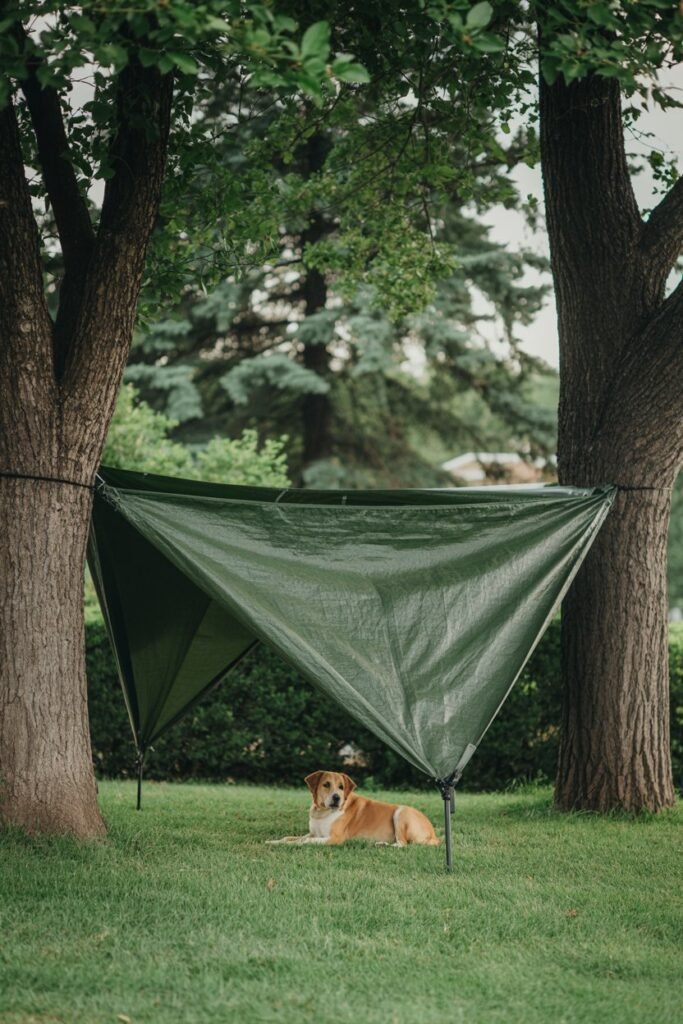
Using mature trees with a durable tarp creates an affordable shade solution that keeps your dog cool while blending naturally into your backyard.
What You’ll Need
- Heavy-duty waterproof tarp
- UV-resistant rope
- Carabiners
- Bungee cords
- Tent stakes
- Measuring tape
- Ladder
- Outdoor dog bed
- Ground mat
How to Create the Shade
If your yard already has healthy mature trees, you have the perfect starting point for an inexpensive DIY shade project. This setup requires very few materials and can usually be completed within an afternoon.
Step 1: Select Healthy Trees
Choose two or more sturdy trees with strong trunks. Make sure they are healthy and free from dead branches that could fall during storms.
The trees should be spaced far enough apart to stretch the tarp tightly without excessive sagging.
Step 2: Measure the Area
Measure the distance between the trees before purchasing your tarp. Choose one that’s slightly larger than the area you want to cover.
A larger tarp provides more flexibility when creating proper tension.
Step 3: Attach the Rope
Wrap UV-resistant rope around each tree without tying it so tightly that it damages the bark. Tree-friendly straps are even better if available.
Step 4: Secure the Tarp
Attach each corner of the tarp using carabiners and bungee cords. Pull each corner evenly until the tarp is stretched tightly.
Leave one side slightly lower than the other so rainwater can run off instead of pooling on top.
Step 5: Anchor the Lower Edges
If needed, use tent stakes to anchor the lower corners securely to the ground. This helps prevent the tarp from flapping excessively in windy weather.
Step 6: Finish the Resting Area
Place an outdoor rug, cooling mat, or elevated bed beneath the shaded space. Add fresh water and a few toys to make it inviting for your dog.
Maintenance Tips
- Inspect ropes every few weeks for wear.
- Tighten loose corners after strong winds.
- Remove standing rainwater immediately.
- Repair small tears before they grow larger.
- Clean the tarp with mild soap when necessary.
- Replace worn ropes or bungee cords as needed.
6. Patio Umbrella Cooling Station
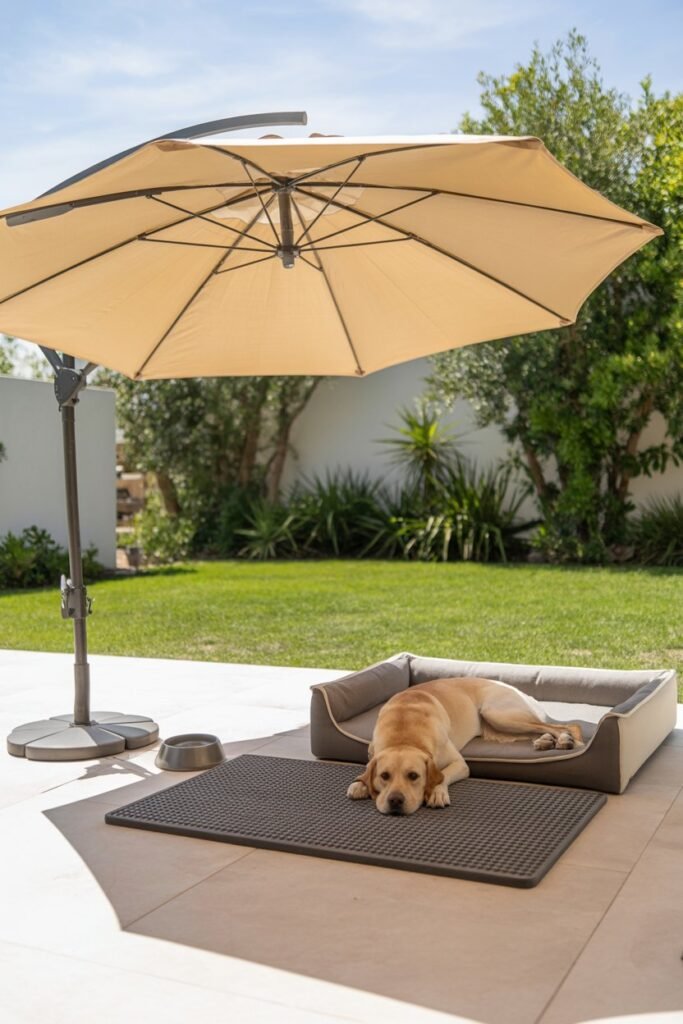
A large patio umbrella creates flexible shade that’s easy to reposition throughout the day, helping your dog stay cool wherever the sun moves.
What You’ll Need
- Large outdoor patio umbrella
- Heavy weighted umbrella base
- Outdoor rug
- Elevated dog bed
- Cooling mat
- Large water bowl
- Outdoor side table (optional)
- Cooling fan (optional for covered patios)
How to Create the Shade
A patio umbrella is one of the quickest ways to provide shade, especially for smaller yards, patios, or decks. Since it can be adjusted throughout the day, it’s a practical option for maintaining consistent coverage.
Step 1: Choose the Right Umbrella
Select a large umbrella made from UV-resistant outdoor fabric. The wider the canopy, the larger the shaded area your dog can enjoy.
A tilt-function umbrella gives you even greater flexibility as the sun changes position.
Step 2: Install a Stable Base
Use a heavy-duty weighted base that’s appropriate for the umbrella’s size. A lightweight base may tip over during windy conditions.
Check that the umbrella pole is securely locked into place before opening it.
Step 3: Position the Umbrella
Open the umbrella fully and angle it to block the strongest afternoon sunlight.
If your umbrella includes a tilt feature, adjust it several times throughout the day to maintain maximum shade.
Step 4: Build a Cooling Station
Lay an outdoor rug underneath the umbrella to create a comfortable surface.
Place an elevated dog bed or cooling mat on top of the rug to improve airflow and reduce heat buildup.
Keep a large bowl of fresh, cool water nearby. If electricity is available on a covered patio, a small outdoor-rated fan can further improve airflow.
Step 5: Make It Dog-Friendly
Add a favorite toy, chew, or lightweight blanket so your dog associates the area with comfort and relaxation.
If you have multiple dogs, choose a larger umbrella to ensure everyone has enough shaded space.
Maintenance Tips
- Close the umbrella whenever it’s windy.
- Clean the canopy every few weeks.
- Allow the fabric to dry before closing it after rain.
- Tighten bolts and joints regularly.
- Store the umbrella indoors during winter if possible.
- Replace faded or torn fabric to maintain effective UV protection.
7. PVC Pipe Shade Tent
A PVC pipe shade tent is an affordable, beginner-friendly project that provides dependable shade while being lightweight, portable, and surprisingly durable for everyday use.
What You’ll Need
- PVC pipes (1-inch diameter works well)
- PVC connectors (T-joints, elbows, and cross connectors)
- PVC pipe cutter or hacksaw
- Measuring tape
- Marker
- PVC cement (optional for a permanent frame)
- UV-resistant shade cloth
- Heavy-duty zip ties or bungee cords
- Tent stakes or sandbags
- Rubber mallet
- Elevated dog bed
- Water bowl
How to Create the Shade
A PVC shade tent is one of my favorite DIY projects because it’s inexpensive, easy to customize, and doesn’t require advanced building skills. You can make it as large or as small as you need, depending on the size of your dog and the available space in your yard.
Step 1: Measure the Space
Choose a flat area in your backyard where your dog enjoys spending time. Measure the length, width, and height you want for the tent. Be sure to leave enough room for your dog to stand, turn around, stretch, and lie down comfortably.
Step 2: Cut the PVC Pipes
Using a PVC cutter or hacksaw, cut the pipes according to your measurements. Label each piece with a marker to make assembly easier.
Step 3: Assemble the Frame
Connect the pipes using the PVC fittings to create a sturdy rectangular frame. Assemble the base first, followed by the vertical supports and the top frame.
If you want a permanent structure, apply PVC cement to each connection. For a portable tent, simply push the pieces together without glue so they can be taken apart later.
Step 4: Attach the Shade Cloth
Spread the shade cloth evenly over the top of the frame. Secure it tightly using heavy-duty zip ties or bungee cords. Make sure the fabric is stretched evenly so it doesn’t sag or flap excessively in the wind.
If you’d like extra protection from the afternoon sun, allow the cloth to hang down one or two sides of the frame.
Step 5: Secure the Tent
Anchor each corner with tent stakes if you’re placing it on grass. If it’s going on a patio or deck, use sandbags or weighted objects to keep it stable.
Step 6: Add Comfort
Place an elevated dog bed inside the tent to improve airflow beneath your dog’s body. Add a cooling mat, a large water bowl, and a few favorite toys to create a cozy retreat.
Maintenance Tips
- Inspect PVC joints every few weeks.
- Replace cracked or damaged pipes promptly.
- Wash the shade cloth regularly with mild soap.
- Check zip ties for wear and replace them as needed.
- Tighten loose connections.
- Store the tent indoors during winter or severe storms to extend its lifespan.
8. Natural Tree Shade Retreat
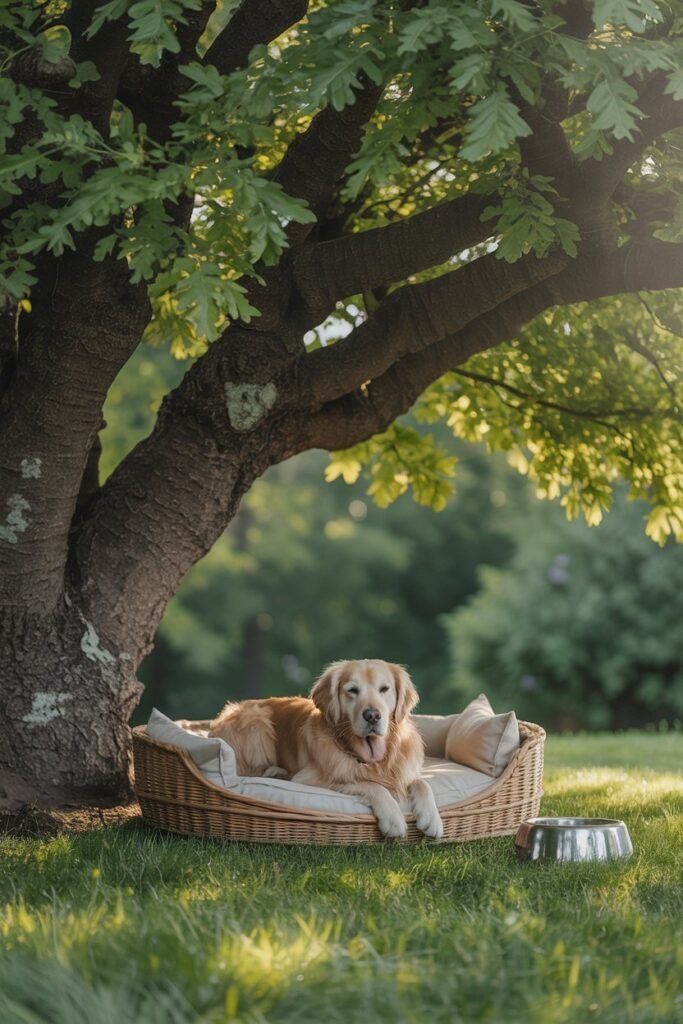
Mature trees create one of the coolest and most relaxing outdoor spaces, giving dogs natural shade while enhancing the beauty of your backyard.
What You’ll Need
- Healthy mature tree
- Organic mulch
- Outdoor dog bed or cooling mat
- Fresh water bowl
- Ground cover or grass seed (optional)
- Garden rake
- Pruning shears
- Outdoor toys
- Solar-powered fan (optional for covered areas)
How to Create the Shade
Sometimes the best shade doesn’t require building anything at all. Mature trees naturally lower surrounding temperatures by blocking sunlight and releasing moisture into the air through their leaves.
With just a little preparation, you can transform the shaded area beneath a tree into your dog’s favorite summer retreat.
Step 1: Choose a Safe Tree
Select a healthy tree with a wide canopy that provides generous shade throughout the day.
Avoid trees known to produce toxic fruit, seeds, or leaves for dogs. If you’re unsure about a tree species, research it before allowing your dog to spend time beneath it.
Step 2: Clean the Area
Remove fallen branches, sharp sticks, rocks, and any debris that could injure your dog.
Rake away old leaves and inspect the area for ant hills, wasp nests, or other insects.
Step 3: Improve the Ground
Spread a layer of organic mulch around the tree, leaving a small gap around the trunk to protect the roots.
Mulch helps keep the ground cooler while reducing dust and mud.
Step 4: Add Comfortable Bedding
Place an elevated dog bed or cooling mat beneath the tree. Even though the ground is naturally cooler, elevated bedding provides better airflow and keeps your dog cleaner.
Step 5: Create a Hydration Station
Add a large bowl of fresh water nearby. Refresh it often to ensure it stays cool and clean.
You can also include a few outdoor toys so your dog has a relaxing place to play and rest.
Maintenance Tips
- Prune dead branches regularly.
- Remove fallen fruit immediately.
- Refresh mulch once or twice a year.
- Watch for insects, snakes, or pests.
- Water the tree during dry periods.
- Keep the resting area clean and free of debris.
9. Bamboo Shade Screen
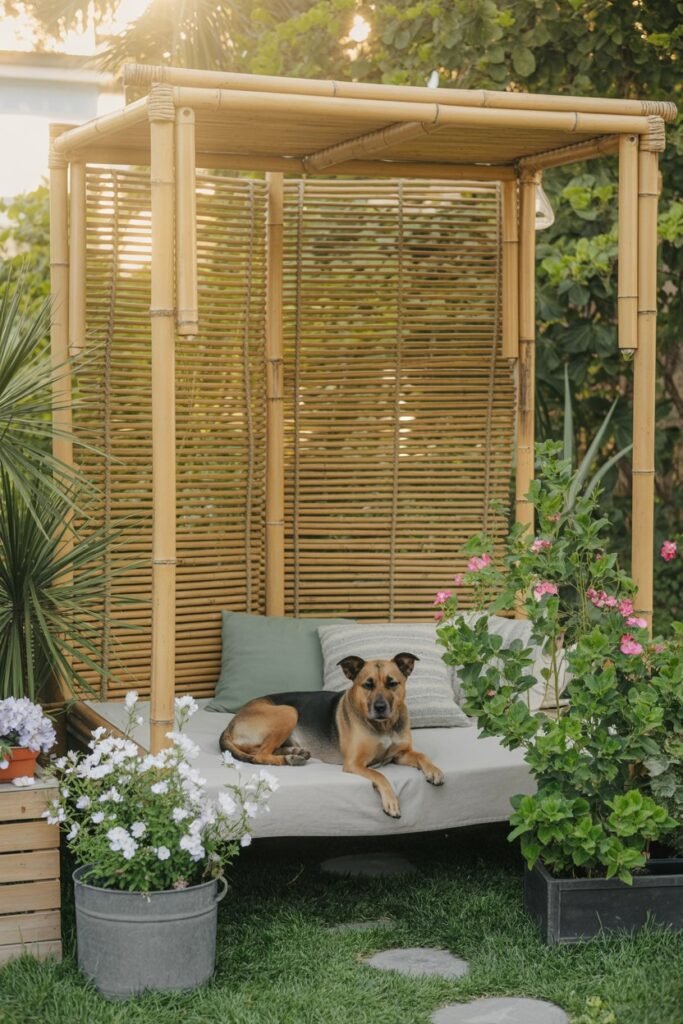
A bamboo shade screen provides stylish filtered shade while improving privacy and allowing cooling breezes to move freely through your outdoor space.
What You’ll Need
- Bamboo fencing or bamboo rolls
- Pressure-treated wooden posts
- Concrete mix
- Screws
- Drill
- Measuring tape
- Level
- Outdoor wood sealant
- Zip ties (optional)
- Decorative plants (optional)
- Outdoor dog bed
How to Create the Shade
If your backyard receives strong afternoon sunlight from one direction, a bamboo screen can block those harsh rays while still allowing air to circulate.
It’s also an attractive way to add privacy to your yard without building a solid wall.
Step 1: Select the Location
Identify where the strongest afternoon sun enters your yard. Position the screen so it blocks direct sunlight without restricting airflow.
Step 2: Install the Support Posts
Measure and mark the post locations. Dig holes approximately two feet deep, place the posts inside, and secure them with concrete.
Allow the concrete to cure completely before attaching the bamboo.
Step 3: Attach the Bamboo
Unroll the bamboo fencing and attach it securely to the posts using screws or heavy-duty zip ties.
Make sure the bamboo is straight and tightly fastened to prevent movement during windy weather.
Step 4: Enhance the Area
Place an outdoor dog bed or cooling mat behind the screen where the filtered shade is strongest.
You can also add potted plants around the screen for additional cooling and a more natural appearance.
Step 5: Check Stability
Gently test the structure to ensure everything is secure before allowing your dog to use the area.
Maintenance Tips
- Apply bamboo sealant every year.
- Replace cracked bamboo poles when necessary.
- Tighten loose fasteners.
- Wash away dirt with a garden hose.
- Inspect wooden posts annually.
- Trim nearby plants to maintain airflow.
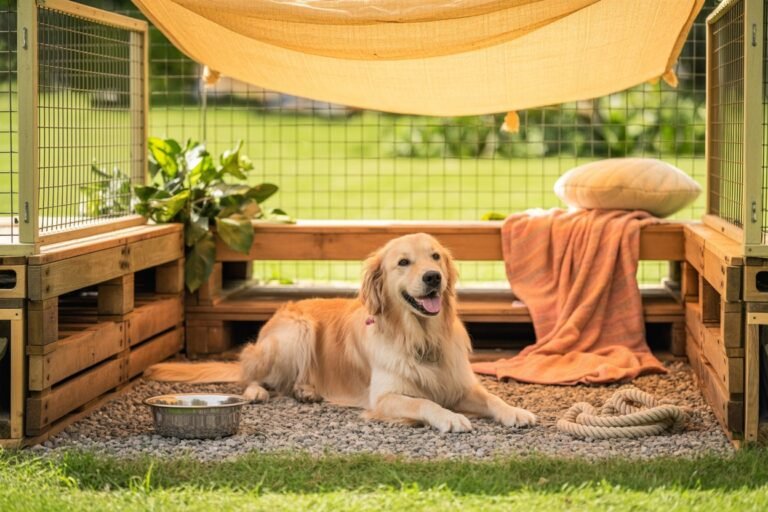
10. Covered Dog Run
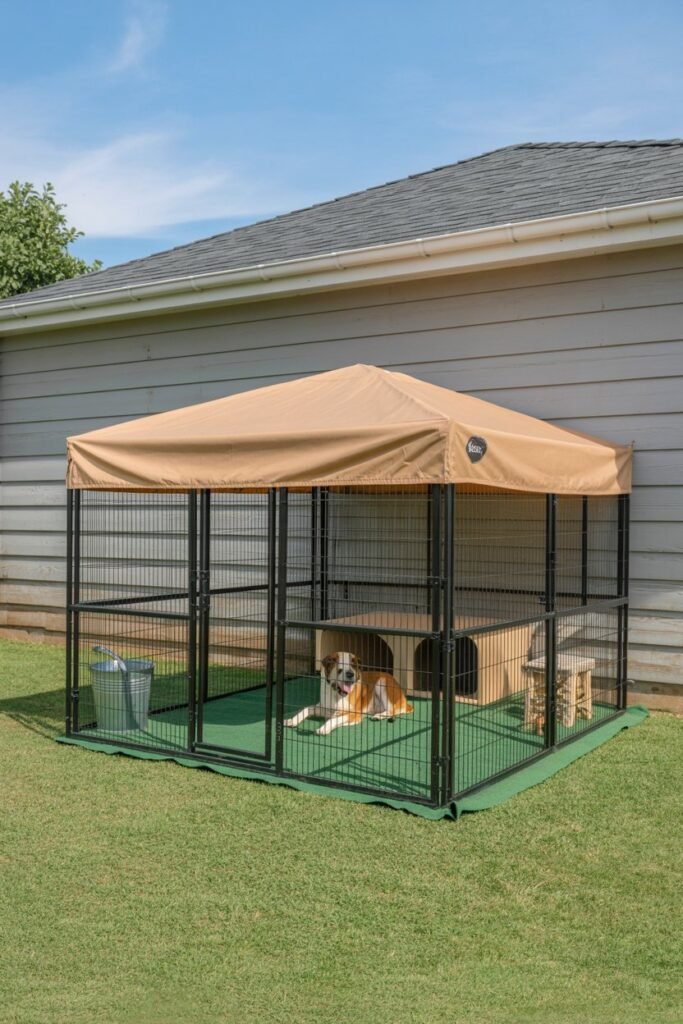
A covered dog run offers dependable shade and protection, making it an excellent choice for dogs that spend longer periods enjoying the outdoors.
What You’ll Need
- Chain-link kennel panels
- Pressure-treated posts
- Concrete mix
- UV-resistant shade cloth
- Heavy-duty zip ties
- Gate kit
- Gravel or rubber flooring
- Elevated dog bed
- Large water bowl
- Cordless drill
- Measuring tape
- Level
How to Create the Shade
A covered dog run is one of the best long-term solutions for active dogs that enjoy spending time outdoors. It combines safety, shade, and plenty of space for movement while protecting your dog from direct sunlight.
Step 1: Plan the Layout
Measure the available area and decide how large the dog run should be. Make sure there’s enough room for your dog to walk, play, and rest comfortably.
Larger breeds will need significantly more space than smaller breeds.
Step 2: Install the Posts
Mark the corners and dig holes for the support posts. Place each post into the ground, level it carefully, and secure it with concrete.
Allow the concrete to cure completely before assembling the fencing.
Step 3: Assemble the Kennel
Attach the chain-link panels to the posts according to the manufacturer’s instructions.
Install the gate and make sure it opens and closes securely.
Step 4: Install the Shade Cloth
Stretch the UV-resistant shade cloth tightly across the roof of the dog run.
Secure it using heavy-duty zip ties or the recommended fastening system.
If afternoon sun enters from one side, consider extending the shade cloth down that side for additional protection.
Step 5: Prepare the Flooring
Cover the ground with gravel, rubber flooring, or artificial turf to improve drainage and reduce mud.
Avoid bare concrete whenever possible, as it can become extremely hot during summer.
Step 6: Add Comfort Features
Place an elevated dog bed inside the run along with fresh water, durable toys, and a cooling mat.
Your dog should always have access to both shade and clean drinking water while using the enclosure.
Maintenance Tips
- Inspect the fencing every month.
- Tighten loose zip ties.
- Replace damaged shade cloth promptly.
- Wash the flooring regularly.
- Remove waste daily.
- Check the gate latch frequently to ensure it remains secure.
Safety Tips When Building Outdoor Dog Shade
Creating shade is one of the best things you can do for your dog during summer, but it’s only part of keeping them safe. A well-designed shaded area should provide comfort, encourage airflow, and eliminate potential hazards. Before your dog begins using any new structure, take a few extra minutes to make sure it’s both secure and practical.
Always Provide Fresh Drinking Water
Shade alone won’t keep your dog hydrated. Always place a large bowl of clean, cool water in the shaded area and refill it throughout the day. On especially hot days, check the water often since it can warm up quickly.
You can also place a few ice cubes in the bowl to help keep the water cooler for longer.
Prioritize Good Airflow
A shaded area should never feel stuffy or enclosed. Fresh air helps carry heat away from your dog’s body, making the space much more comfortable.
Avoid surrounding the shade with solid walls that block natural breezes. Instead, choose open-sided structures, mesh panels, or breathable shade cloth whenever possible.
Avoid Heat-Absorbing Materials
Concrete, metal, and dark-colored surfaces can become extremely hot under direct sunlight. Even if they’re partially shaded, they may still retain heat long after the sun has moved.
Whenever possible, use:
- Grass
- Rubber flooring
- Mulch
- Outdoor rugs
- Elevated dog beds
- Pea gravel
These surfaces stay much cooler and are gentler on your dog’s paws.
Test the Ground Temperature
Before letting your dog relax outside, place the back of your hand on the ground for several seconds.
If it’s too hot for your hand, it’s too hot for your dog’s paws.
Adding shade won’t always cool the ground immediately, so it’s important to check throughout the day.
Secure Every Structure Properly
Summer storms and unexpected wind gusts can quickly turn lightweight structures into safety hazards.
Always secure:
- Shade sails
- Canopies
- Tarps
- Umbrellas
- PVC shade tents
Use heavy-duty anchors, stakes, or concrete footings to prevent movement.
Use Pet-Safe Building Materials
Choose untreated or pet-safe pressure-treated wood whenever possible, and avoid paints or stains that contain harmful chemicals until they have completely cured.
If your dog enjoys chewing, regularly inspect wooden structures for splinters.
Add Cooling Accessories
Shade becomes even more effective when paired with additional cooling features.
Consider adding:
- Elevated dog beds
- Cooling mats
- Misting fans (where safe to use)
- Frozen water bottles wrapped in towels
- Cooling bandanas for outdoor play
These small additions can make a noticeable difference during very warm weather.
Check the Shade Throughout the Day
The sun constantly changes position, meaning the shaded area may shift as the day goes on.
Spend a day observing your yard and adjust portable structures as needed to ensure your dog remains protected during the hottest afternoon hours.
Never Leave Dogs Outside During Extreme Heat
Even with excellent shade, dogs should not be left outdoors for long periods during heatwaves or extreme temperatures.
Bring your dog indoors whenever temperatures become dangerously high, especially if they are:
- Puppies
- Senior dogs
- Flat-faced breeds
- Thick-coated breeds
- Dogs with health conditions
Your supervision is always the best form of protection.
Common Mistakes to Avoid
Even the best DIY shade project can become less effective if a few important details are overlooked. Avoiding these common mistakes will help ensure your dog stays safe and comfortable all summer long.
Building Shade That’s Too Small
Dogs rarely stay in one position all day. A tiny shaded patch may not provide enough room for them to stretch out, move around, or escape shifting sunlight.
When planning your project, make the shaded area larger than you think you’ll need.
Forgetting About Air Circulation
Completely enclosing a shaded area can trap heat instead of reducing it.
Always leave open sides or use breathable materials that allow fresh air to flow freely.
Choosing Dark Shade Fabrics
Dark-colored materials absorb more heat than lighter colors.
Whenever possible, choose light-colored, UV-resistant shade cloth that reflects sunlight instead of absorbing it.
Ignoring the Afternoon Sun
Morning shade may disappear by midday.
Observe how sunlight moves across your yard before deciding where to place your shade structure.
Placing Shade on Hot Concrete
Concrete and asphalt retain heat for hours.
Even if the area above is shaded, the surface underneath may still become uncomfortable for your dog.
Cover hard surfaces with outdoor rugs, rubber mats, or elevated beds whenever possible.
Skipping Regular Maintenance
Loose bolts, torn fabric, rusted hardware, or damaged ropes can quickly become safety hazards.
Inspect every shade structure regularly and repair problems before they become serious.
Not Anchoring Structures Securely
Canopies, umbrellas, and tarps can become unstable during windy weather.
Always use proper anchors, stakes, or concrete footings to keep your project secure.
Assuming Shade Replaces Supervision
Shade greatly improves outdoor comfort, but it doesn’t eliminate the risks of extreme heat.
Continue checking on your dog regularly, especially during the hottest part of the day.
Frequently Asked Questions
What material provides the best shade for dogs?
UV-resistant shade cloth is one of the best materials because it blocks a large percentage of harmful sunlight while still allowing fresh air to circulate. Shade sails, pergolas with climbing plants, and breathable outdoor fabrics are also excellent options for keeping dogs cool.
How much shade does a dog need outside?
Your dog should always have access to enough shade to comfortably lie down, stretch, stand, and move around without stepping into direct sunlight. If you have multiple dogs, make sure the shaded space is large enough for all of them to relax without competing for cooler spots.
Is a tarp safe for dog shade?
Yes, a heavy-duty tarp can provide effective temporary shade when it’s installed correctly. Stretch it tightly to prevent water from collecting, secure it with sturdy ropes or anchors, and inspect it regularly for tears or loose fasteners. A breathable shade cloth is often a better long-term option because it allows more airflow.
Can dogs stay outside all day if they have shade?
No. While shade significantly reduces heat exposure, it doesn’t eliminate the risk of overheating. Dogs should always have access to fresh water, proper ventilation, and regular supervision. During extremely hot weather, it’s safest to bring them indoors during the hottest hours of the day.
What colors keep dog shelters coolest?
Light colors such as white, beige, light gray, or tan reflect more sunlight than darker colors. Using lighter-colored fabrics or roofing materials can help reduce heat buildup inside shaded areas and create a more comfortable environment for your dog.
Should a dog house stay in direct sunlight?
No. A dog house should always be placed in a shaded location whenever possible. Direct sunlight can quickly cause the inside of a dog house to become much hotter than the surrounding air, making it an unsafe place for your dog to rest during summer.
Conclusion
Keeping your dog cool during the summer doesn’t have to be difficult or expensive.
Whether you build a simple shade sail, set up a patio umbrella, or create a natural shaded retreat under a tree, providing a cool place to rest can make a big difference in your dog’s comfort and safety.
Remember to pair shade with fresh drinking water, good airflow, and regular supervision on hot days. With the right shade solution, your furry friend can enjoy spending time outdoors while staying happy, healthy, and comfortable all summer long.